 +7 775 858 9294
 WhatsApp
What Can a Private Enforcement Officer Do in Child Support Cases in Kazakhstan?
What can a private enforcement officer do in child support cases? In Kazakhstan, a private enforcement officer is responsible for compulsory enforcement of child support if the debtor does not pay voluntarily. The officer enforces a court order, court judgment, enforcement writ or notarized child support agreement.
Child support is the child’s legal right. Therefore, enforcement in child support cases is aimed at protecting the child’s interests, not simply collecting an ordinary debt.
Who is a private enforcement officer?
A private enforcement officer is a professional authorized to enforce court acts and other enforcement documents. In child support cases, the officer ensures that the debtor pays regularly.
If the debtor does not pay, the officer may apply enforcement measures such as calculating debt, sending orders to the employer, freezing accounts, checking property and initiating liability procedures.
When does the enforcement officer start working?
The enforcement officer begins work after receiving an enforcement document. This may include:
- a court order;
- a court judgment;
- an enforcement writ;
- a notarized child support agreement;
- another enforceable document.
After enforcement proceedings are opened, the officer notifies the parties and begins collecting child support.
What can the enforcement officer do?
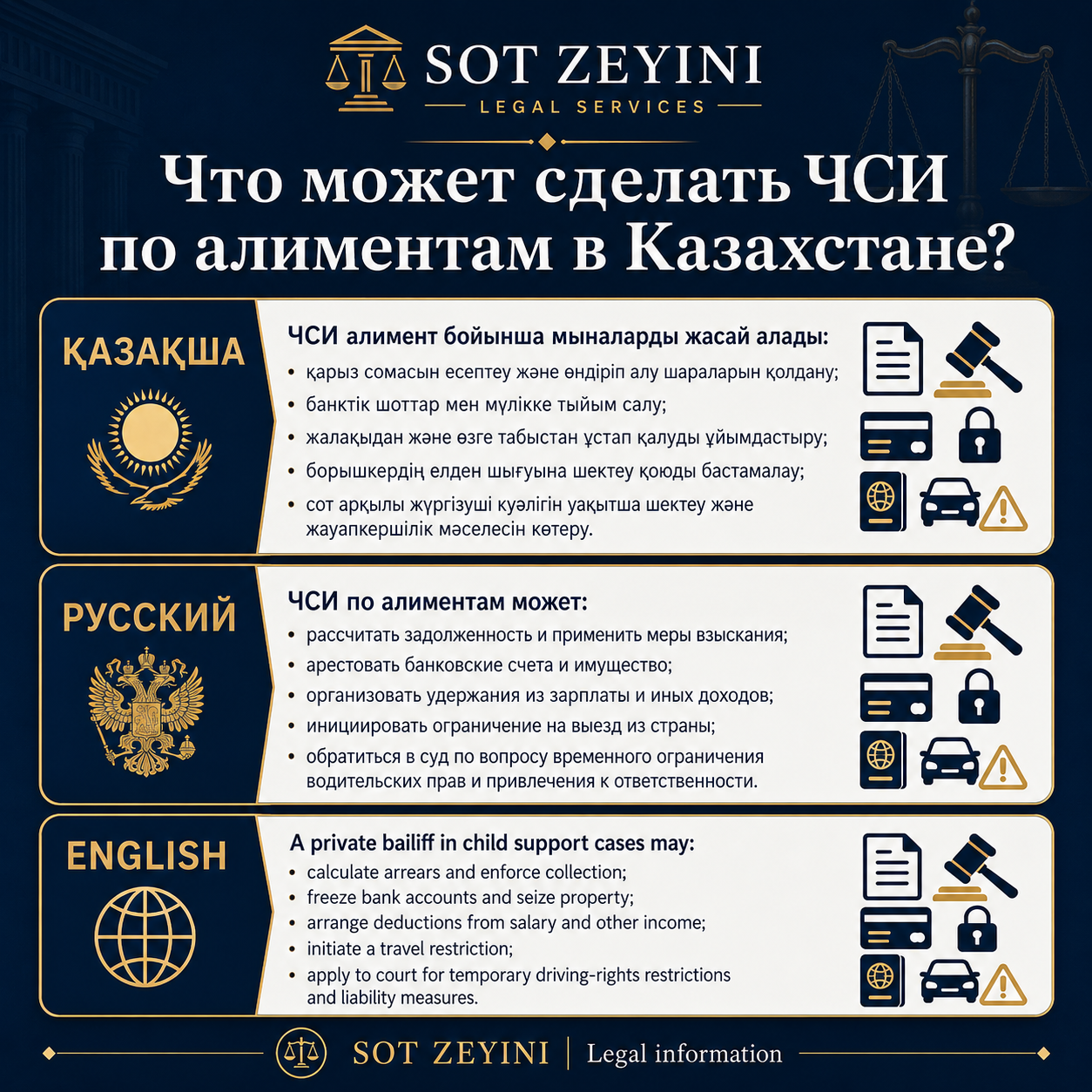
In a child support case, the enforcement officer may:
- open enforcement proceedings;
- notify the debtor;
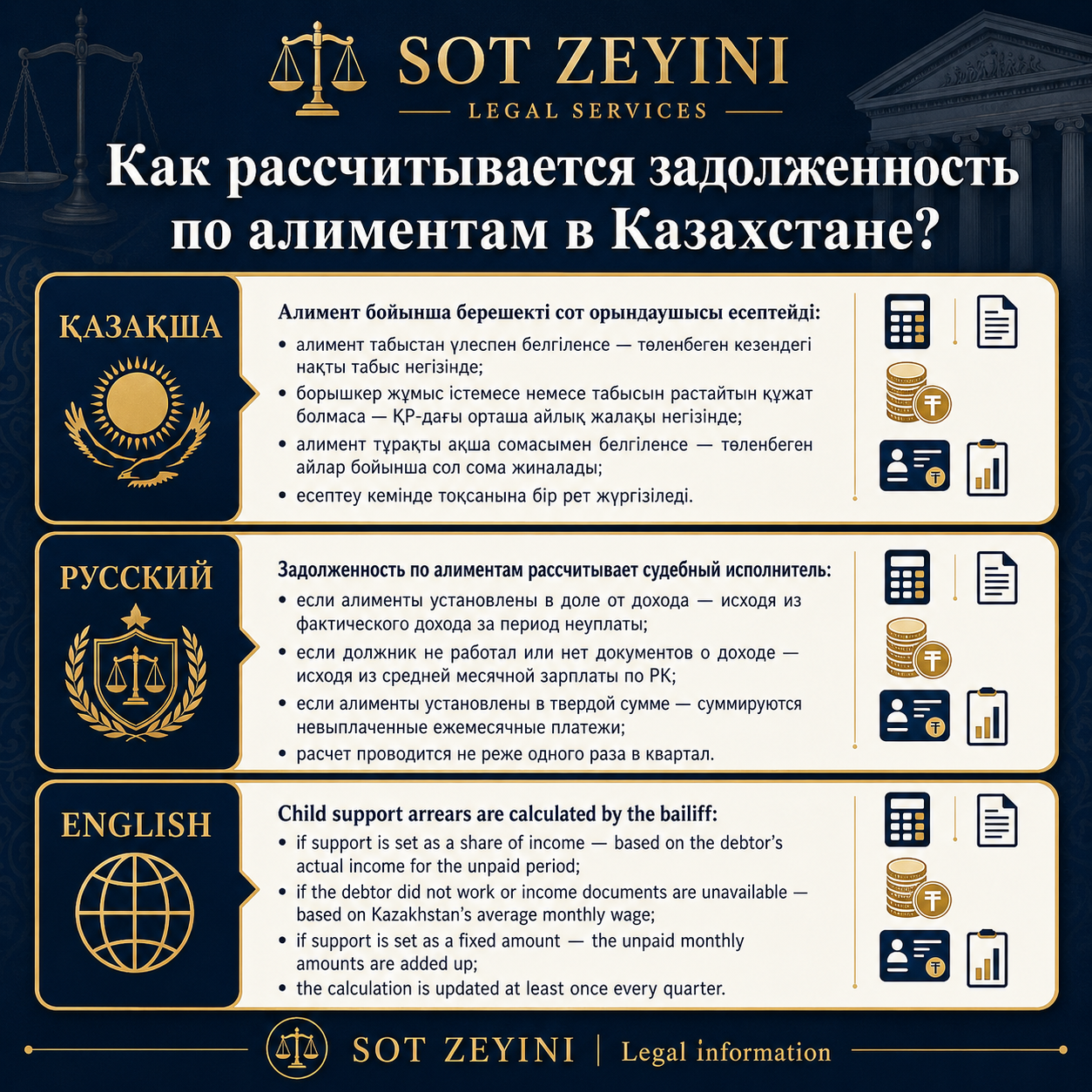
- calculate child support debt;
- send an order to the employer to withhold child support from salary;
- request income information;
- check bank accounts;
- freeze bank accounts;
- check property;
- seize a car or real estate;
- restrict property registration actions;
- include the debtor in the debtor register;
- apply or initiate a temporary travel restriction;
- send materials for administrative liability;
- in cases of willful evasion, send materials for possible criminal liability.
In simple terms, the enforcement officer can make non-payment legally very uncomfortable for the debtor.
Can the enforcement officer calculate child support debt?
Yes. Calculating child support debt is one of the key functions of the enforcement officer.
The calculation may consider:
- the amount of child support;
- the unpaid period;
- the debtor’s income;
- amounts actually paid;
- partial payments;
- bank transfers;
- whether the debtor is officially employed;
- whether child support is set as a percentage or fixed amount.
If the debtor does not work or does not provide income documents, the debt may be calculated based on the average monthly salary in Kazakhstan.
Can child support be withheld from salary?
Yes. If the debtor is officially employed, the enforcement officer sends an order to the employer. The employer’s accounting department then withholds child support from salary and transfers it to the receiving parent.
This is one of the most effective enforcement methods because payments are made regularly and automatically.
Can bank accounts be frozen?
Yes. If there is child support debt, the enforcement officer may freeze the debtor’s bank accounts.
If money is received into the account, it may be used to repay the child support debt. The debtor may also face restrictions on using a bank card or account.
If the account receives payments that cannot be legally collected, the debtor should provide supporting documents to the enforcement officer.
Can property be seized?
Yes. If the debtor does not pay child support, the enforcement officer may seize property.
This may include:
- a car;
- real estate;
- land;
- money in bank accounts;
- other property that may legally be collected.
If the debt is not paid, property may in some cases be sold to repay the debt.
Can the debtor be restricted from leaving Kazakhstan?
Yes. If there is debt and the legal procedure is followed, the enforcement officer may apply or initiate a temporary restriction on leaving the Republic of Kazakhstan.
In practice, this means the debtor may be stopped when trying to leave the country. The restriction is removed after the grounds are eliminated, for example after payment of the debt or compliance with the officer’s requirements.
Can the enforcement officer hold the debtor liable?
The enforcement officer does not personally impose punishment, but may prepare and submit materials for liability.
This may happen if the debtor:
- does not pay for a long time;
- hides income;
- hides employment;
- ignores summons;
- fails to provide information;
- evades enforcement of a court act;
- does not take steps to repay the debt.
Depending on the circumstances, administrative or criminal liability may be considered.
Can the enforcement officer change the amount of child support?
No. The enforcement officer cannot independently increase or decrease child support. The officer only enforces the amount stated in the court act, court order or notarized agreement.
If the amount needs to be changed, the party must apply to court. The enforcement officer will enforce the new amount only after receiving a new enforceable document.
Can the enforcement officer set child support as a fixed amount?
No. Setting child support as a fixed monthly amount is within the court’s authority. The enforcement officer does not decide how much the parent must pay. The officer only collects the amount already established by a court or agreement.
If the debtor has unstable income, works unofficially or hides income, the receiving parent may apply to court to request a fixed monthly amount.
What if the enforcement officer does nothing?
If the enforcement officer does not take action, a complaint may be filed against inaction.
The complaint may state that the officer:
- did not calculate the debt;
- did not send an order to the employer;
- did not check bank accounts;
- did not seize property;
- did not check the car or real estate;
- did not restrict travel;
- did not raise the issue of liability;
- did not respond to applications.
A complaint may be filed with the regional chamber of private enforcement officers, the Department of Justice, the prosecutor’s office or the court.
What can the receiving parent request from the enforcement officer?
The receiving parent may submit a written application asking the enforcement officer to:
- calculate the debt;
- send an order to the employer;
- check the debtor’s income;
- check bank accounts;
- freeze accounts;
- check property;
- seize a car;
- restrict travel from Kazakhstan;
- take enforcement measures;
- submit materials for liability;
- provide copies of enforcement documents.
Written applications are much better than oral requests because they remain in the case file.
What if the debtor disagrees with the debt calculation?
The debtor may apply for recalculation of the debt. This may be necessary if payments, bank transfers or income documents were not considered.
If the enforcement officer refuses or does not respond, the debtor may file a complaint with the competent authorities or court.
However, a complaint does not cancel the duty to pay child support. Until the debt is officially recalculated, enforcement proceedings continue.
When are restrictions removed?
If the debt is paid or the grounds for restrictions no longer exist, the enforcement officer must take steps to remove the restrictions.
This may include removing:
- bank account freezes;
- restrictions on registration actions;
- property seizure;
- travel restrictions;
- other enforcement measures.
If the debt has been paid but restrictions remain, the debtor should submit a written application and attach proof of payment.
Conclusion
In child support cases, a private enforcement officer may apply many measures: calculate debt, withhold money from salary, freeze accounts, seize property, restrict travel, verify income and initiate liability.
However, the officer cannot change the amount of child support or establish a new amount. Only the court can do that.
If child support is not being paid, the receiving parent should actively work with the enforcement officer: submit written applications, request debt calculation and monitor enforcement proceedings.
FAQ: What can an enforcement officer do in child support cases?
What can an enforcement officer do in a child support case?
The officer can calculate debt, send orders to the employer, freeze accounts, seize property, restrict travel and initiate liability procedures.
Can a bank card be frozen?
Yes. If there is child support debt, the debtor’s bank accounts may be frozen.
Can child support be withheld from salary?
Yes. If the debtor is officially employed, child support may be withheld directly from salary.
Can a car be seized?
Yes. If the debtor owns a car, the enforcement officer may seize it or restrict registration actions.
Can the debtor be restricted from leaving Kazakhstan?
Yes. If there are legal grounds, a temporary travel restriction may be applied.
Can the enforcement officer change the amount of child support?
No. Only a court can change the amount of child support.
Can the enforcement officer set a fixed monthly amount?
No. A fixed monthly amount can only be established by court.
What if the enforcement officer is inactive?
A written complaint may be filed with the chamber of private enforcement officers, the Department of Justice, the prosecutor’s office or the court.
Can the officer’s actions be challenged?
Yes. Actions, inaction or orders of the enforcement officer may be appealed.
What if the debt is paid but the account freeze remains?
A written application should be submitted to the enforcement officer with proof of payment, requesting removal of restrictions.