 +7 775 858 9294
 WhatsApp
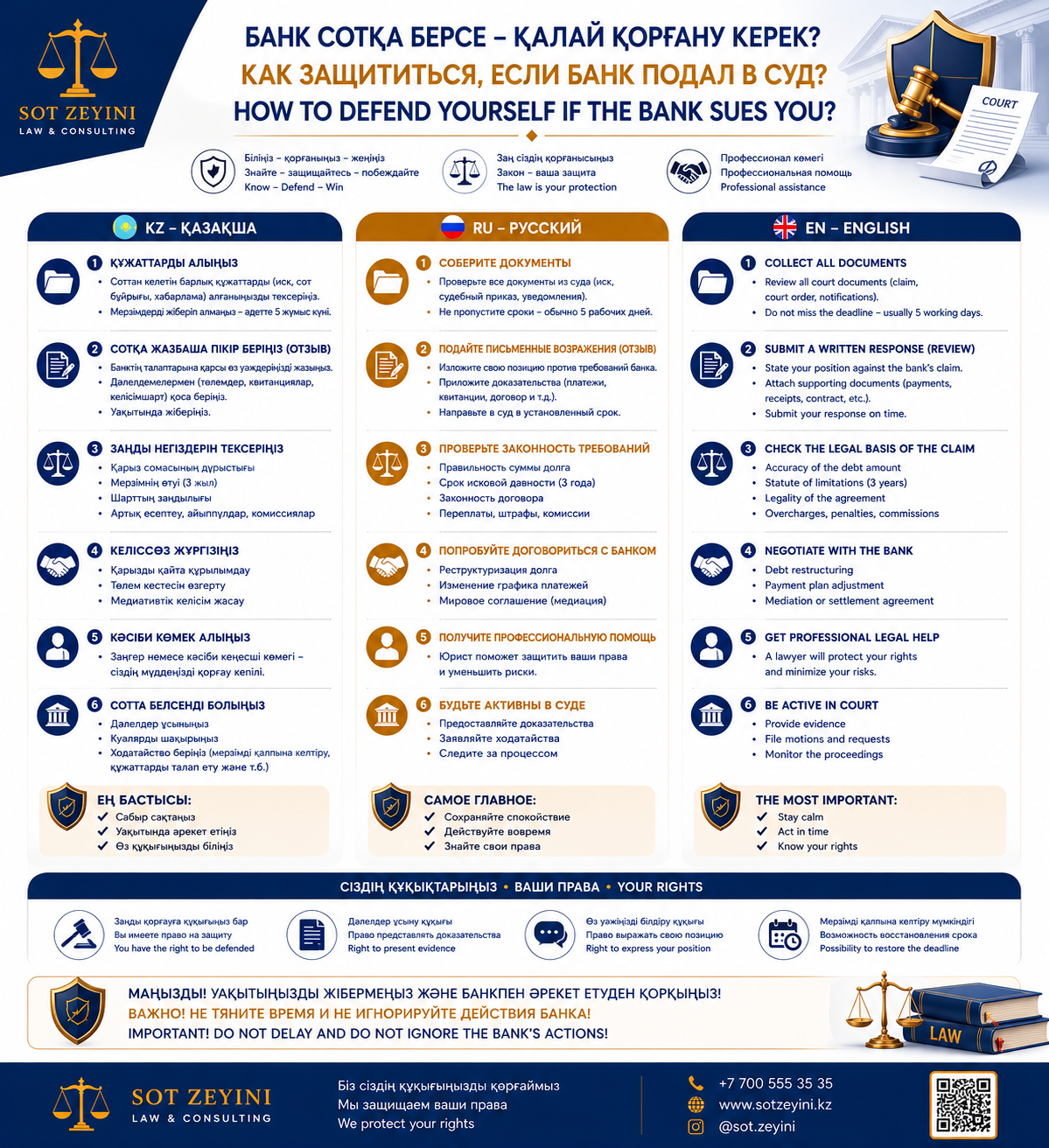
How to Defend Yourself if a Bank Files a Lawsuit?
If a bank files a lawsuit over a loan, you should not ignore the court documents. You need to review the claim, check the debt calculation, and prepare a written response.
Why does a bank file a lawsuit?
Usually, a bank goes to court if:
- there is a long overdue debt;
- the borrower violated the payment schedule;
- no agreement was reached;
- the pre-trial demand was ignored;
- debt, interest, penalties, and late fees have accumulated.
What should you do after receiving the claim?
You should:
- Check the case number;
- Find out which court is hearing the case;
- Review the claim and attachments;
- Verify the debt calculation;
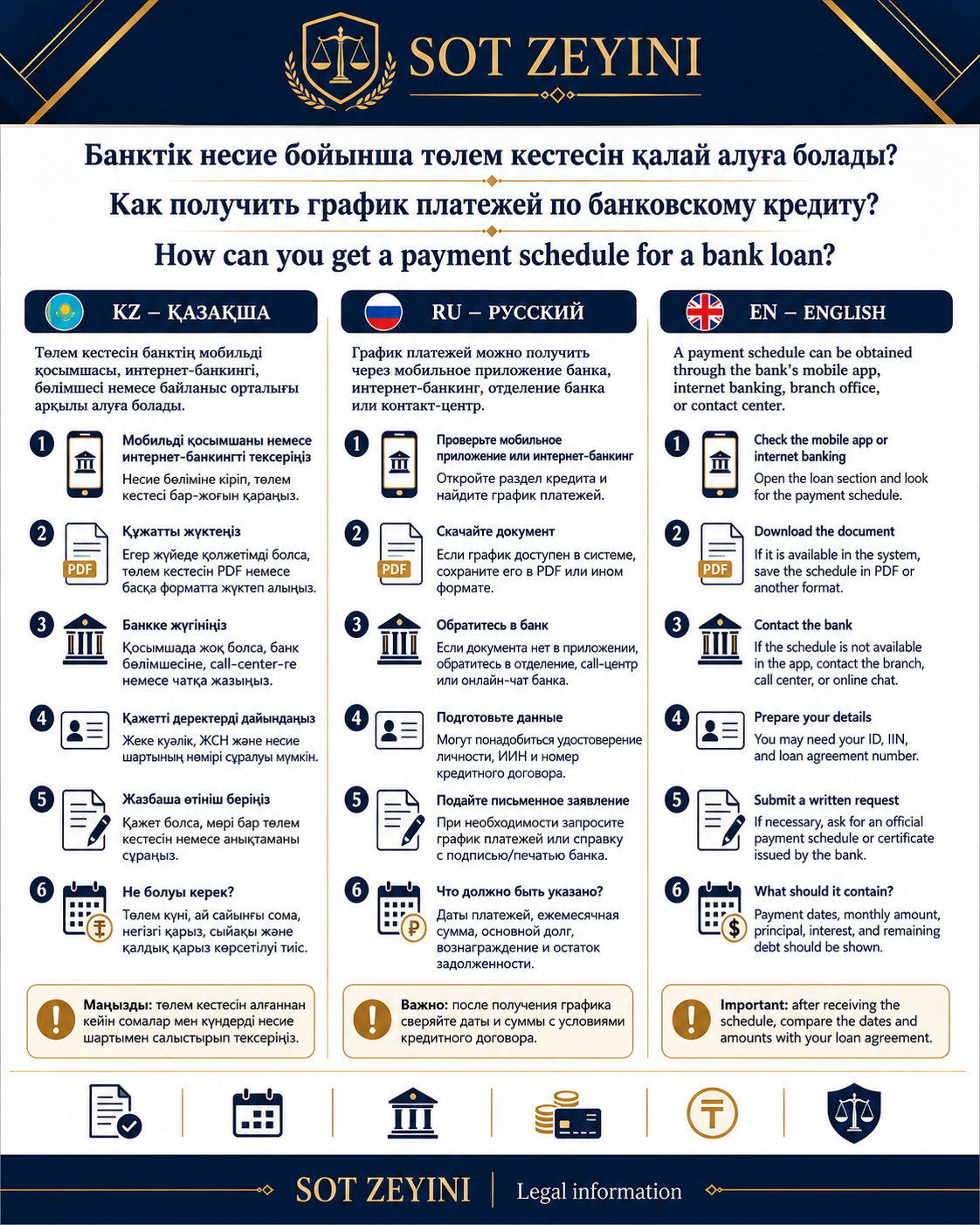
- Compare the calculation with payment history;
- Prepare a response or objection;
- Ask to reduce penalties and late fees;
- Consider mediation or a settlement agreement.
How can you defend yourself?
In court, you may argue that:
- the debt amount was calculated incorrectly;
- penalties and late fees are excessive;
- paid amounts were not included;
- the bank failed to prove part of its claims;
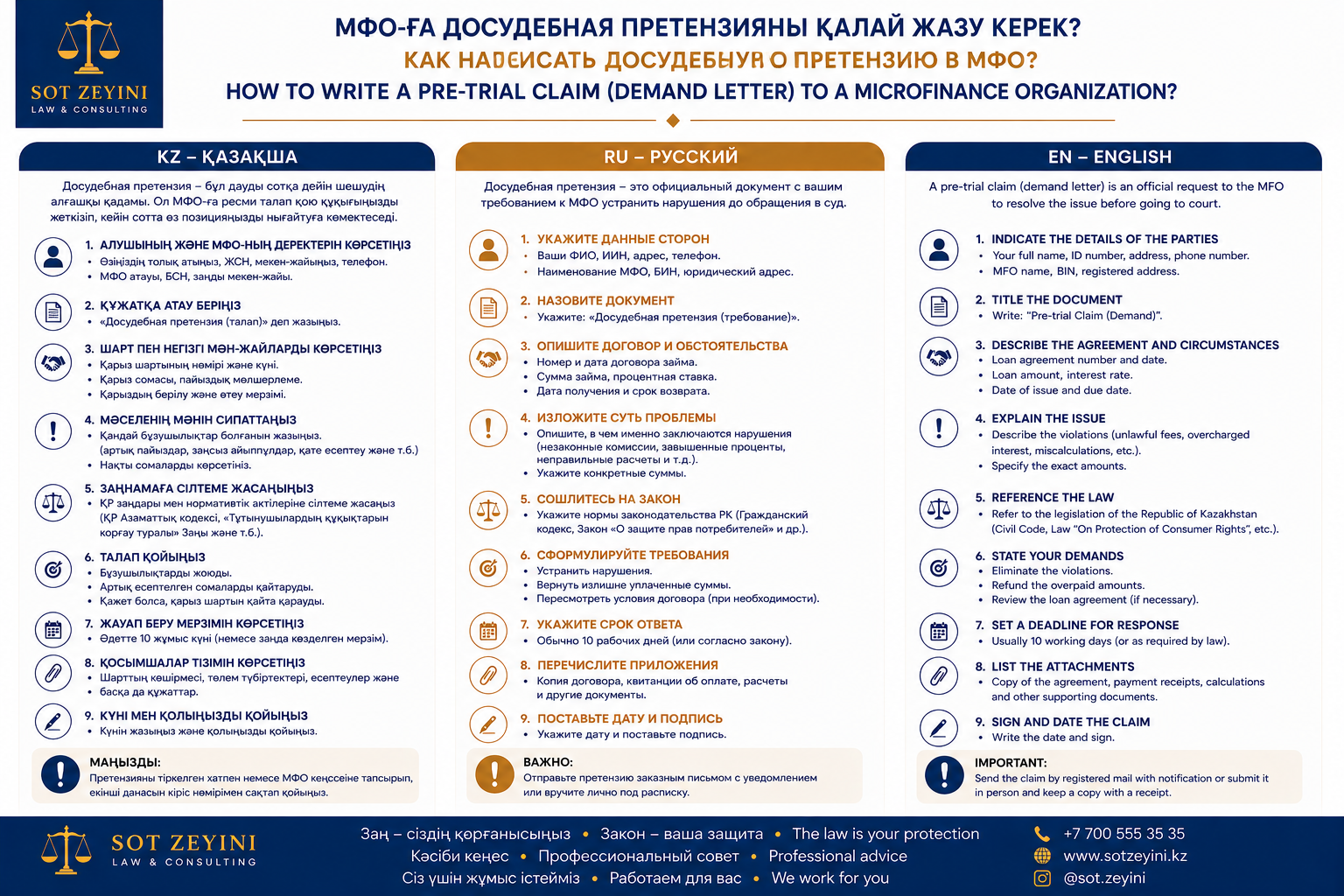
- the pre-trial procedure was violated;
- the limitation period has expired;
- the bank’s documents are incomplete.
Can penalties and late fees be reduced?
Yes. If penalties and late fees are disproportionate to the breach, you may ask the court to reduce them.
Can you negotiate with the bank?
Yes. During court proceedings, you can conclude a settlement or mediation agreement: approve a payment schedule, reduce penalties, or change the repayment procedure.
What happens after the court decision?
If the court satisfies the claim, after the decision enters into force, a writ of execution may be transferred to a bailiff. Then bank accounts may be arrested, salary deductions may begin, and property restrictions may be imposed.
Conclusion
If a bank files a lawsuit, you should actively defend yourself: check the calculation, submit a response, request reduction of penalties, and, if possible, agree on a payment schedule.
FAQ
Should I attend court?
Yes, it is better to participate or submit a written response.
Can the debt amount be reduced?
Yes, if the calculation is incorrect or penalties are excessive.
Can a settlement agreement be concluded?
Yes, at any stage of the court proceedings.
What if the decision has already been issued?
Check the appeal deadline or prepare for the enforcement stage.