 +7 775 858 9294
 WhatsApp
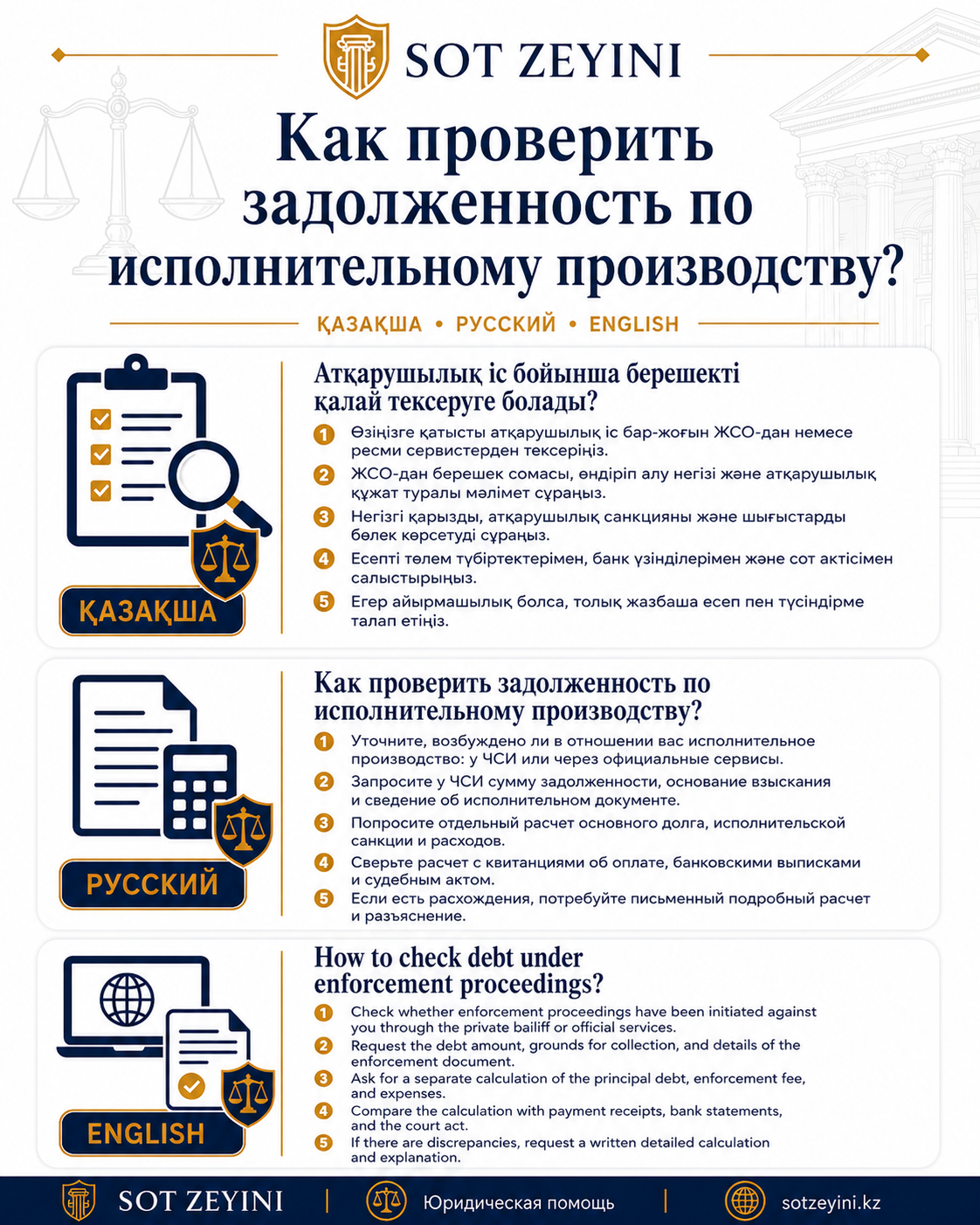
How to Check Debt Under Enforcement Proceedings in Kazakhstan
In Kazakhstan, enforcement proceedings may be initiated based on a court decision, court order, notarial writ of execution, alimony obligation, fine, bank debt, tax debt, or another enforcement document.
If enforcement proceedings are initiated, a private enforcement officer may freeze bank accounts, deduct money from salary, restrict property transactions, or impose a travel ban.
That is why it is important to check enforcement debts on time. Sometimes a person learns about enforcement proceedings only after their bank card has already been frozen.
In simple terms: checking early helps avoid unpleasant surprises.
What are enforcement proceedings?
Enforcement proceedings are the process of compulsory execution of a court act or another enforcement document.
They may be initiated based on:
- court decision;
- court order;
- notarial writ of execution;
- court-approved agreement;
- fine;
- alimony obligation;
- another enforcement document.
After enforcement proceedings are opened, the enforcement officer may apply recovery measures against the debtor.
Where can enforcement debt be checked?
Debt may be checked through:
- eGov;
- eGov Mobile;
- debtor registry;
- automated enforcement information systems;
- bank;
- private enforcement officer;
- Judicial Cabinet;
- chamber of private enforcement officers.
The most convenient method is checking online by individual identification number or business identification number.
How to check debt through eGov
Through eGov, it is possible to check information in the debtor registry and whether there is a restriction on leaving Kazakhstan.
To check:
- Go to the eGov portal.
- Find the service for checking the debtor registry or travel ban.
- Enter the individual identification number or business identification number.
- Submit the request.
- Review the result.
The result may show whether there are enforcement proceedings, debtor registry records, or travel restrictions.
How to check through the debtor registry
The debtor registry contains information about debtors under enforcement proceedings.
It may include:
- debtor’s full name;
- identification number;
- enforcement case number;
- date of initiation;
- debt amount;
- creditor;
- enforcement officer;
- enforcement officer’s contact details;
- basis for recovery;
- information about restrictions.
If you find yourself in the debtor registry, write down the enforcement case number and the enforcement officer’s details.
What information should be checked?
When reviewing enforcement information, pay attention to:
- enforcement case number;
- date of initiation;
- debt amount;
- creditor;
- enforcement officer;
- case status;
- restrictions;
- payment details;
- remaining balance.
This information is needed if you plan to contact the enforcement officer, request recalculation, file an application, or submit a complaint.
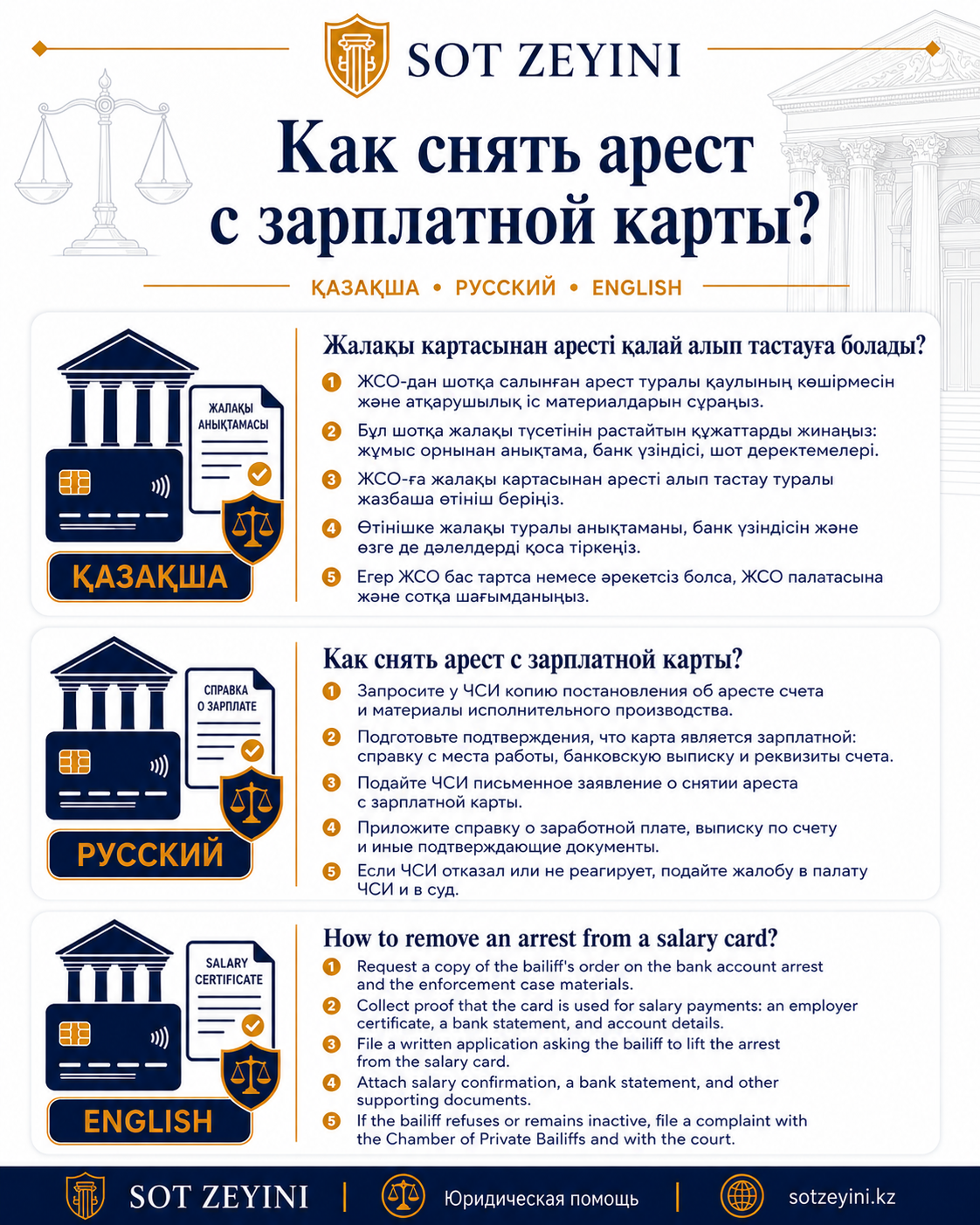
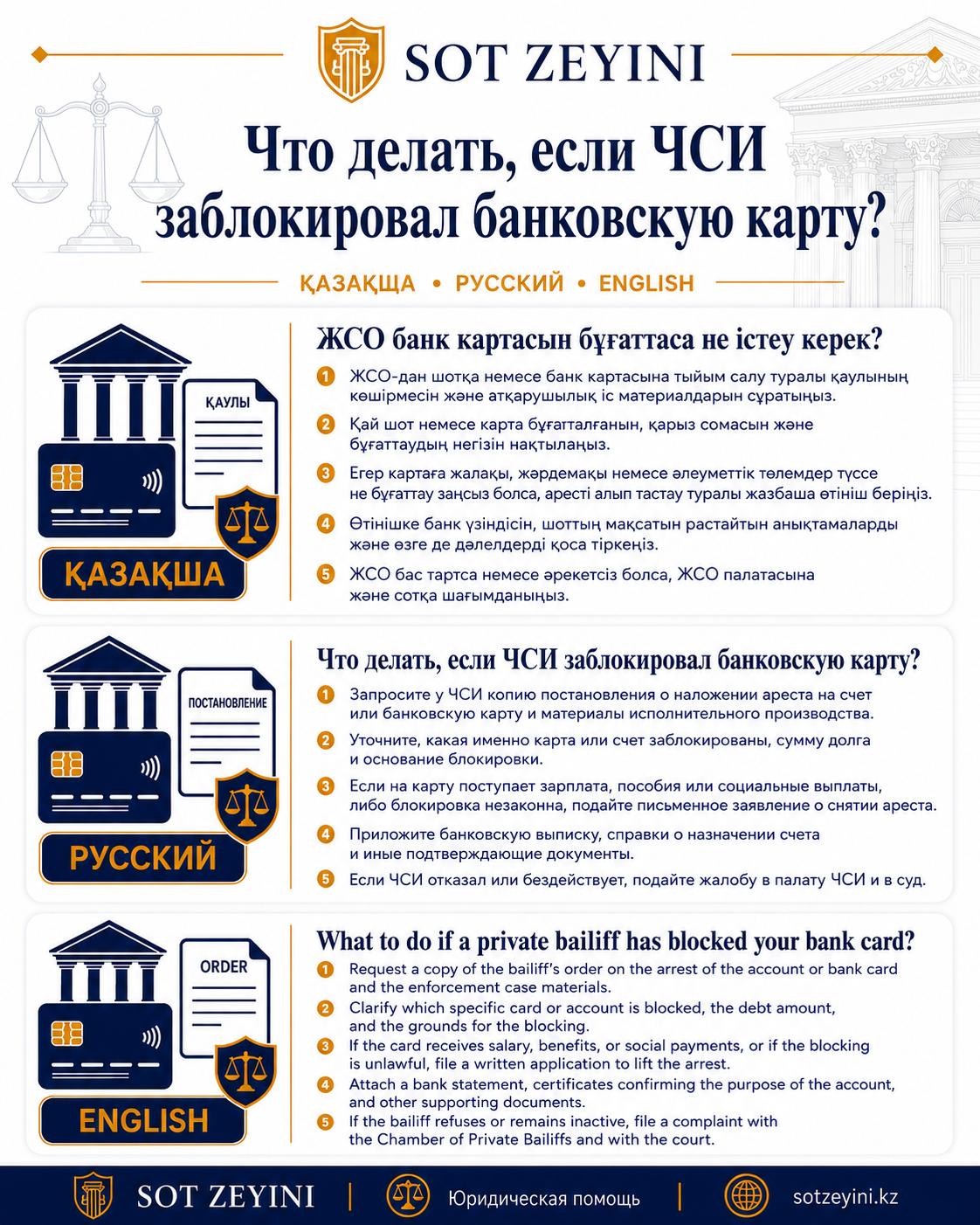
What if your bank card has been frozen?
If your bank card has been frozen, contact the bank and ask who imposed the freeze.
Ask the bank:
- which enforcement officer issued the resolution;
- enforcement case number;
- debt amount;
- date of the resolution;
- which accounts are frozen;
- whether a resolution removing the freeze was received;
- whether information about the creditor is available.
If the freeze was imposed by an enforcement officer, the bank usually cannot remove it on its own. A resolution from the enforcement officer is required.
How to get information from the enforcement officer
If you know the enforcement officer’s contact details, submit a written request for information about the enforcement proceedings.
You may request:
- copy of the resolution initiating enforcement proceedings;
- principal debt amount;
- enforcement expenses;
- enforcement officer’s fees;
- creditor’s details;
- basis for recovery;
- information about freezes and restrictions;
- payment details;
- debt calculation;
- remaining balance.
It is better to submit requests in writing. Verbal conversations are difficult to prove later.
Why can the debt amount increase?
Sometimes a person remembers one debt amount, but the enforcement case shows a larger amount. This may happen because additional amounts are added to the principal debt.
The total debt may include:
- principal debt;
- state duty;
- court expenses;
- legal fees;
- enforcement sanction;
- enforcement expenses;
- enforcement officer’s fee;
- penalty;
- alimony arrears.
If the amount seems incorrect, request a detailed calculation from the enforcement officer.
How to check whether the debt calculation is correct
To check the calculation, request a detailed breakdown from the enforcement officer.
The calculation should show:
- principal debt;
- amounts already paid;
- remaining balance;
- enforcement expenses;
- enforcement officer’s fee;
- dates of payments received;
- basis for charges;
- total amount.
If you disagree with the calculation, you may submit an application for recalculation.
What if the debt is paid but still appears in the database?
Sometimes the debtor pays the debt, but the debtor registry still shows the record, bank accounts remain frozen, or the travel ban is not removed.
In this case, submit a written application to the enforcement officer.
In the application, request:
- recognition that the debt has been paid;
- completion of enforcement proceedings;
- removal from the debtor registry;
- removal of bank account freezes;
- removal of travel restrictions, if any;
- sending relevant resolutions to banks and authorities;
- copies of the resolutions.
Paying the debt is not always enough. You must make sure the enforcement case is properly closed.
How to check a travel ban
A travel ban may be checked through eGov or the debtor registry.
To check:
- enter the identification number;
- check whether a restriction exists;
- review the enforcement case details;
- identify the enforcement officer.
If there is a travel ban, it may be removed after payment of the debt or if there are legal grounds for cancellation. Submit an application to the enforcement officer.
How to check alimony debt
Alimony debt may be calculated separately and depends on the court act, debtor’s income, period of non-payment, and payments made.
You may request from the enforcement officer:
- total alimony debt;
- monthly calculation;
- payments received;
- remaining debt;
- basis of calculation;
- salary-related data;
- explanation why certain payments were not counted.
If the calculation is incorrect, submit an application for recalculation of alimony debt.
How to check debt under a court order or notarial writ
Sometimes enforcement proceedings are initiated not based on a court judgment but on a court order or notarial writ of execution.
In this case, you should:
- request a copy of the court order;
- request a copy of the notarial writ;
- identify the creditor;
- check the debt amount;
- check deadlines for cancellation or appeal;
- assess whether there are grounds to cancel the document.
If the court order or notarial writ is cancelled, submit an application to the enforcement officer to terminate or complete the proceedings and remove all freezes.
What information should be saved?
When checking debt, save:
- enforcement case number;
- enforcement officer’s full name;
- officer’s phone number;
- office address;
- debt amount;
- creditor;
- type of enforcement document;
- date of initiation;
- information about freezes;
- information about travel ban;
- payment details;
- amounts already paid;
- remaining balance.
This information is needed for applications, complaints, recalculation, and removal of freezes.
How to pay the debt correctly
If you decide to pay the debt, do it correctly.
Recommended steps:
- obtain official payment details from the enforcement officer;
- use the correct payment purpose;
- save the receipt;
- send the receipt to the enforcement officer;
- request confirmation of payment;
- file an application to complete enforcement proceedings;
- check removal of freezes and restrictions.
If payment is made in cash, obtain an official document or written receipt.
What if the enforcement officer shows the wrong amount?
If you believe the debt amount is incorrect, submit an application for recalculation.
State:
- which amount you disagree with;
- which payments were not counted;
- what documents confirm payment;
- why the calculation is incorrect;
- request a new calculation.
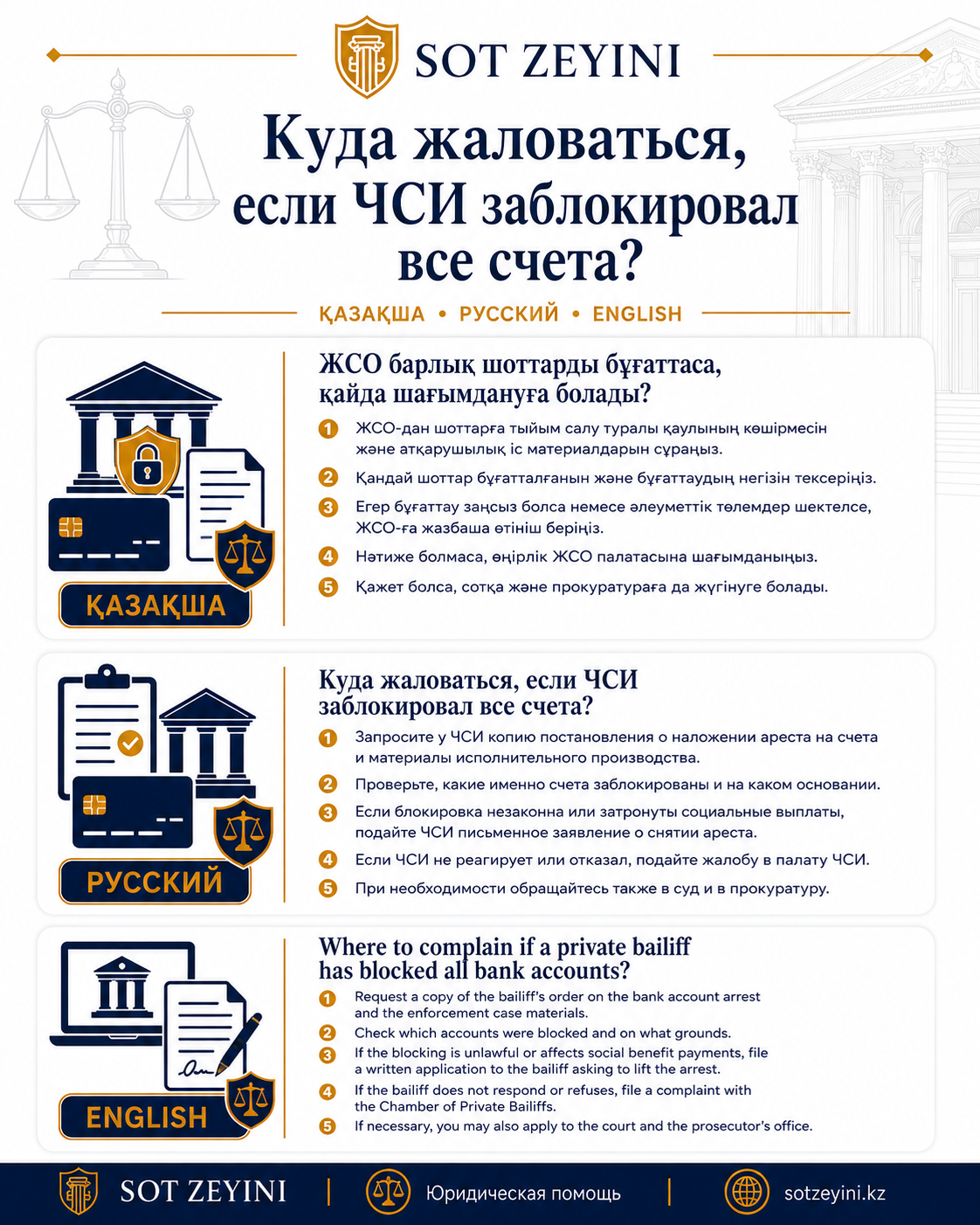
If the enforcement officer does not respond, you may complain to the chamber of private enforcement officers, the department of justice, or the court.
What if there is no enforcement case, but the account is frozen?
If no enforcement case appears in databases but the bank account is frozen, submit a written request to the bank.
Ask the bank:
- legal basis for the freeze;
- number of the resolution;
- body or person that imposed the freeze;
- date when the resolution was received;
- which accounts were frozen;
- whether cancellation of the freeze was received.
Sometimes database information is updated with delay. Also, the freeze may have been imposed by another authority, not by a private enforcement officer.
Common mistakes when checking enforcement debt
Common mistakes include:
- checking only the bank app;
- not identifying the enforcement officer;
- not writing down the enforcement case number;
- not requesting debt calculation;
- paying the debt but not closing the enforcement case;
- not checking removal of freezes;
- not checking the travel ban;
- not keeping receipts;
- making only verbal requests;
- not complaining about incorrect calculations.
These mistakes may lead to a situation where the debt is already paid, but restrictions still remain.
Legal assistance
SOT ZEYINI law company helps check enforcement debts and deal with enforcement officers in Kazakhstan.
We can help with:
- checking enforcement proceedings;
- finding enforcement officer details;
- requesting debt calculation;
- checking whether the calculation is correct;
- preparing an application for recalculation;
- preparing an application to remove freezes;
- preparing an application to complete enforcement proceedings;
- removing travel restrictions;
- preparing complaints about actions or inaction of the enforcement officer;
- contacting the department of justice or court.
If you do not know how much you owe under enforcement proceedings or disagree with the enforcement officer’s calculation, contact us via WhatsApp. A lawyer will review the case and explain the next steps.
FAQ
How can enforcement debt be checked?
It can be checked through eGov, eGov Mobile, debtor registry, automated enforcement systems, bank, or directly through the enforcement officer.
Can debt be checked by identification number?
Yes. Many records can be checked by individual identification number through eGov or the debtor registry.
What should I do if my card is frozen?
Ask the bank which enforcement officer imposed the freeze, then contact the officer and request enforcement case information.
Why does the debt still appear after payment?
The enforcement officer may not have completed the proceedings or sent resolutions to the bank and registry. Submit a written application.
What if the debt amount is wrong?
Submit an application for recalculation and attach supporting payment documents.
How can I check a travel ban?
A travel ban can be checked through eGov or the debtor registry by identification number.
Where should the debt be paid?
Payment should be made using official details provided by the enforcement officer. Keep the receipt.
What if there is no enforcement case but the account is frozen?
Request information from the bank about the basis of the freeze and the authority or person who imposed it.
Conclusion
Enforcement debt in Kazakhstan can be checked through eGov, debtor registry, automated enforcement systems, bank, or directly through the enforcement officer. It is important to identify the enforcement case number, debt amount, creditor, enforcement officer, and restrictions.
If the debt has been paid, keep the receipt and make sure the enforcement proceedings are completed, freezes are removed, and debtor registry records are updated.
The key rule is simple: check not only the debt, but also whether the enforcement case has been fully closed.