 +7 775 858 9294
 WhatsApp
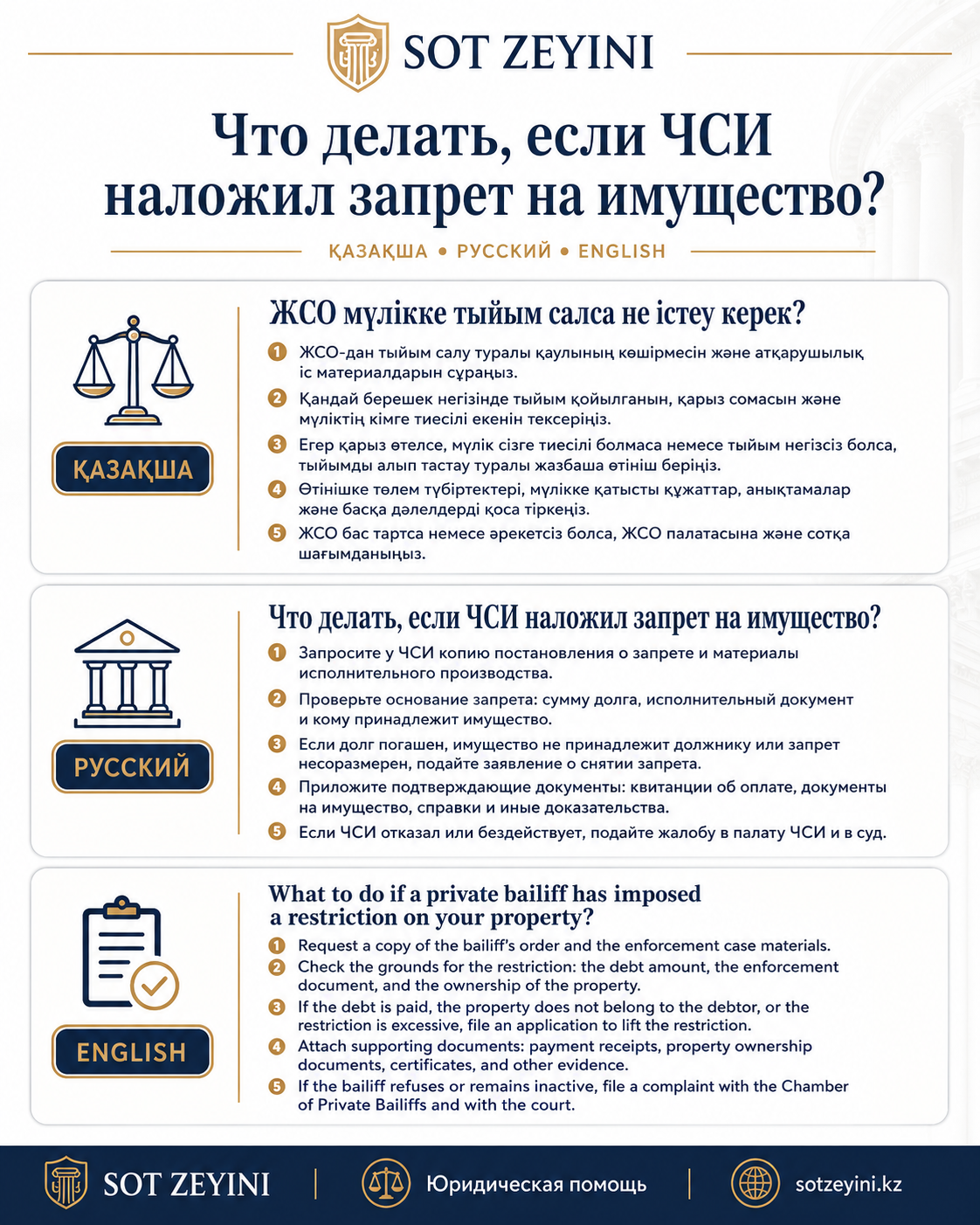
What to Do if a Private Bailiff Imposes a Restriction on Property?
If a private bailiff imposes a restriction on property, it means the property cannot be sold, gifted, pledged, or re-registered until the restriction is removed.
Why does a bailiff impose a restriction on property?
Common reasons include:
- debt under a court decision;
- unpaid alimony;
- unpaid fines;
- debt to a bank or microfinance organization;
- tax debt;
- failure to comply with an enforcement document.
What property can be restricted?
A restriction may be imposed on:
- real estate;
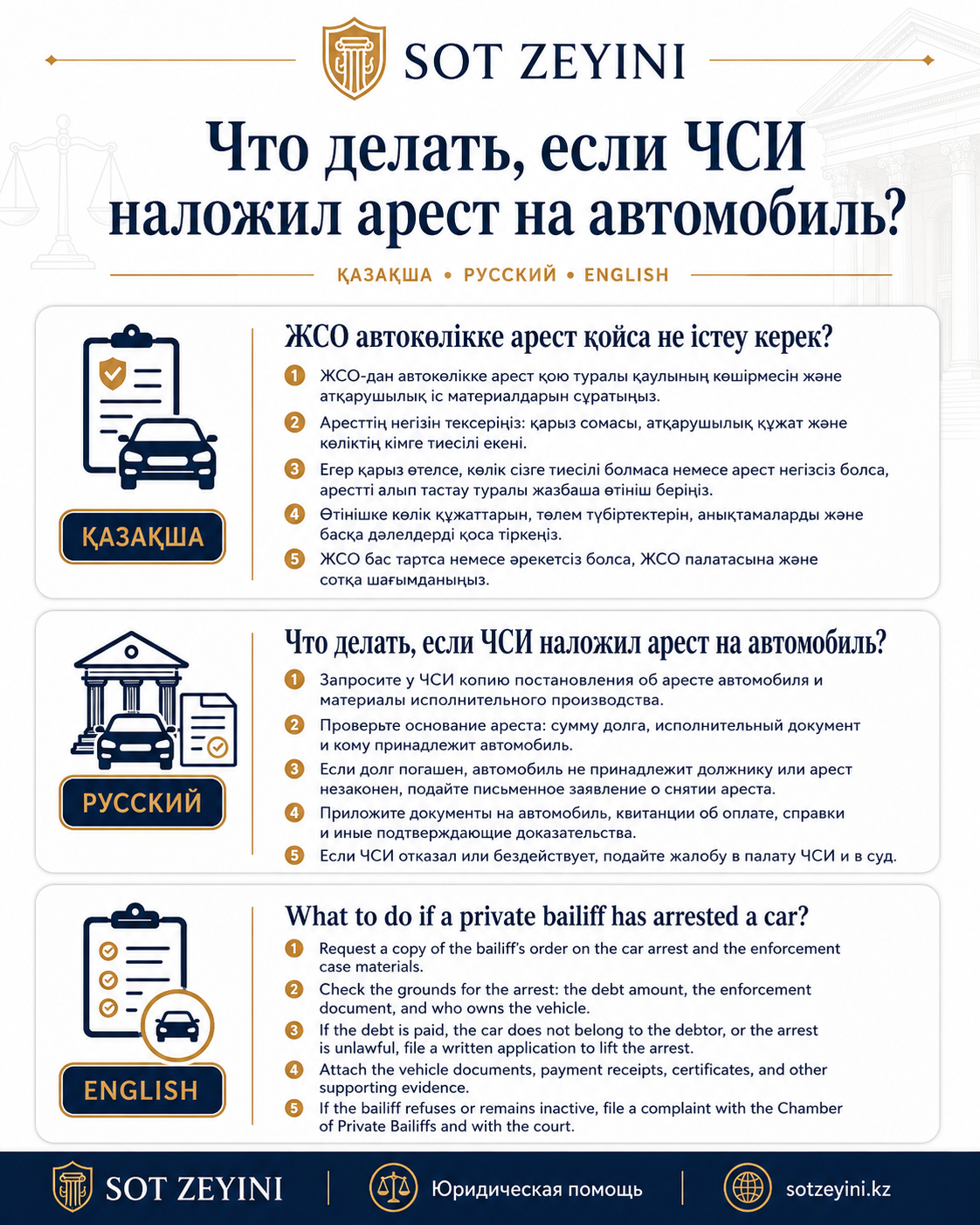
- a car;
- a land plot;
- bank accounts;
- a share in a company;
- other debtor’s assets.
How to remove a restriction from property?
You should:
- Find out which bailiff imposed the restriction;
- Obtain the enforcement case number;
- Clarify the debt amount;
- Pay the debt or agree on a payment arrangement;
- Submit supporting documents to the bailiff;
- File an application to remove the restriction;
- Obtain the resolution removing the restriction;
- Check whether the restriction has been removed from the database.
Is the restriction removed automatically?
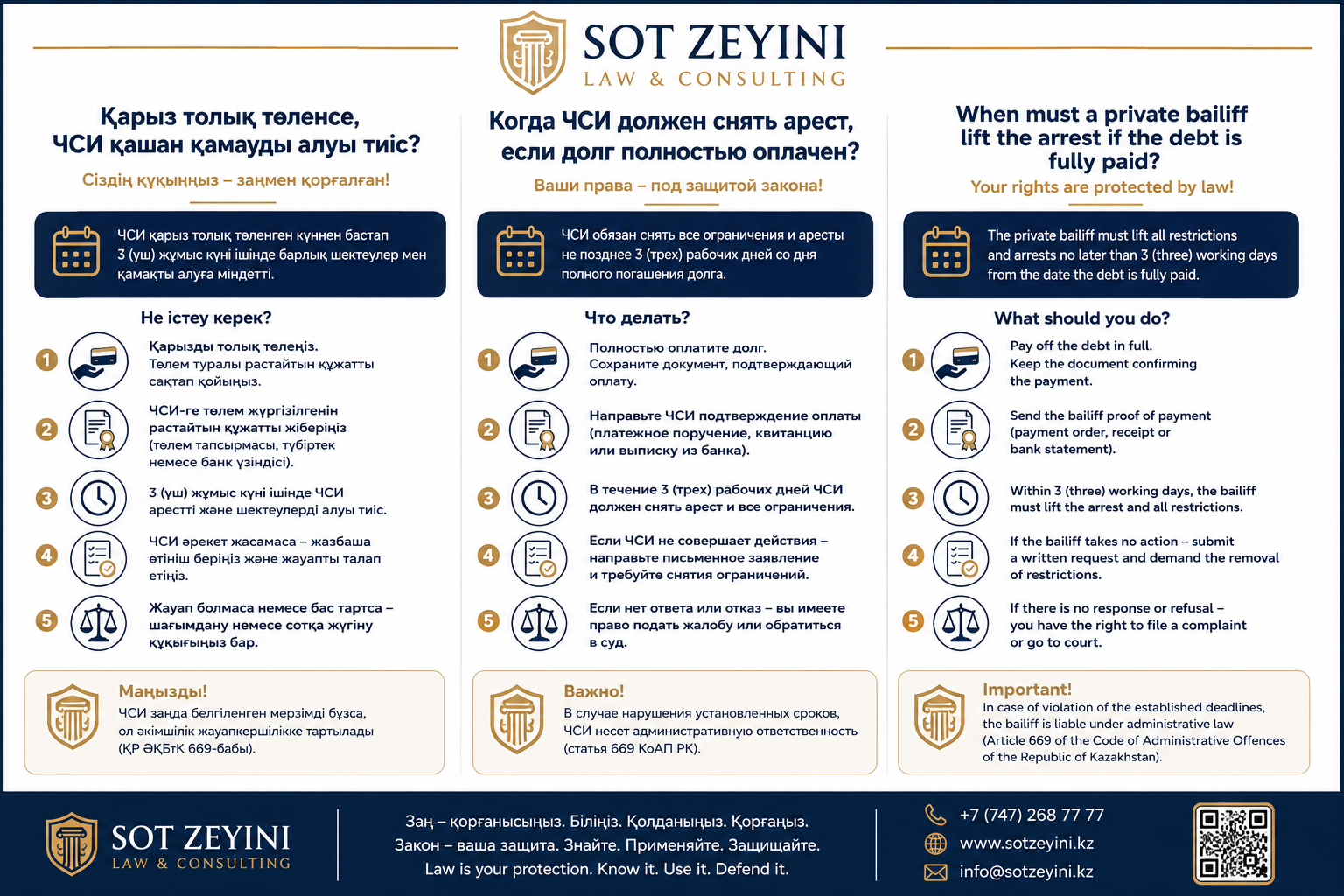
No. After the debt is paid, the bailiff must issue a resolution removing the restriction and send it to the relevant authority. Otherwise, the restriction may remain in the database.
What if the restriction is unlawful?
If the property does not belong to the debtor, the debt has already been paid, or enforcement proceedings have been completed, a written request with evidence should be submitted to the bailiff.
If there is no response, a complaint may be filed with the Department of Justice or the court.
Can the bailiff sell the property?
Yes. If the debt is not paid, the bailiff may assess the property and transfer it for compulsory sale.
Conclusion
To remove a property restriction, you need to repay the debt or prove that the restriction is unlawful, and then obtain the bailiff’s resolution removing the restriction.
FAQ
Can property be sold while restricted?
No. Re-registration is impossible until the restriction is removed.
Is the restriction removed immediately after payment?
No. A bailiff’s resolution is required.
Can the bailiff sell the property?
Yes, if the debt is not repaid.
What if the property belongs to another person?
The owner may request removal of the restriction and confirm ownership with documents.
Where can I complain about the bailiff?
You can complain to the Department of Justice or to the court.