 +7 775 858 9294
 WhatsApp
Can Child Support Debt Be Forgiven in Kazakhstan?
Can child support debt be forgiven in Kazakhstan? This issue is not simple. Child support is not an ordinary debt between adults. If the debt relates to a minor child, child support is considered the child’s legal right to maintenance. Therefore, a parent cannot simply forgive the debt if it harms the child’s interests.
In some cases, child support debt may be reduced or the debtor may be released from paying it, but this requires legal grounds and proper procedure.
What is child support debt?
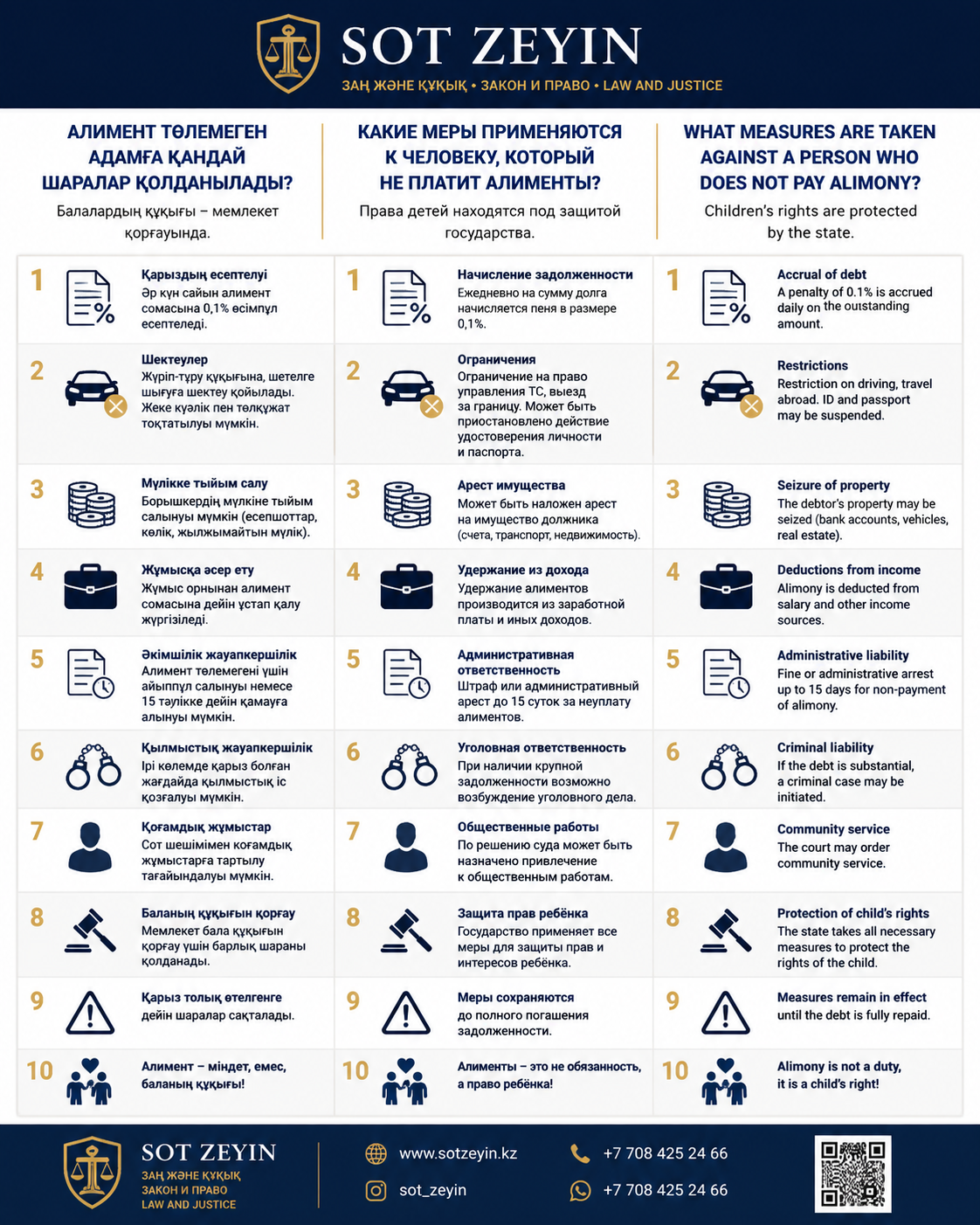
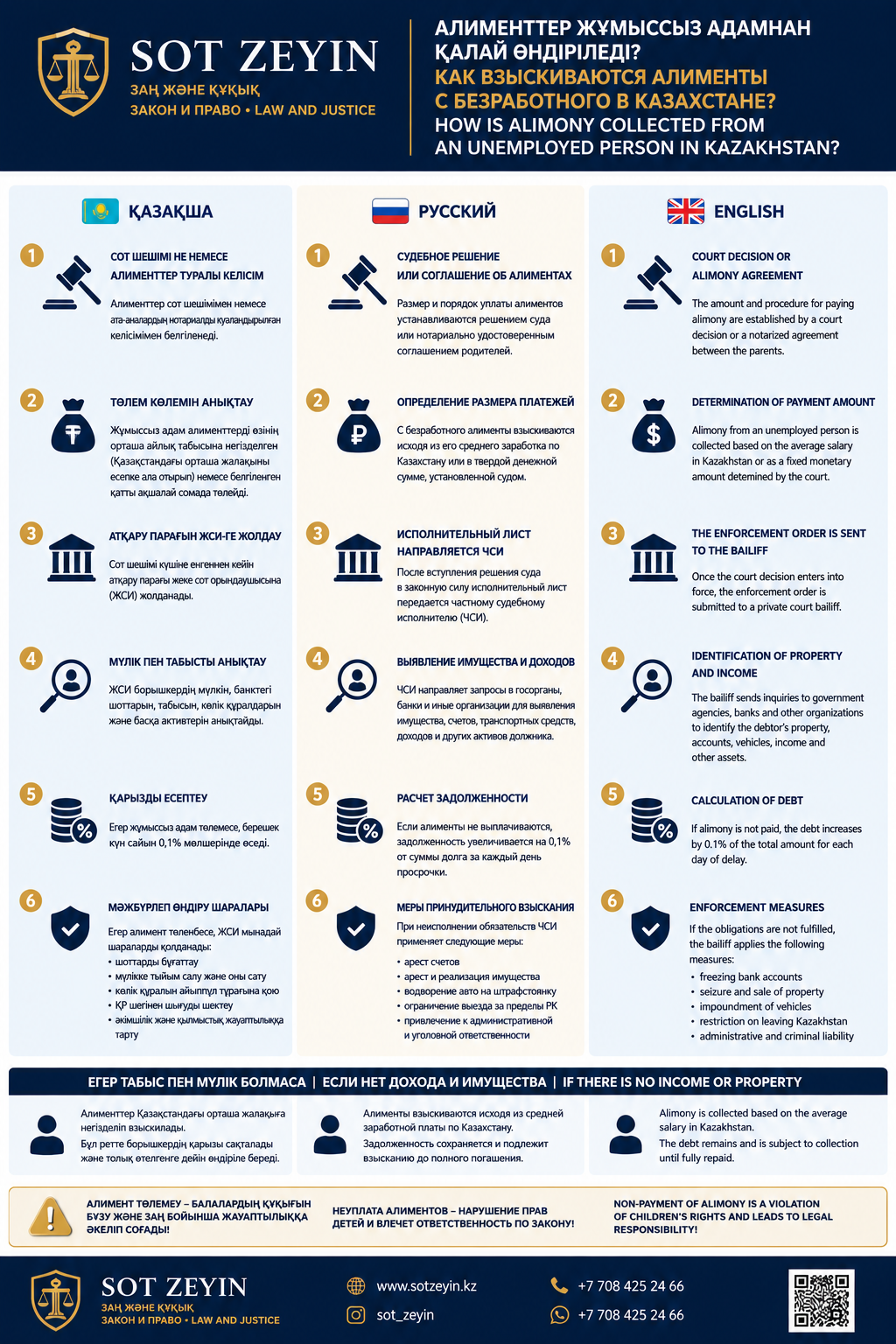
Child support debt is the amount that a parent was legally required to pay for the child’s maintenance but failed to pay on time.
The debt may arise under:
- a court order;
- a court judgment;
- an enforcement writ;
- a notarized agreement;
- a court-approved mediation agreement;
- another enforcement document.
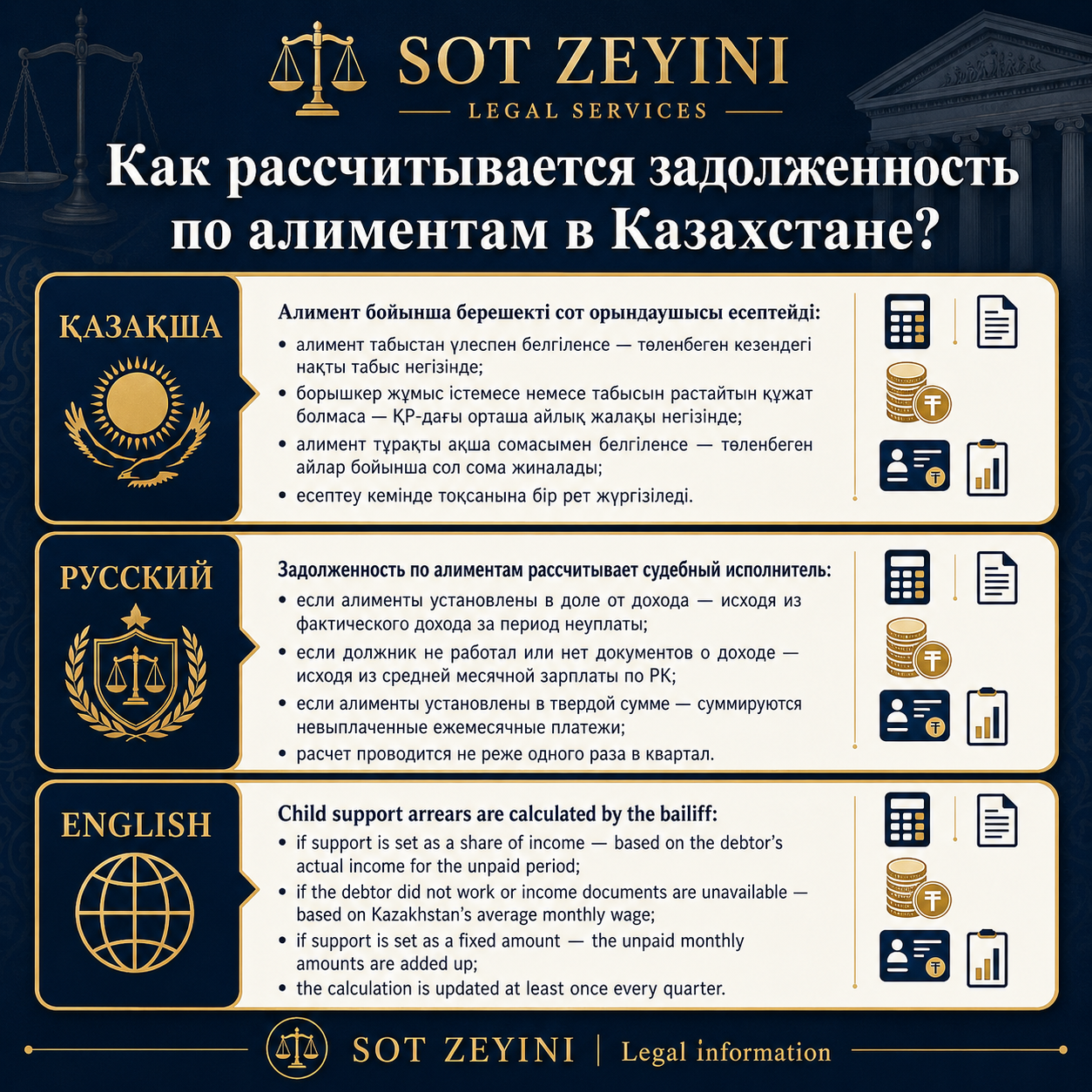
For example, if the debtor must pay 100,000 KZT per month but does not pay for five months, the basic debt may be 500,000 KZT. If partial payments were made, they should be deducted from the debt.
Can parents simply agree to forgive the debt?
If child support is owed for a minor child, simply agreeing to forgive the debt may be risky. Even if the receiving parent says, “I will not claim this debt,” such refusal may be disputed if it worsens the child’s position.
Child support belongs to the child, not to the parent. The parent who lives with the child receives the money for the child’s needs, but cannot freely waive the child’s rights.
Therefore, any agreement about child support debt should be prepared carefully and legally.
Can child support debt be forgiven by agreement?
In general, parties may agree to reduce or release debt when child support is paid under an agreement. However, there is a special limitation for child support owed to minor children: the child’s position must not be worsened.
If the child is a minor, full forgiveness of debt may be considered contrary to the child’s interests. In such cases, it is usually safer to agree on a repayment schedule or apply to court.
Can the court release the debtor from child support debt?
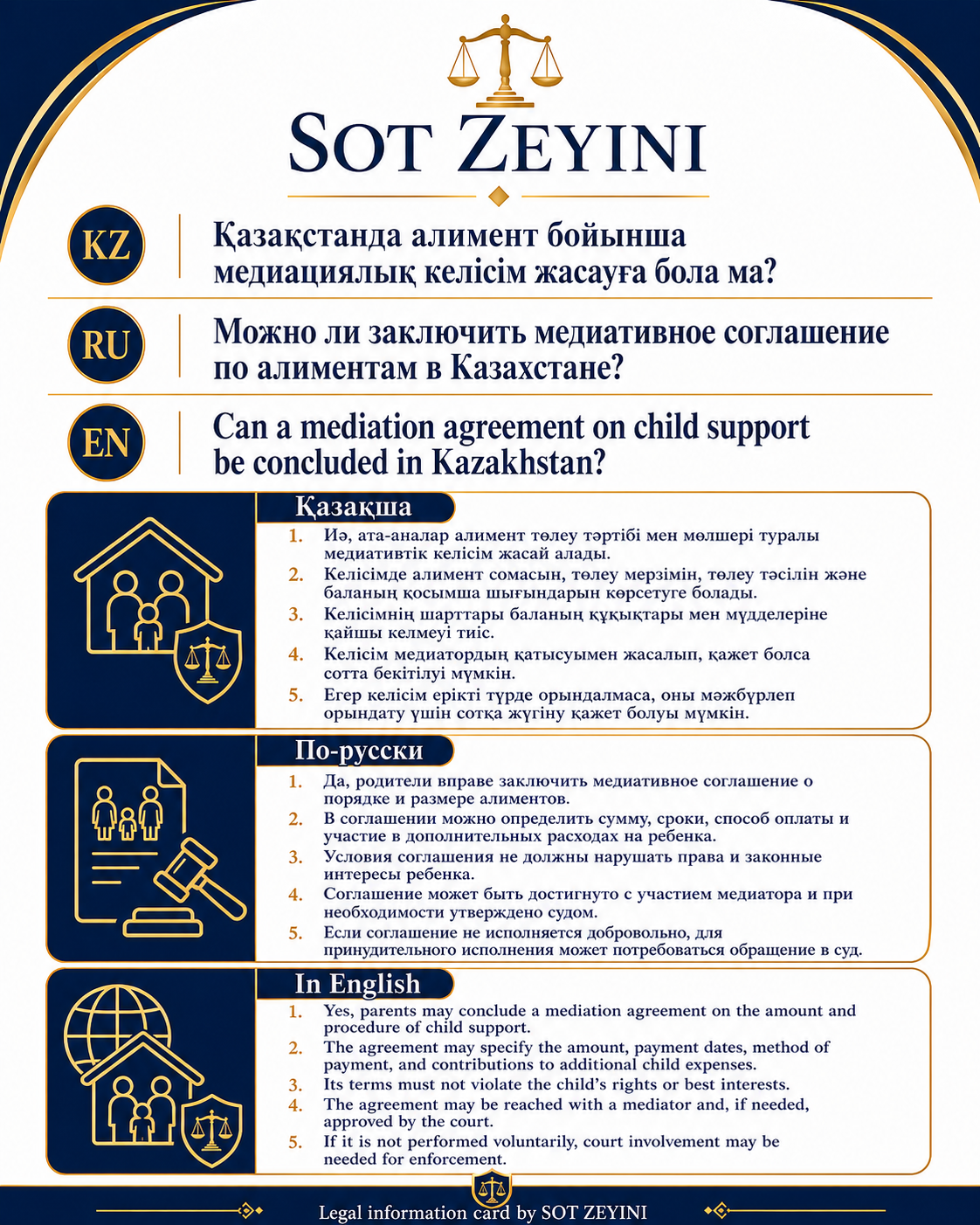
Yes. The court may fully or partially release the debtor from child support debt, but only if there are valid reasons.
The court may consider:
- serious illness of the debtor;
- long-term medical treatment;
- loss of ability to work;
- disability;
- difficult financial situation;
- family situation of the debtor;
- other dependents;
- objective inability to repay the debt;
- the child’s interests;
- the debtor’s behavior;
- whether the debtor tried to make payments.
It is not enough to say “I have no money.” The debtor must prove why the debt could not be paid and why full recovery would be impossible or unfair.
When can the debt be reduced?
In practice, courts more often consider reducing the debt rather than fully forgiving it.
Possible grounds may include:
- serious illness;
- inability to work for valid reasons;
- confirmed medical expenses;
- overstated debt calculation;
- payments not included in the calculation;
- the debtor paid in fact but lacks some documents;
- the debt was calculated based on the average salary despite actual income;
- significant changes in family circumstances;
- impossibility of paying the whole debt at once.
However, the court will always consider whether the child’s interests are protected.
Forgiveness vs recalculation: what is the difference?
These are different things.
Debt forgiveness means releasing the debtor from the obligation to pay all or part of the debt.
Debt recalculation means correcting the debt amount if it was calculated incorrectly.
For example, if the enforcement officer did not include bank transfers, receipts or written acknowledgments, the debtor should request recalculation rather than forgiveness. Sometimes recalculation significantly reduces the debt.
Can an enforcement officer forgive child support debt?
No. A private or state enforcement officer cannot independently forgive child support debt.
The enforcement officer may:
- calculate the debt;
- recalculate the debt;
- include confirmed payments;
- issue a debt calculation order;
- apply enforcement measures;
- remove restrictions after payment.
But the enforcement officer cannot simply cancel the debt at their discretion. Release from debt is handled by the court or through the procedure provided by law.
Can a repayment schedule be made?
Yes. This is often the most practical solution. If the debtor cannot pay the whole amount immediately, the parties may agree on a repayment schedule.
The schedule should state:
- total debt amount;
- monthly repayment amount;
- payment date;
- deadline for full repayment;
- current child support separately from old debt;
- bank details;
- consequences of late payment.
Important: repayment of old debt should not cancel current child support. The child must continue receiving current support, while old debt is repaid separately.
Does the debt disappear when the child turns 18?
No. If child support debt arose before the child turned 18, it does not automatically disappear. The obligation to pay current child support may stop after adulthood, but accumulated debt remains collectible.
The debtor should not assume that the debt will vanish when the child reaches 18.
Can penalties or late-payment charges be forgiven?
If the receiving parent separately claims penalties for late payment, that issue may be handled separately from the principal debt.
The principal child support debt and penalties are different claims. In some cases, parties may discuss waiver or reduction of penalties, but the main child support debt cannot simply be ignored.
What documents are needed?
For court, the following documents may be needed:
- court order or judgment;
- enforcement writ;
- order opening enforcement proceedings;
- debt calculation from the enforcement officer;
- income documents;
- medical certificates;
- medical reports;
- disability documents;
- family composition documents;
- birth certificates of other children;
- expense documents;
- receipts and bank transfers;
- written acknowledgments of payment;
- evidence of partial payment;
- recalculation request if the calculation is wrong.
The stronger the evidence, the higher the chance that the court will review the issue objectively.
What should the debtor do?
If child support debt has accumulated, the debtor should not wait for account freezes and restrictions.
The debtor should:
- request debt calculation from the enforcement officer;
- check whether all payments were included;
- collect proof of payments;
- request recalculation if there is an error;
- propose a repayment schedule if the debt is real;
- continue paying current child support;
- apply to court if there are valid reasons;
- make all payments through a bank.
The worst strategy is to stay silent and do nothing. The debt will grow, and enforcement measures will become stricter.
What should the receiving parent do?
If the debtor asks to forgive the debt, the receiving parent should carefully assess the situation.
Before signing anything, it is important to check:
- whether the debt calculation is correct;
- the child’s interests;
- the child’s real expenses;
- whether the debtor can actually pay;
- whether the debtor hides income;
- whether current child support will continue;
- whether a repayment schedule is better than forgiveness;
- whether the agreement violates the child’s rights.
In most cases, a repayment schedule is safer than full forgiveness of debt.
When can the court refuse to release the debtor?
The court may refuse if:
- valid reasons are not proven;
- the debtor intentionally did not work;
- the debtor hid income;
- the debtor hid property;
- the debtor could pay but did not;
- no attempts were made to repay the debt;
- the child needs support;
- release from debt would harm the child’s interests.
The court evaluates not only the debtor’s words, but also their behavior during the entire debt period.
Conclusion
Child support debt in Kazakhstan cannot always be forgiven. If the debt concerns a minor child, the issue is treated strictly because child support is the child’s right.
In some cases, the court may release the debtor from debt fully or partially if there are valid reasons such as illness, serious financial hardship or objective inability to pay. However, this must be proven with documents.
In many cases, the correct solution is not forgiveness, but recalculation of the debt or a repayment schedule.
FAQ: Forgiveness of Child Support Debt
Can child support debt be forgiven?
Not always. If the debt is owed to a minor child, full forgiveness may violate the child’s rights.
Can the receiving parent waive the debt?
If the debt concerns a child, any waiver must be assessed from the perspective of the child’s interests. An oral waiver is not a reliable solution.
Can the enforcement officer forgive the debt?
No. The enforcement officer cannot forgive debt. They calculate, recalculate and enforce it.
Can the court release the debtor from debt?
Yes. The court may fully or partially release the debtor if there are valid reasons and serious financial or family circumstances.
What reasons may be valid?
Serious illness, disability, long-term treatment, loss of ability to work and other objective circumstances may be considered.
Is unemployment enough to forgive the debt?
Usually not by itself. The court will check why the person was unemployed and whether they tried to pay child support.
Can the debt be recalculated?
Yes. If the calculation is wrong or payments were not included, a recalculation request may be submitted.
Can the debt be paid in installments?
Yes. A repayment schedule may be agreed. Current child support should still be paid separately.
Does the debt disappear when the child turns 18?
No. Debt that arose before the child turned 18 does not automatically disappear.
What is better: forgiveness or repayment schedule?
In most cases, a repayment schedule is safer because it protects the child’s right to support and allows the debtor to pay gradually.