 +7 775 858 9294
 WhatsApp
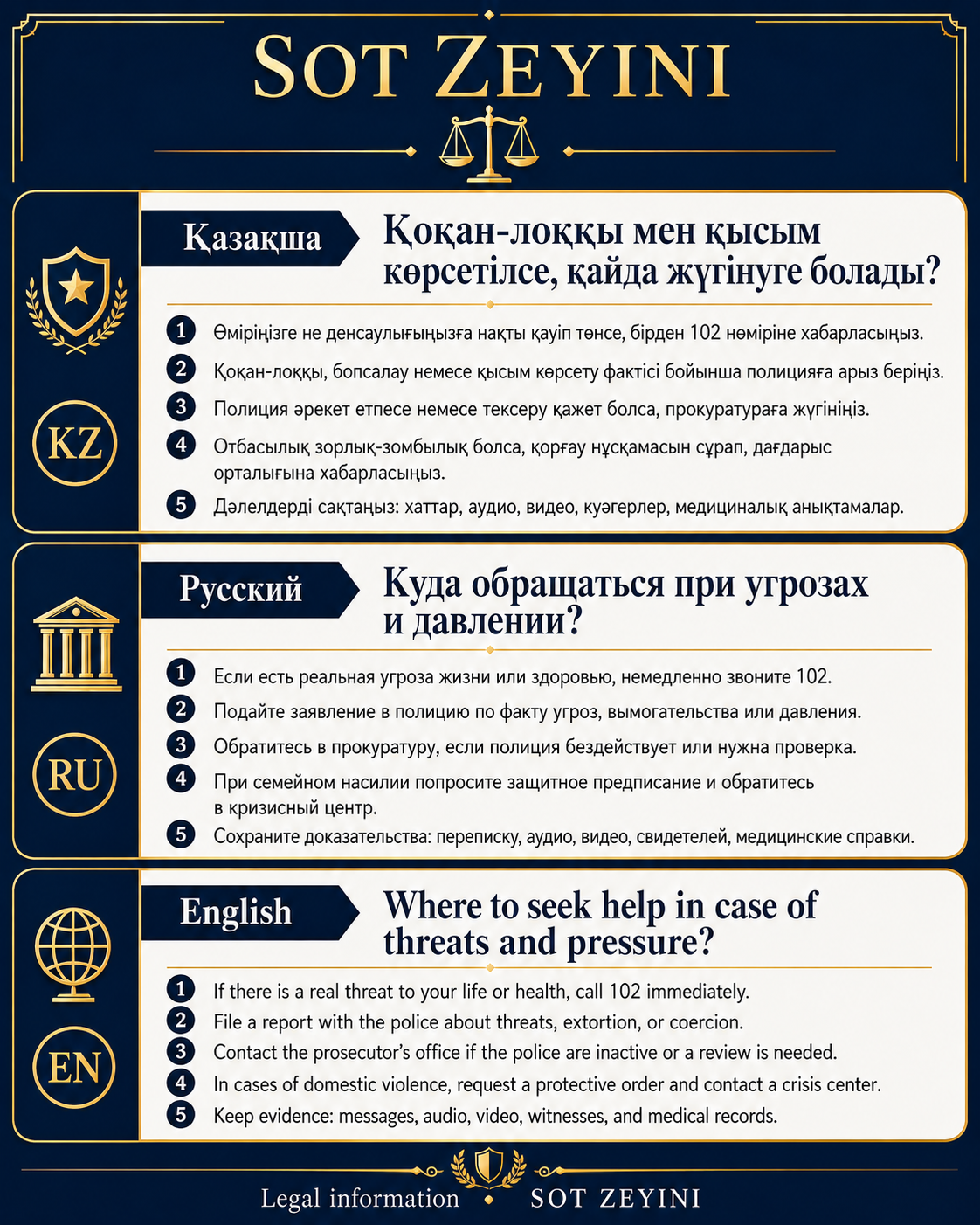
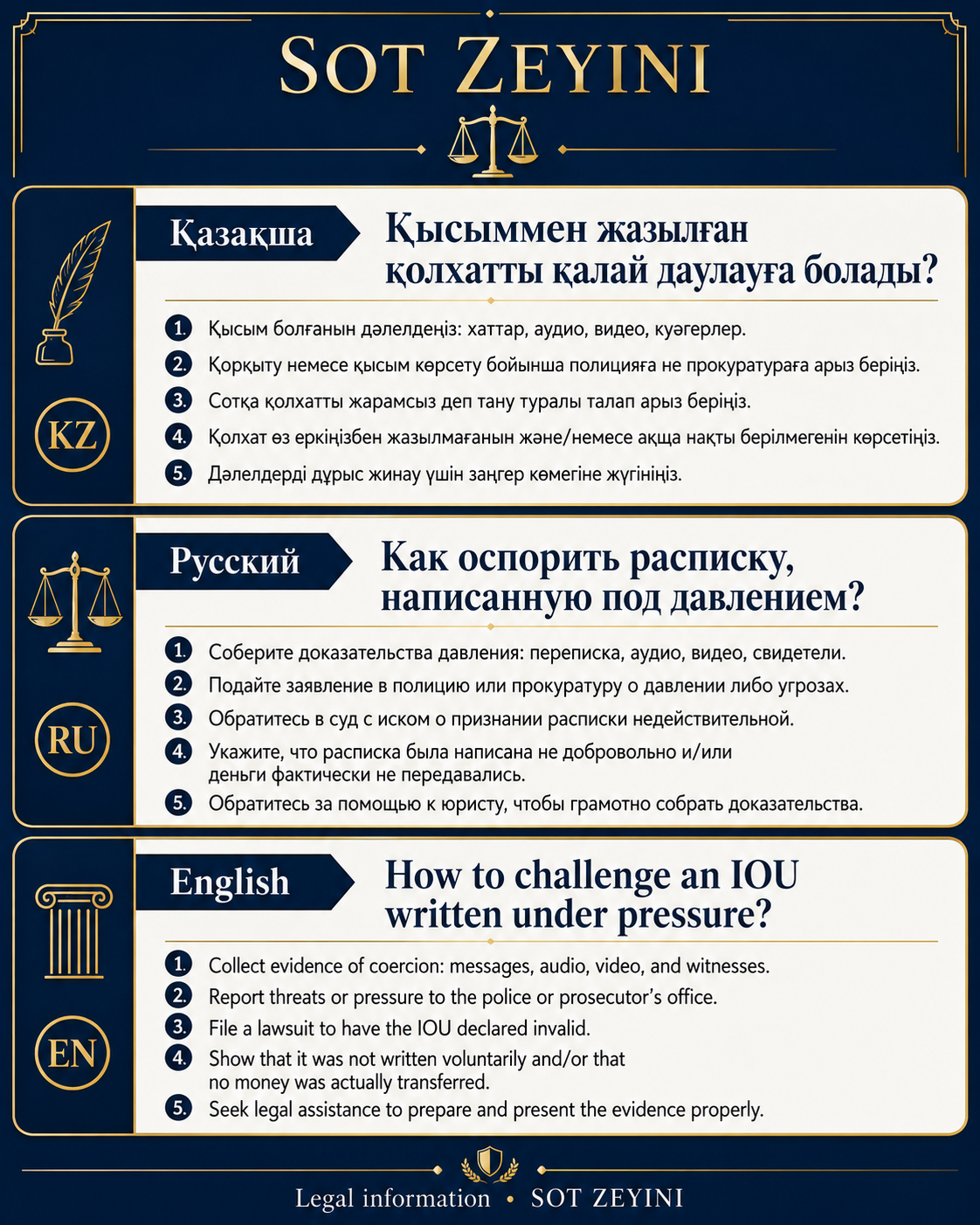
Where Can You Report Threats and Pressure?
What Counts as a Threat or Pressure?
Threats and pressure are actions that create danger to a person’s life, health, property, family, privacy, reputation, or freedom of decision-making.
A threat may be made:
- verbally;
- in writing;
- by phone;
- through WhatsApp;
- through Instagram, Telegram, or Facebook;
- by SMS;
- in person;
- through third parties.
Examples include:
- “I will kill you”;
- “I will hurt you”;
- “I will burn your car or house”;
- “I will publish your private photos”;
- “I will tell everyone your private information”;
- “I will take your children away”;
- “I will destroy your business”;
- “I will file a false complaint against you”;
- “If you do not pay, you will have problems.”
If the person receiving the threat reasonably feels unsafe, the situation should not be ignored.
What Should You Do If the Danger Is Immediate?
If the danger is happening right now, your first priority is safety.
You should:
- move to a safe place;
- call 102 or 112;
- give the exact address;
- identify the person making the threat;
- explain the nature of the threat;
- say whether there is a weapon or dangerous object;
- say whether children or other people are present;
- wait for the police in a safe location.
If someone is standing at your door, following you, trying to enter your home, threatening physical violence, or behaving aggressively, do not wait until the situation escalates.
Where Can You Report Threats?
Threats and pressure may be reported to several authorities.
1. Police
The main authority is the police. A complaint may be filed at the place of residence, the place where the incident occurred, or at the nearest police department.
The complaint should state:
- who made the threat;
- when it happened;
- how the threat was made;
- the exact words used;
- why you believe the threat is real;
- what evidence you have;
- whether there are witnesses.
2. Emergency number 102
If the situation is urgent, call 102. You should clearly state the address, circumstances, identity of the threatening person, and the danger involved.
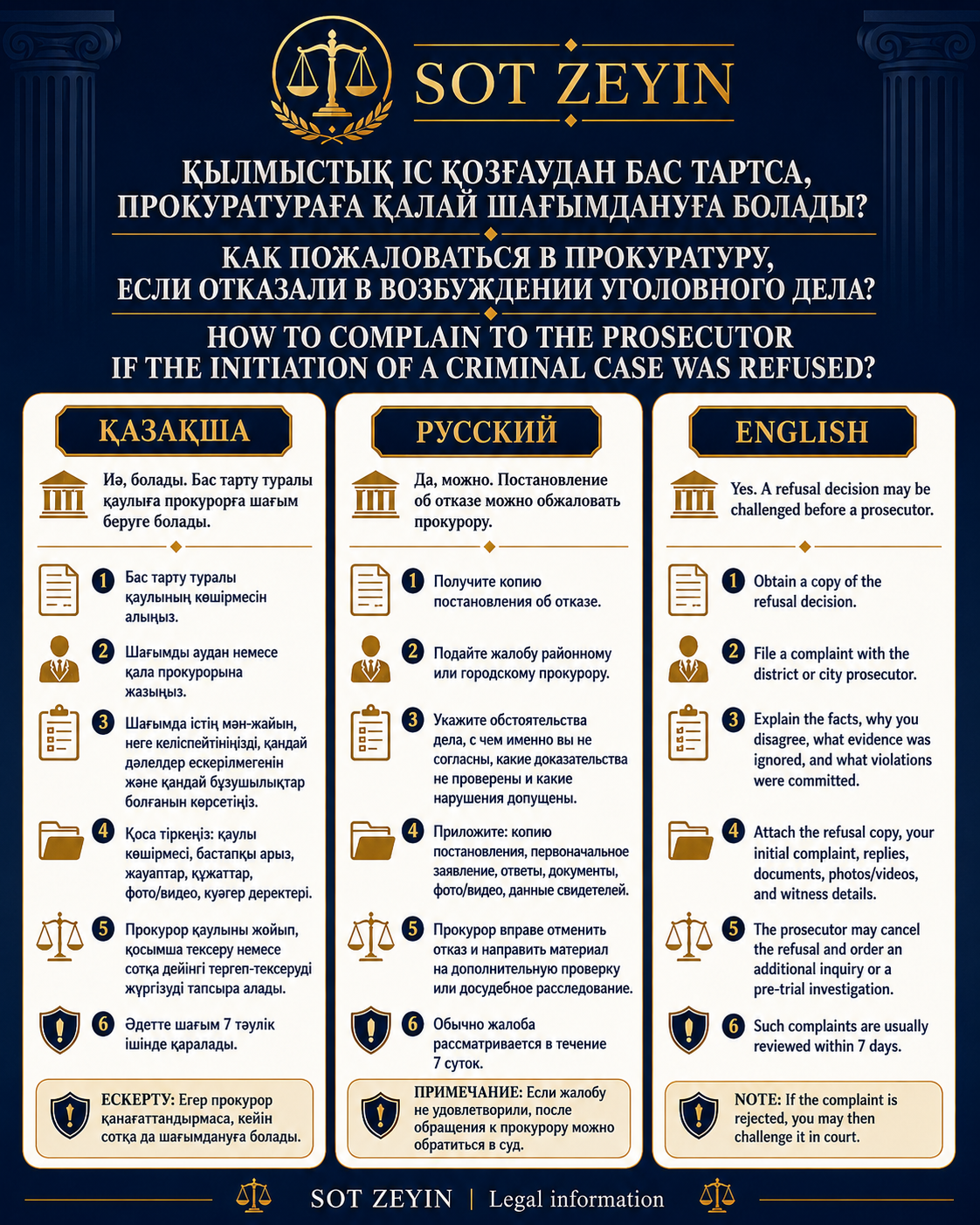
3. Prosecutor’s office
If the police refuse to accept the complaint, fail to register it, or do not respond, a complaint may be filed with the prosecutor’s office.
You may ask the prosecutor to:
- review police inaction;
- require registration of the complaint;
- ensure a proper review;
- require a procedural decision.
4. Investigative court
If the police remain inactive, a complaint may be filed with the investigative court. The court may be asked to recognize police inaction as unlawful and require procedural action.
5. eOtinish
A written complaint may also be submitted through eOtinish. However, if the threat is urgent, call 102 or 112 first and file written documents later.
When Should You File a Police Complaint?
You should file a police complaint if:
- someone threatens to kill you;
- someone threatens to harm your health;
- someone threatens to damage your property;
- someone demands money;
- someone blackmails you with private photos or videos;
- someone follows you;
- someone constantly calls or messages you;
- an ex-spouse or acquaintance harasses you;
- someone threatens your children or relatives;
- pressure is applied at work;
- someone forces you to sign documents or give up your rights.
Even a single serious threat should be recorded officially.
Can a Threat Be a Criminal Offense?
Yes, in certain cases a threat may lead to criminal liability. This is especially relevant when a person threatens to kill, cause serious bodily harm, use serious violence, or destroy property in a dangerous way.
The circumstances matter. If the person has previously used violence, came to your home, followed you, showed a weapon, sent repeated messages, or acted aggressively, the threat may be considered more serious.
What Is Pressure?
Pressure may be physical, psychological, financial, work-related, or social.
Examples include:
- “I will fire you if you complain”;
- “I will file a complaint against you”;
- “I will tell everyone about your private life”;
- “I will not let you see the children”;
- “We will ruin your reputation”;
- “If you do not sign, you will have problems”;
- “We will take your business or clients.”
Depending on the situation, you may apply to the police, prosecutor’s office, labor inspectorate, court, or another competent authority.
What to Do in Case of Extortion
If a person demands money, property, services, or another action under threat, the situation may have signs of extortion.
Examples:
- demanding money for silence;
- threatening to publish private materials;
- forcing someone to sign a contract;
- demanding property transfer;
- threatening harm to you or your family;
- forcing you to withdraw a complaint.
Do not rush to transfer money. Save all evidence and contact the police.
What to Do in Case of Stalking or Harassment
Stalking may involve repeated following, calls, messages, surveillance, attempts to contact, or visits to your home or workplace.
If you are being stalked:
- keep all messages;
- do not delete correspondence;
- take screenshots;
- save call logs;
- record dates and times;
- preserve CCTV footage;
- collect witness details;
- file a police complaint.
If the harassment involves an ex-spouse, relative, or person who lived with you, you may ask the police for protective and preventive measures.
What Evidence Should Be Collected?
Evidence is very important in threat and pressure cases.
You may attach:
- WhatsApp messages;
- SMS;
- Instagram, Telegram, or Facebook messages;
- audio recordings;
- videos;
- call recordings;
- screenshots;
- witness details;
- CCTV footage;
- medical certificates;
- photos of injuries or damage;
- previous complaints;
- bank transfers;
- emails.
Screenshots should show the date, time, phone number, account name, and message content.
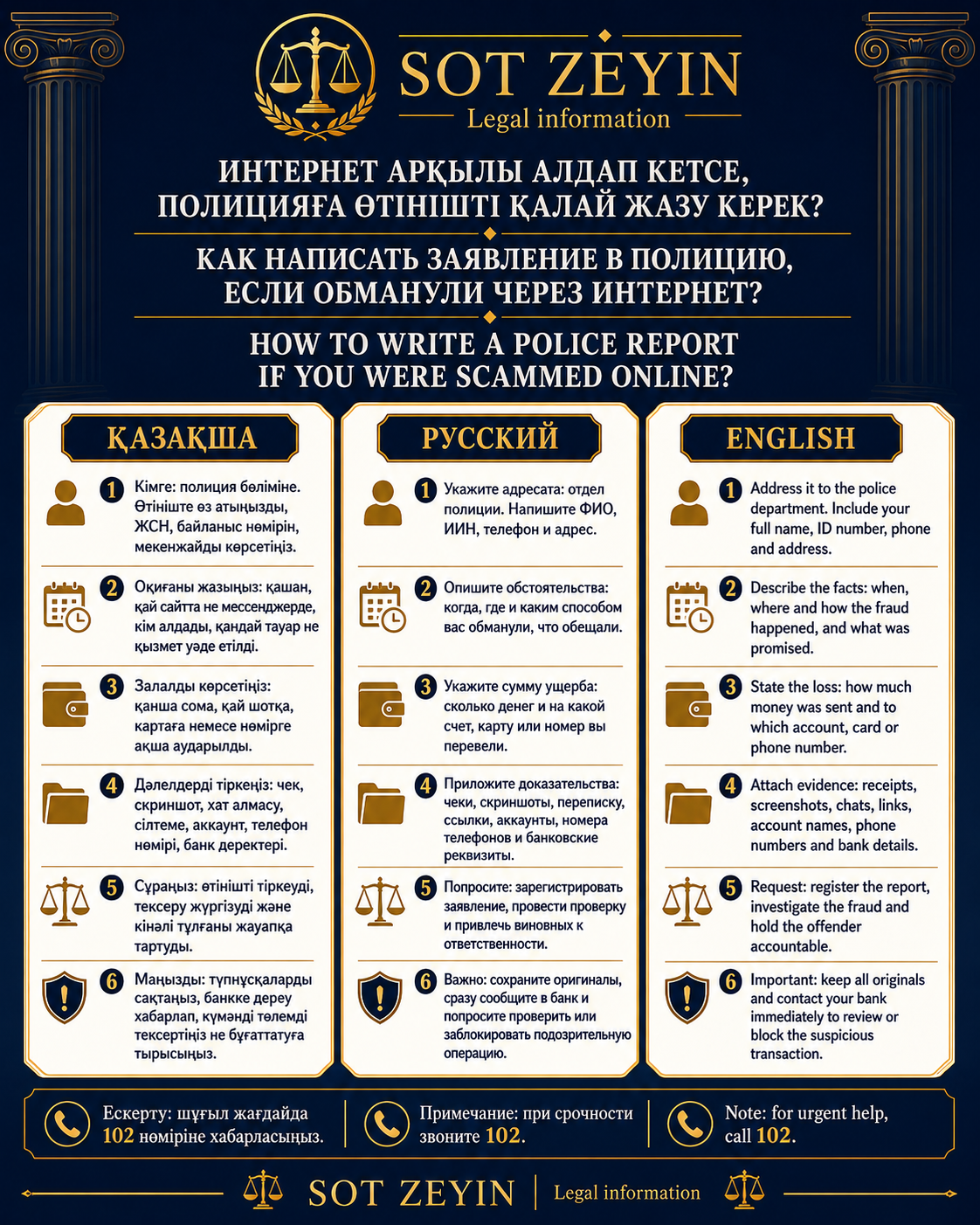
What Should Be Written in the Complaint?
A police complaint should include:
- applicant’s full name;
- identification number;
- address;
- phone number;
- details of the threatening person;
- date and time of the incident;
- method of the threat;
- exact threatening words;
- why the threat is considered real;
- whether threats happened before;
- witness details;
- list of evidence;
- request to accept and register the complaint;
- request to issue a registration confirmation.
At the end, you may write:
“I request that this complaint be accepted and registered, that a notification slip be issued, that the circumstances be reviewed, and that a procedural decision be made in accordance with the law.”
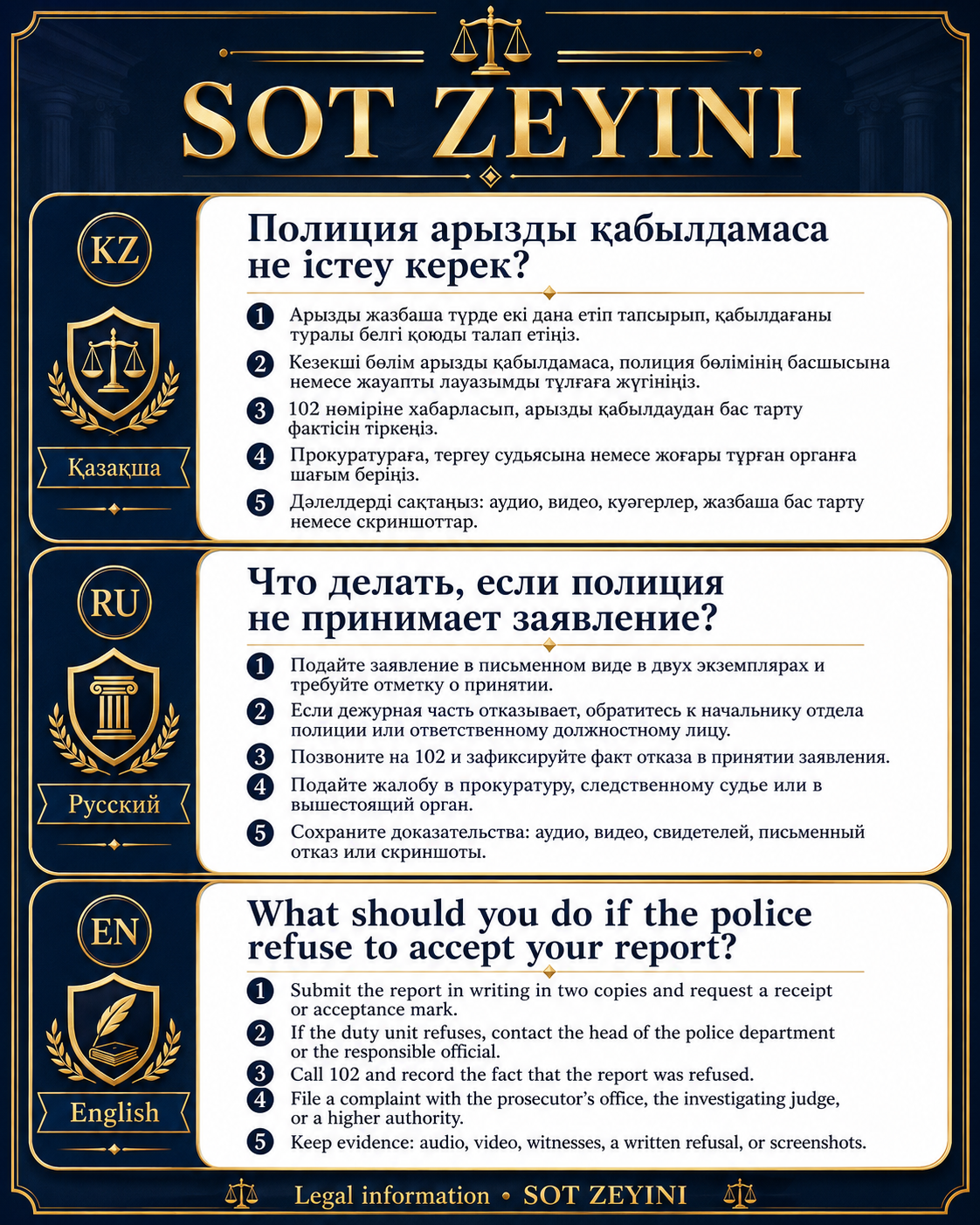
What If the Police Refuse to Accept the Complaint?
If the police say “this is just a conflict,” “solve it yourself,” “there is no evidence,” or “come later,” you should:
- submit the complaint in writing;
- request a mark on your copy;
- request a notification slip;
- write down the officer’s details;
- contact the head of the department;
- complain to the prosecutor’s office;
- apply to the investigative court if necessary.
Reports of possible criminal offenses must be accepted and registered.
What If the Pressure Happens at Work?
If pressure happens at work, the correct authority depends on the situation.
You may apply to:
- the police, if there are threats, coercion, blackmail, or extortion;
- the labor inspectorate, if labor rights are violated;
- the prosecutor’s office, if the pressure is systematic;
- the court, if there is a labor dispute or moral damage;
- company management or HR for an internal investigation.
Evidence may include emails, orders, audio recordings, witnesses, employment contracts, internal chats, and official correspondence.
What If the Threats Happen in the Family?
If threats come from a spouse, ex-spouse, relative, or cohabitant, you should contact the police. It should not be treated as merely a private family matter if there is danger.
Recommended steps:
- call 102;
- file a complaint;
- ask for protective measures;
- ensure children’s safety;
- seek medical help if injured;
- obtain a medical certificate;
- avoid being alone with the aggressor.
A family conflict does not justify threats or violence.
Common Mistakes
People often make these mistakes:
- Deleting messages
- Not taking screenshots
- Reporting only verbally
- Not obtaining registration confirmation
- Not writing the exact threatening words
- Not explaining why the threat is real
- Not attaching evidence
- Paying the extortionist
- Blocking the person and losing evidence
- Seeking legal help too late
If you are threatened, it is important to document everything and report it officially.
Sample Complaint
To the Police Department
I, __________________, submit this complaint regarding threats and pressure.
On “_” ________ 20, at approximately _______ o’clock, citizen __________________ made threats and exerted pressure against me.
Specifically, the person stated: “__________________”. The threat was made through WhatsApp / phone call / personal meeting / social network.
I consider this threat real because __________________.
Previously, the same person also committed the following actions: __________________.
I attach the following evidence: __________________.
Based on the above, I request that you:
- Accept and register my complaint;
- Issue a notification slip;
- Conduct a review of the circumstances;
- Provide a legal assessment of the person’s actions;
- Take measures to ensure my safety if necessary;
- Make a procedural decision in accordance with the law.
Attachments:
- Screenshots
- Audio/video materials
- Witness details
- Other evidence
Date: __________
Signature: __________
Conclusion
In cases of threats and pressure, the most important things are safety, evidence, and official reporting. If the danger is immediate, call 102 or 112. If threats are made through messages, calls, or social media, save all evidence and file a police complaint.
If the police do not respond, you may complain to the prosecutor’s office or investigative court. Threats should not be dismissed as “just words,” especially when there are reasons to believe they may be real.
FAQ
Where should threats be reported?
Threats should first be reported to the police. If the danger is urgent, call 102 or 112.
Can I file a complaint for WhatsApp threats?
Yes. Messages, audio, video, and screenshots may be used as evidence.
What if the police refuse to accept the complaint?
You may complain to police management, the prosecutor’s office, or the investigative court.
Can a threat be a criminal offense?
Yes, especially if it involves threats to kill, cause serious harm, or use serious violence.
What should I do in case of extortion?
Save all evidence and contact the police. Do not rush to transfer money.
What should I do in case of stalking?
Record calls, messages, visits, witnesses, and file a police complaint.
Can workplace pressure be reported?
Yes. Depending on the case, you may contact the police, labor inspectorate, prosecutor’s office, or court.
Is a lawyer necessary?
If the threats are systematic, the police do not respond, or there are signs of extortion, legal assistance is useful.