Articles

Is the other parent’s consent required?

Is the other parent’s consent required?

The answer depends on the purpose of the trip. There are two different situations: 1. Temporary travel abroad — vacation, medical treatment, sports competition, study trip, visiting relatives, or tourism. 2. Permanent relocation abroad — when the child changes their country of residence. For temporary travel abroad with one parent, Kazakhstan law does not require the other parent’s notarized consent in every case. However, consent may be required by the consulate, visa center, airline, or the destination country. For permanent relocation abroad with one parent, notarized consent of the other parent living in Kazakhstan may be required. If the other parent does not consent, the matter may be resolved by court. In simple terms, a 7-day vacation and moving a child to another country permanently are not the same thing. What is temporary travel abroad?

Read article →
Is the other parent’s permission required?

Is the other parent’s permission required?

When a child is taken to another city within Kazakhstan, it is important to distinguish between two situations: 1. A short-term trip — vacation, visiting relatives, medical treatment, sports competition, school event, or a trip for several days. 2. Permanent relocation — changing the child’s place of residence, school, kindergarten, daily routine, and access to the other parent. For a short-term trip within Kazakhstan, notarized consent from the other parent is generally not required. However, it is advisable to notify the other parent in advance: where the child is going, for how long, where the child will stay,and how contact will be maintained. If the child is being moved to another city permanently, the issue becomes more serious. Such relocation may affect the child’s place of residence and the other parent’s right to communicate with the child. In that case, written consent or a court decision may be necessary if there is a dispute.

Read article →
What does it mean if the father does not return the child?

What does it mean if the father does not return the child?

If the father takes the child and refuses to return them to the mother, the first step is to understand whether there is a court decision on the child’s place of residence and under what conditions the father took the child. Different situations may arise: the father took the child for visitation and did not return them on time; the father took the child to another city; the father refuses to say where the child is; the father prevents the mother from speaking with the child; the father keeps the child even though the child previously lived with the mother; the father does not comply with a court decision; the father threatens to take the child abroad. In such cases, the mother should act quickly, calmly, and legally. Emotions are understandable, but courts and authorities rely on evidence.

Read article →
What is the opinion of the guardianship authority?

What is the opinion of the guardianship authority?

The opinion of the guardianship and custody authority is a written document in which the state authority evaluates the child’s situation and provides its view on what decision would best protect the child’s interests. This opinion is often required in court cases involving children: determining the child’s place of residence, establishing a visitation schedule with a parent, restricting contact, returning a child, or limiting or terminating parental rights. In simple terms, the guardianship authority helps the court understand where the child will be safer, more stable, and better cared for.

Read article →
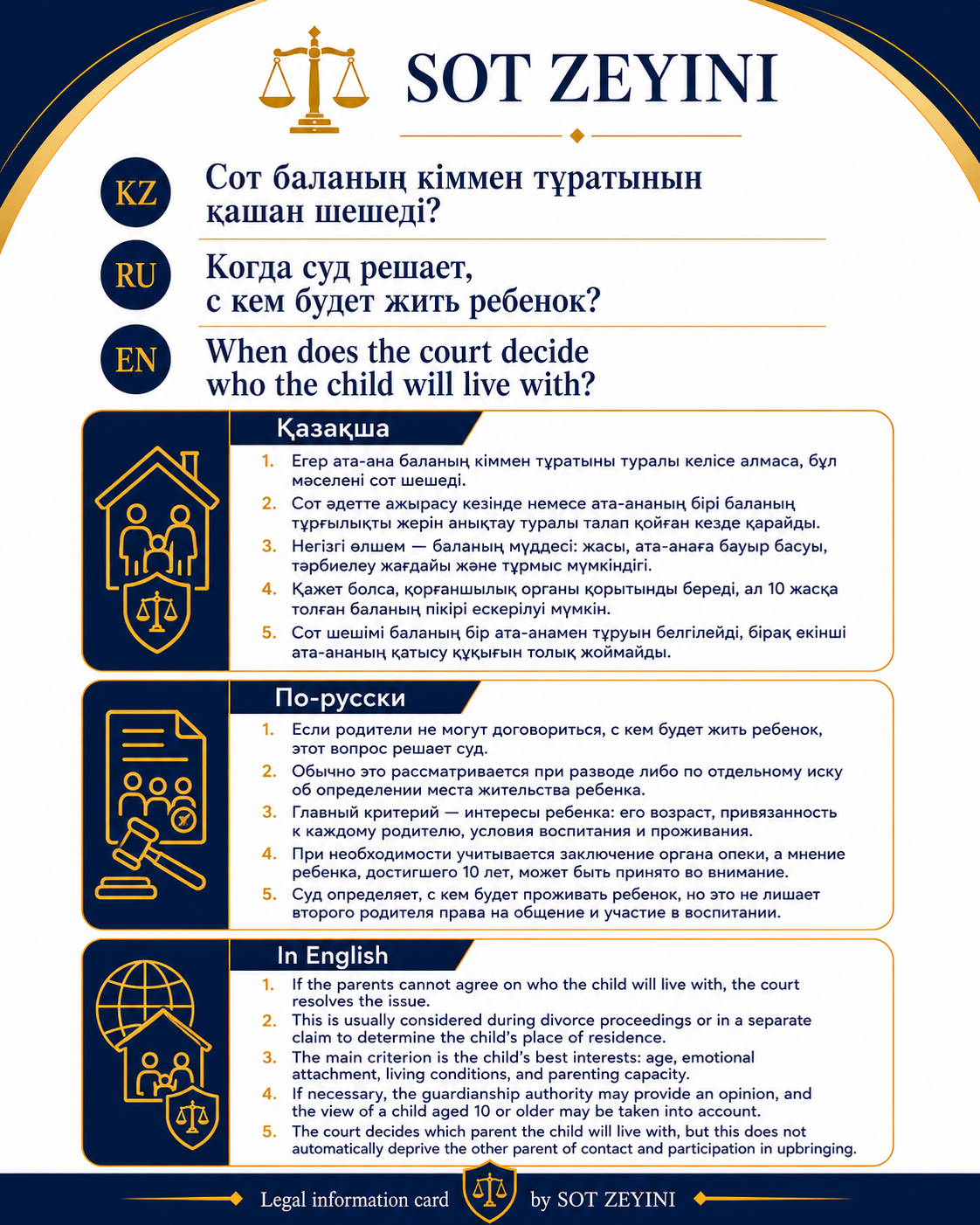
When does the court decide which parent the child will live with?

When does the court decide which parent the child will live with?

The court decides which parent the child will live with when the parents cannot reach an agreement themselves. This usually happens after divorce, separation, or a conflict between the parents about the child’s upbringing and residence. Legally, this is called determining the child’s place of residence. The court decides whether the child will permanently live with the mother or with the father. It is important to understand that if the court determines the child’s residence with one parent, the other parent does not lose the right to communicate with the child, participate in upbringing, call, meet, and receive information about the child’s health and education.

Read article →
What does determining a child’s place of residence mean?

What does determining a child’s place of residence mean?

Determining a child’s place of residence means deciding with which parent the child will permanently live: with the mother or with the father. This issue often arises after divorce, separation, or conflict between parents. For example, the child may live with the mother, but the father believes that living with him would better serve the child’s interests. Or the child may be staying with the father, while the mother wants the child’s place of residence to be determined with her. It is important to understand that determining the child’s place of residence with one parent does not deprive the other parent of the right to communicate with the child, participate in upbringing, and receive information about the child’s life. The court does not decide which parent “wins.” The court decides where the child will be safer, more stable, and better cared for.

Read article →
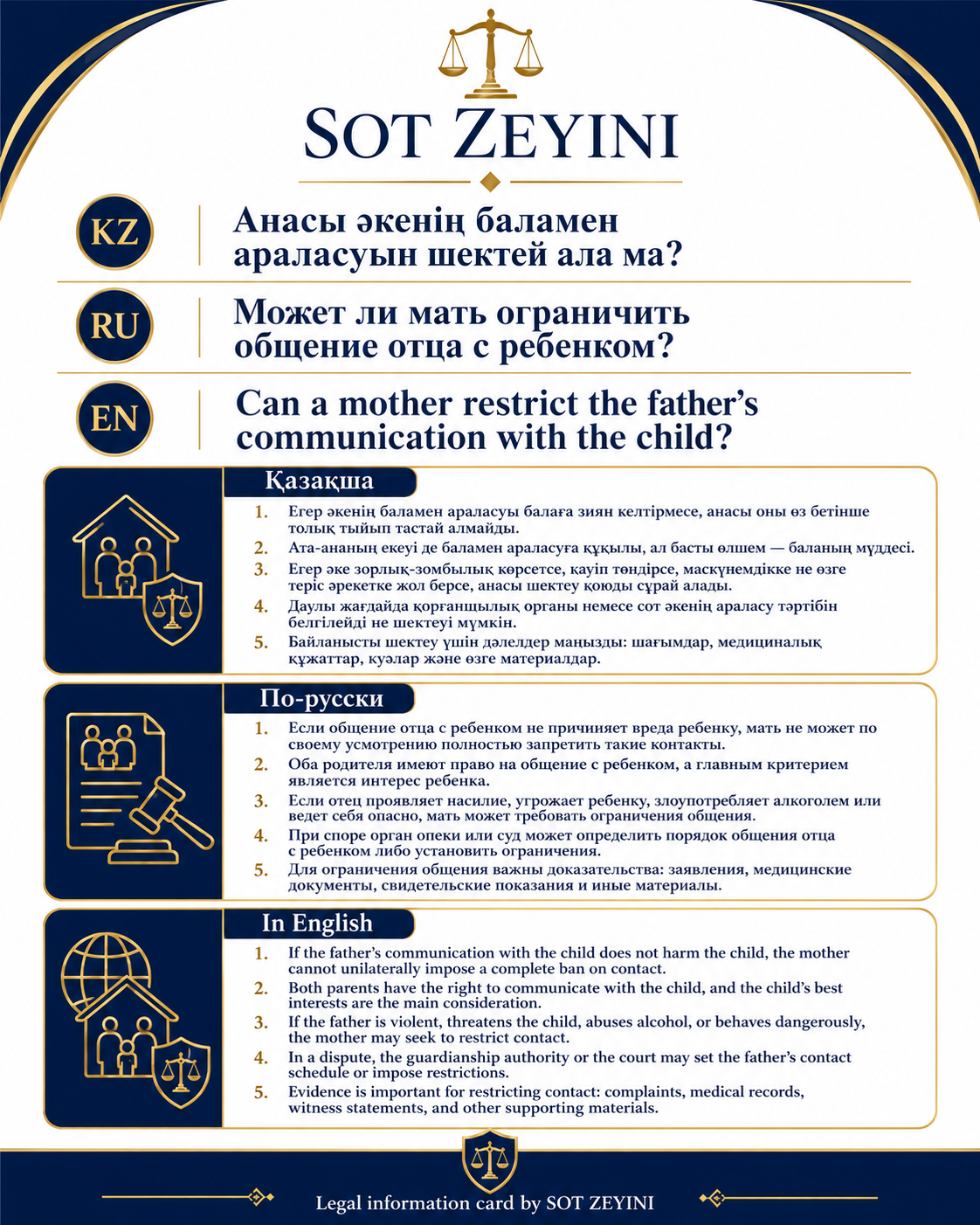
Can a mother restrict the father’s communication with the child?

Can a mother restrict the father’s communication with the child?

A mother cannot arbitrarily and without valid reasons restrict the father’s communication with the child. If the father does not pose a risk to the child’s health, safety, psychological condition, or moral development, the mother should not prevent the child from communicating with him. However, there are situations where restriction may be justified to protect the child. For example, if the father comes to meetings under the influence of alcohol, uses violence, puts psychological pressure on the child, does not return the child on time, or creates a risk to the child’s safety. The main rule is simple: the mother cannot restrict visitation only because of personal resentment, divorce conflict, or child support disputes. But if there is a real risk to the child, she may apply to the guardianship authority or court and request a safe visitation arrangement.

Read article →
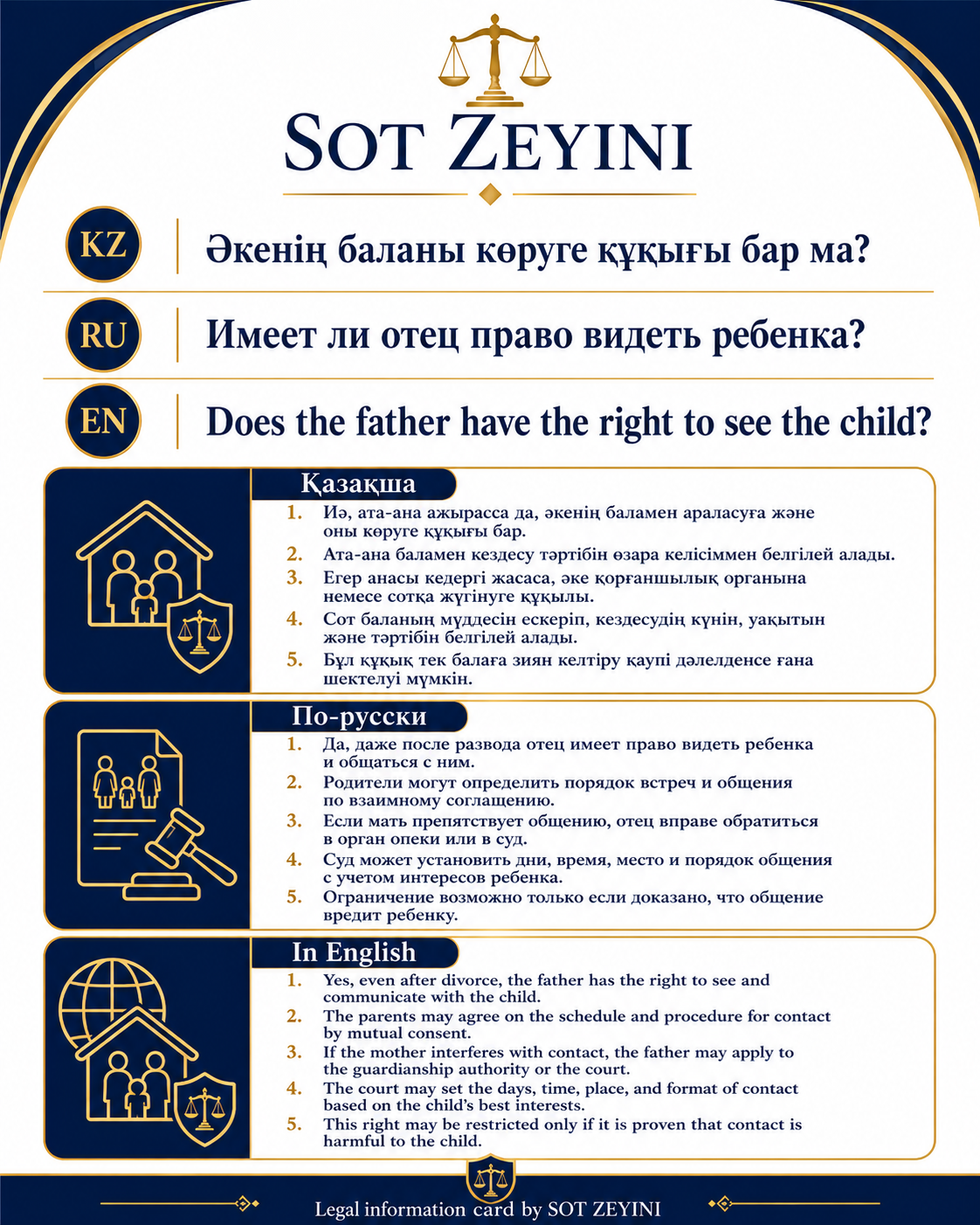
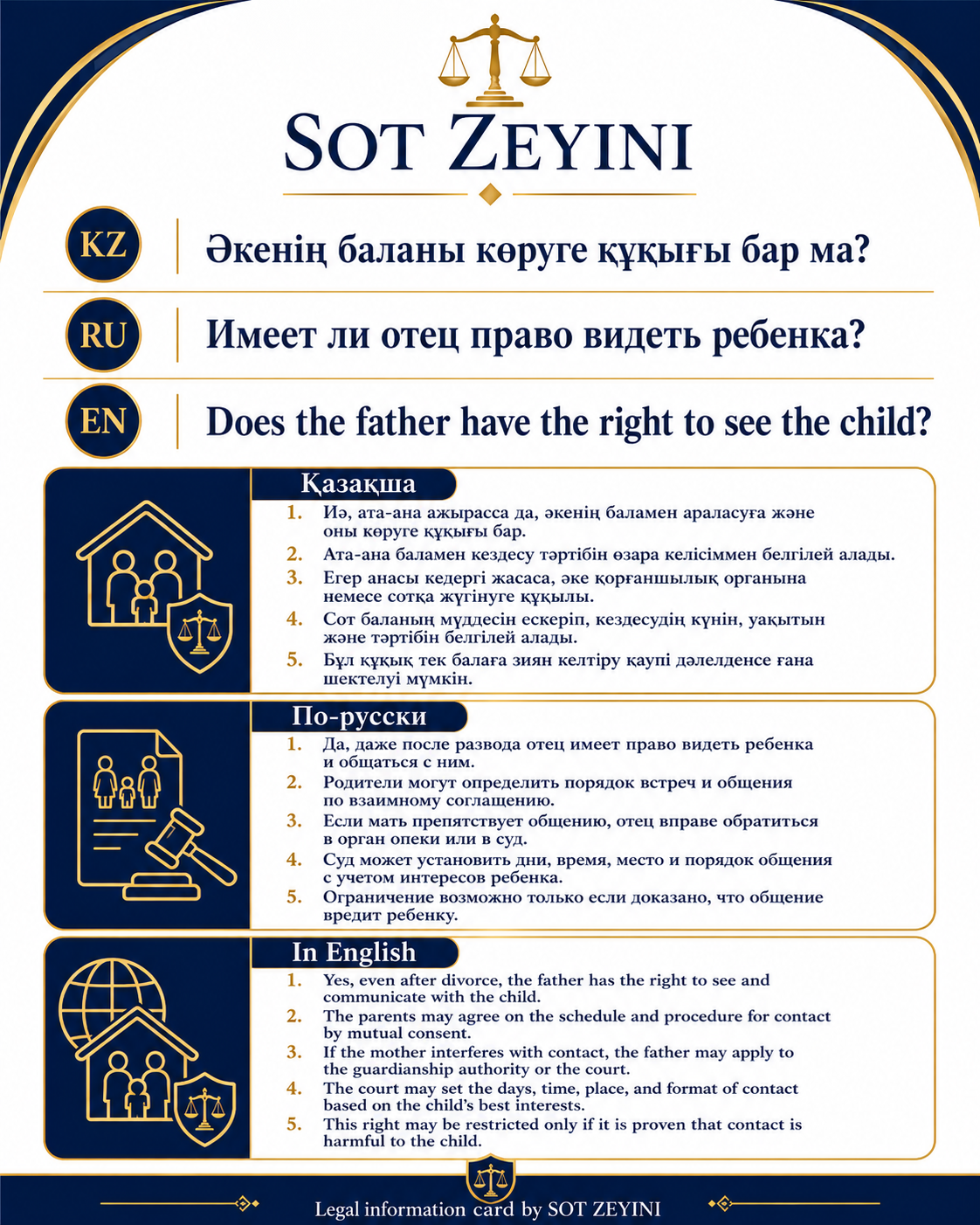
Does a father have the right to see his child?

Does a father have the right to see his child?

Yes. A father has the right to communicate with his child, participate in the child’s upbringing, and take part in important decisions concerning the child’s education, development, and well-being. Divorce or separate residence does not automatically end the relationship between father and child. The child has the right to maintain contact with both parents, unless such contact harms the child’s health, safety, or development. If the mother does not allow the father to see the child, blocks phone calls, refuses meetings, or constantly changes the agreed schedule, the father may apply to court and request an official child visitation schedule.

Read article →
What is a child visitation schedule?

What is a child visitation schedule?

A child visitation schedule is a legally established arrangement that determines when, where, and how a parent living separately from the child may meet, communicate with, and participate in the child’s upbringing. The schedule may include: specific days for visitation; exact start and end times; the place where the child is picked up and returned; whether overnight stays are allowed; communication by phone or video calls; holidays and school vacation arrangements; the duties of each parent during the visitation process.For example, a court may decide: “The father shall have the right to communicate with the child every Saturday from 10:00 a.m. to 6:00 p.m., with the right to pick up the child from the mother’s residence and return the child by 6:00 p.m. on the same day.” The more specific the schedule is, the easier it is to enforce. In family disputes, vague wording is the enemy. The court needs a clear plan, not “we’ll see how it goes” energy.

Read article →
Can Child Support Debt Be Forgiven in Kazakhstan?
Alimony May 28, 2026 267 views

Can Child Support Debt Be Forgiven in Kazakhstan?

Can child support debt be forgiven in Kazakhstan? This issue is not simple. Child support is not an ordinary debt between adults. If the debt relates to a minor child, child support is considered the child’s legal right to maintenance. Therefore, a parent cannot simply forgive the debt if it harms the child’s interests. In some cases, child support debt may be reduced or the debtor may be released from paying it, but this requires legal grounds and proper procedure.

Read article →
ИИ Бот