Articles

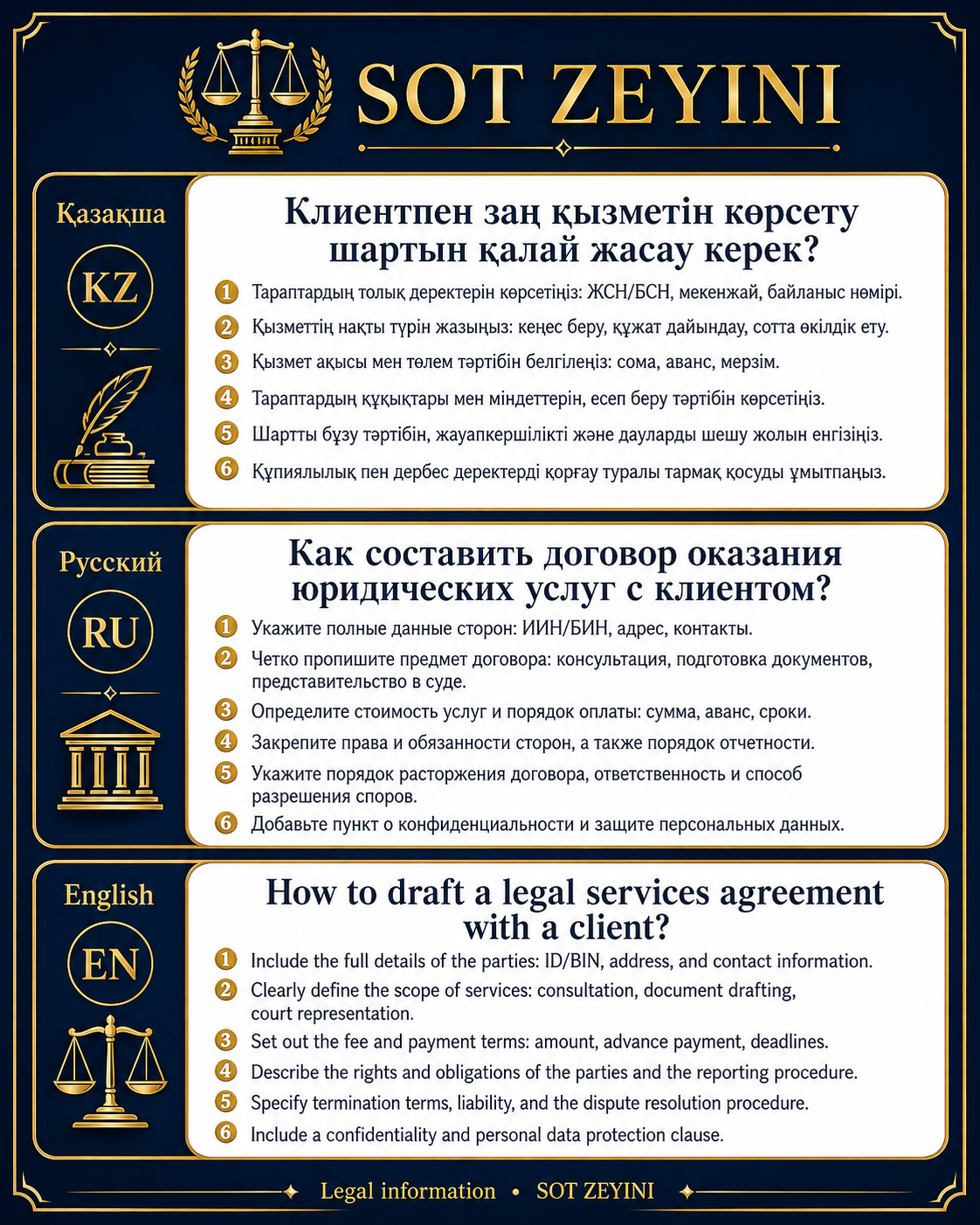
How to Draft a Legal Services Agreement With a Client

How to Draft a Legal Services Agreement With a Client

Why Do You Need a Legal Services Agreement? A legal services agreement is the main document between a lawyer and a client. It defines what services will be provided, how much the client will pay, what documents are required, and what responsibilities each party has. Without a written agreement, disputes may arise: the client may believe the lawyer guaranteed a win; the lawyer may believe the agreement covered only document preparation; the parties may disagree about fees; court expenses may be unclear; the client may request additional services for free; refund issues may arise if the agreement is terminated. A written agreement helps make the relationship clear and professional.

Read article →
How to Draft a Franchise Agreement or Agency Agreement?

How to Draft a Franchise Agreement or Agency Agreement?

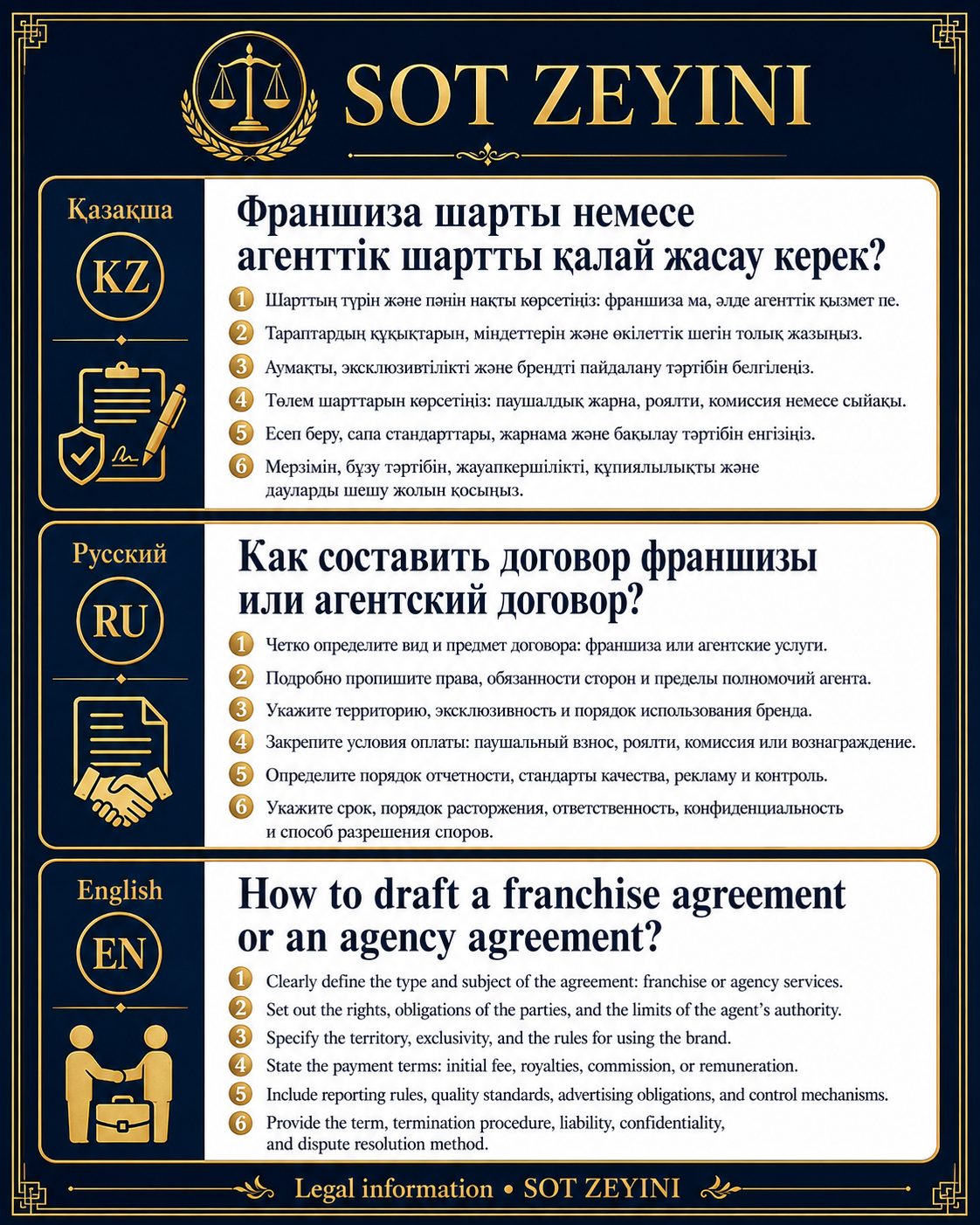
What Is a Franchise Agreement and an Agency Agreement? A franchise agreement and an agency agreement are two different legal models for business cooperation. They may look similar in practice, but they have different purposes, risks, and legal consequences. A franchise agreement allows one party to use another party’s brand, business model, standards, technology, know-how, and commercial system. An agency agreement is usually used when one party finds clients, promotes goods or services, helps conclude deals, and receives commission for that work. In simple terms, a franchise means using a ready-made business system. An agency agreement means attracting clients or sales for a commission.

Read article →
What Should You Consider When Signing an Agreement With an Investor?

What Should You Consider When Signing an Agreement With an Investor?

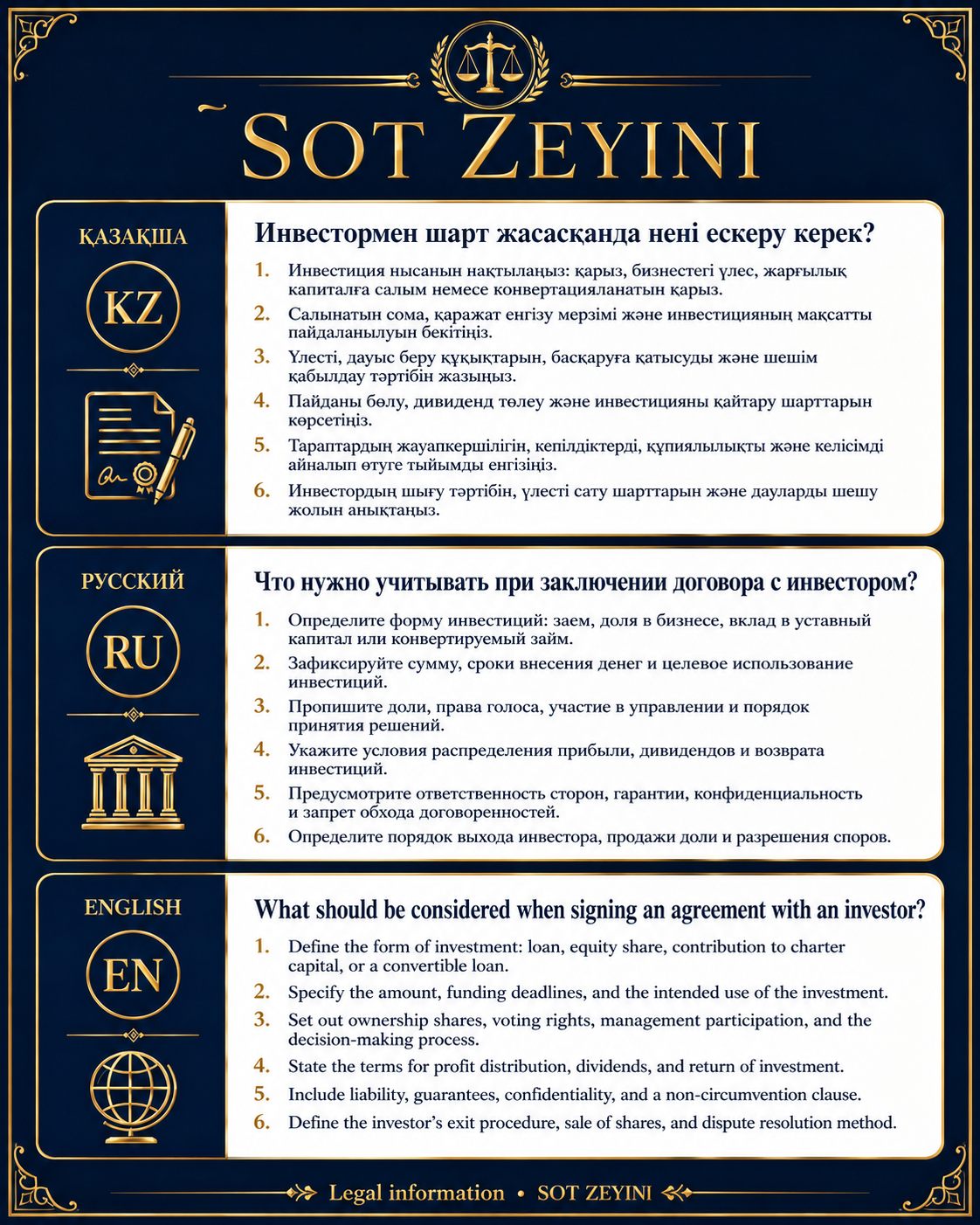
Why Do You Need an Agreement With an Investor? Attracting an investor can help a business grow faster: open a new branch, buy equipment, launch advertising, hire employees, or scale a project. However, if the relationship with the investor is not properly documented, the investment may turn into a dispute. The main issue is that the parties may understand the money differently. The investor may believe the money was provided as a loan and must be repaid. The entrepreneur may believe the money was invested into the business and is subject to business risk. An investor agreement helps clearly define the rights and obligations of both parties.

Read article →
How to Legally Prepare a Commercial Proposal?

How to Legally Prepare a Commercial Proposal?

What Is a Commercial Proposal? A commercial proposal is a document in which a company, entrepreneur, or professional offers goods, works, or services to a potential client under specific conditions. A commercial proposal usually includes: the product or service offered; price; payment terms; deadlines; scope of work; advantages of the company; cooperation terms; contact details and bank details. In practice, commercial proposals are used to attract clients, start negotiations, and present the main terms of a future deal. However, it is important to understand that a commercial proposal may be just an informational document, or it may have legal consequences and be treated as an offer.

Read article →
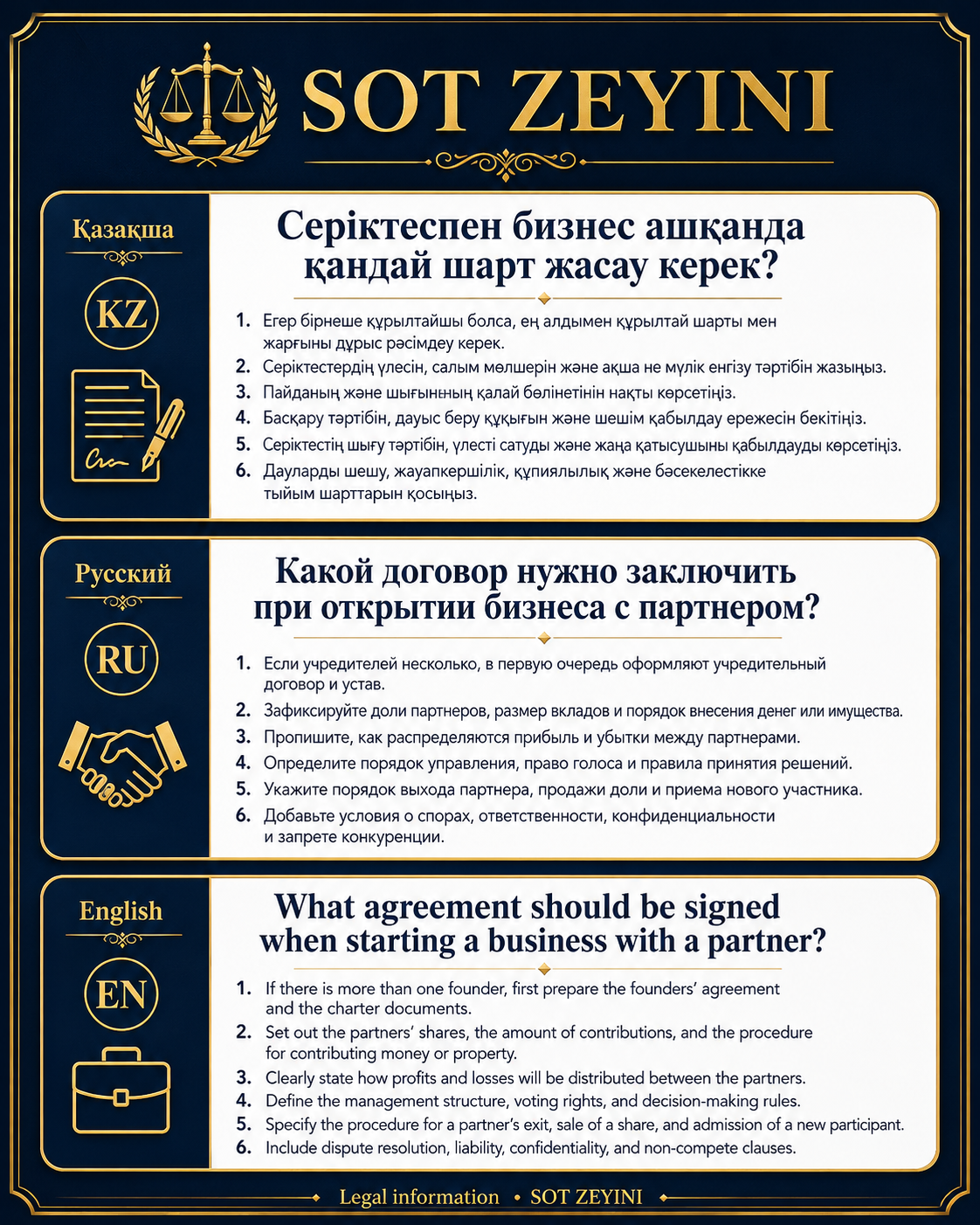
What Agreement Should You Sign When Starting a Business with a Partner?

What Agreement Should You Sign When Starting a Business with a Partner?

Why You Should Not Start a Business With a Partner Based Only on Trust Many people start a business with a friend, relative, or acquaintance without signing a written agreement. At the beginning, everything may seem clear: one person invests money, another manages the business, and someone else brings clients. But when profit, expenses, debts, or disagreements appear, verbal promises are often not enough. Without a written agreement, partners may argue about: who invested how much; who owns what share of the business; how profit should be distributed; who manages the company; who is responsible for debts; who owns the website, brand, Instagram, WhatsApp, CRM, and client database; what happens if one partner leaves the business. A written agreement is not a sign of mistrust. It is a normal legal tool that protects both the business and the partners.

Read article →
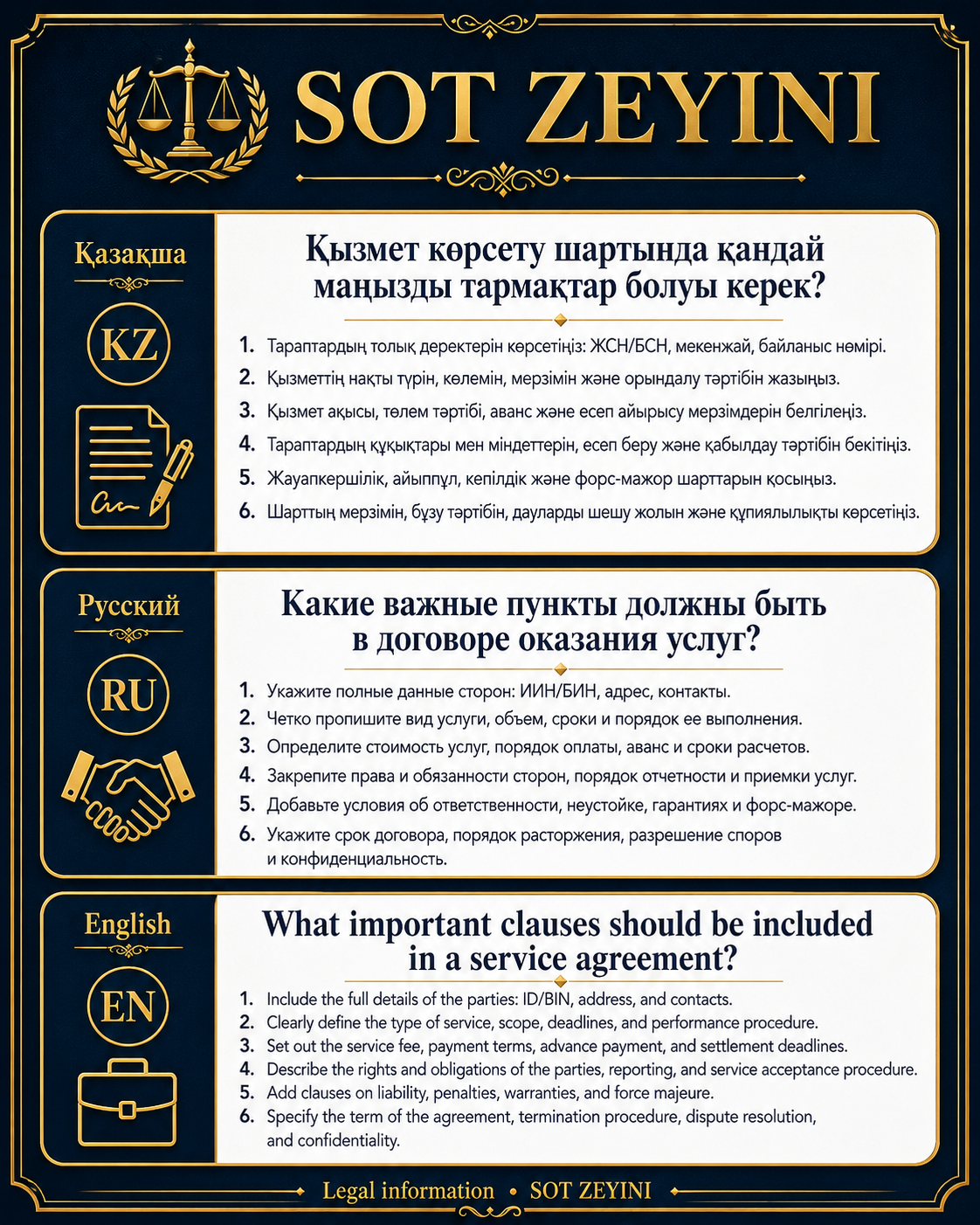
What Important Clauses Should Be Included in a Service Agreement?

What Important Clauses Should Be Included in a Service Agreement?

What is a service agreement? A service agreement is a contract under which one party, the service provider, agrees to provide certain services to the client, and the client agrees to accept and pay for those services. Service agreements are used in many areas, including legal services, accounting, marketing, advertising, IT, design, consulting, education, repair, business support and other professional services. The main purpose of a service agreement is to clearly answer several important questions: who provides the service, what exactly must be done, when it must be done, how much it costs and what happens if one party fails to perform. Without these answers, the agreement becomes legally weak.

Read article →
How to Properly Draft a Sale and Purchase Agreement

How to Properly Draft a Sale and Purchase Agreement

What is a sale and purchase agreement? A sale and purchase agreement is a legal contract under which the seller agrees to transfer property, goods, or another asset to the buyer, and the buyer agrees to accept it and pay the agreed price. At first glance, such an agreement may seem simple: one party sells, the other buys. However, many disputes arise precisely because the agreement was poorly drafted, incomplete, or copied from a generic online template. A properly drafted agreement protects both parties and helps avoid disputes over payment, ownership, defects, restrictions, liens, arrests, or third-party rights.

Read article →
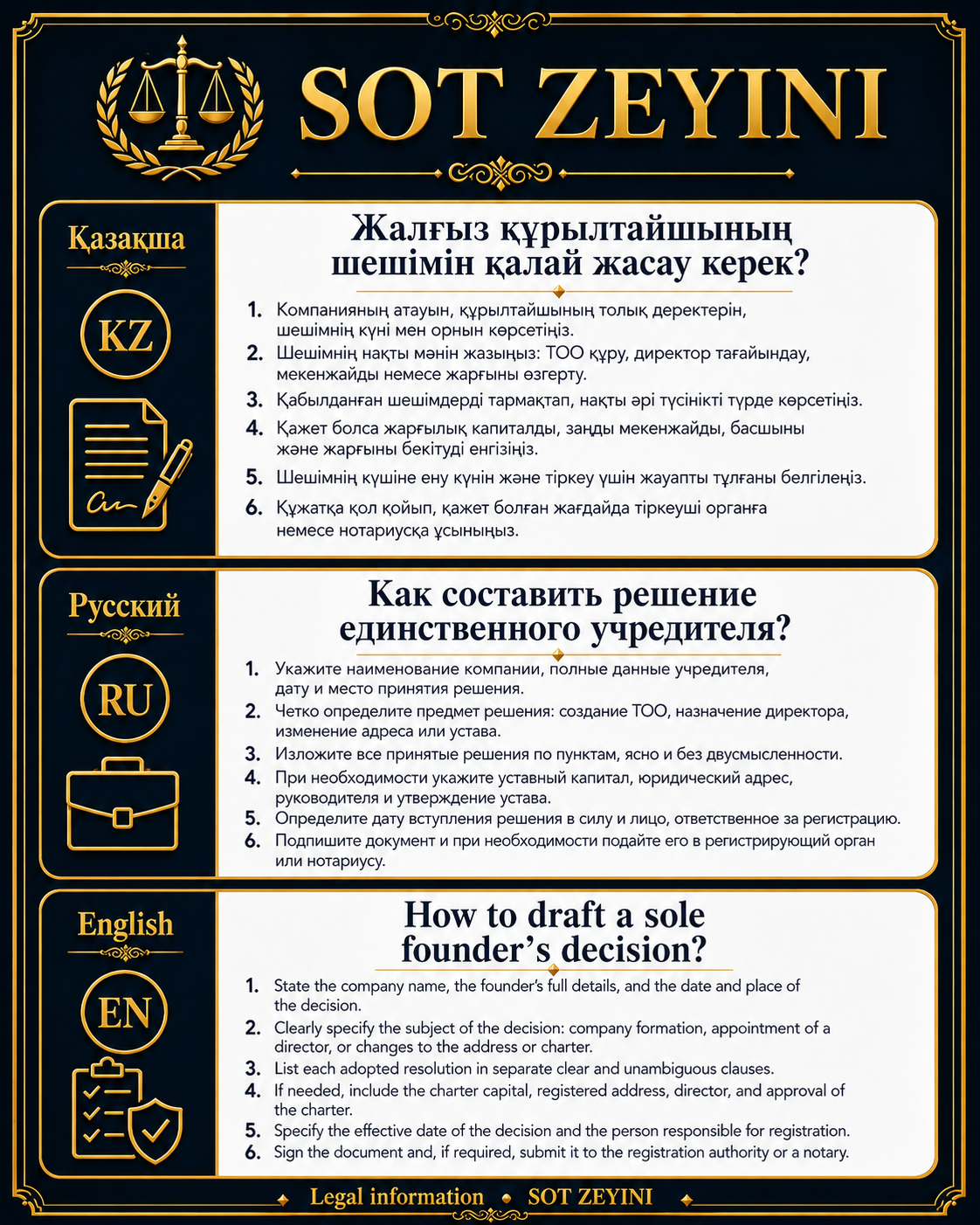
How to Draft a Founder’s Decision

How to Draft a Founder’s Decision

What is a founder’s decision? A founder’s decision is a document by which a sole founder decides to establish an LLP. If the LLP has only one participant, it is created based on that participant’s sole decision. In this case, a foundation agreement is not prepared. In simple terms, the founder’s decision officially states: “I establish this LLP, approve its name, appoint the director, approve the charter, and define the main company details.” This document may be needed for LLP registration, appointment of the director, approval of the charter, determination of the legal address, and setting of charter capital.

Read article →
What Is the Difference Between a Sole Proprietor and an LLP?

What Is the Difference Between a Sole Proprietor and an LLP?

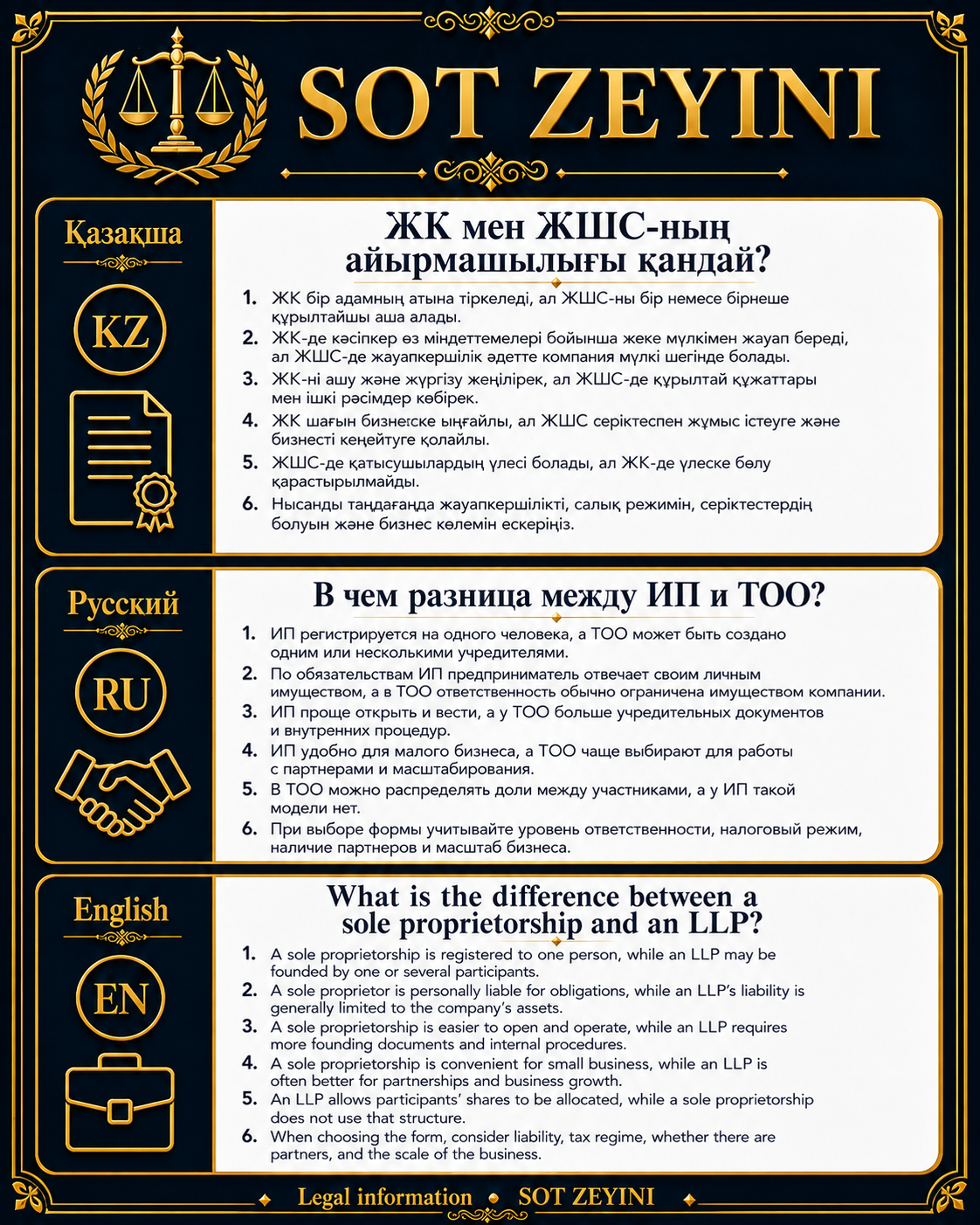
What are a sole proprietor and an LLP? When starting a business in Kazakhstan, many entrepreneurs choose between registering as a sole proprietor and opening an LLP. A sole proprietor is an individual who carries out business activity in their own name. In Kazakhstan, this is commonly referred to as IP or individual entrepreneur. An LLP, or Limited Liability Partnership, is a separate legal entity. It has its own name, business identification number, director, bank account, charter, and participants. In simple terms, a sole proprietor means “I am doing business,” while an LLP means “I have created a company.”

Read article →
What Documents Are Needed to Open an LLP in Kazakhstan?

What Documents Are Needed to Open an LLP in Kazakhstan?

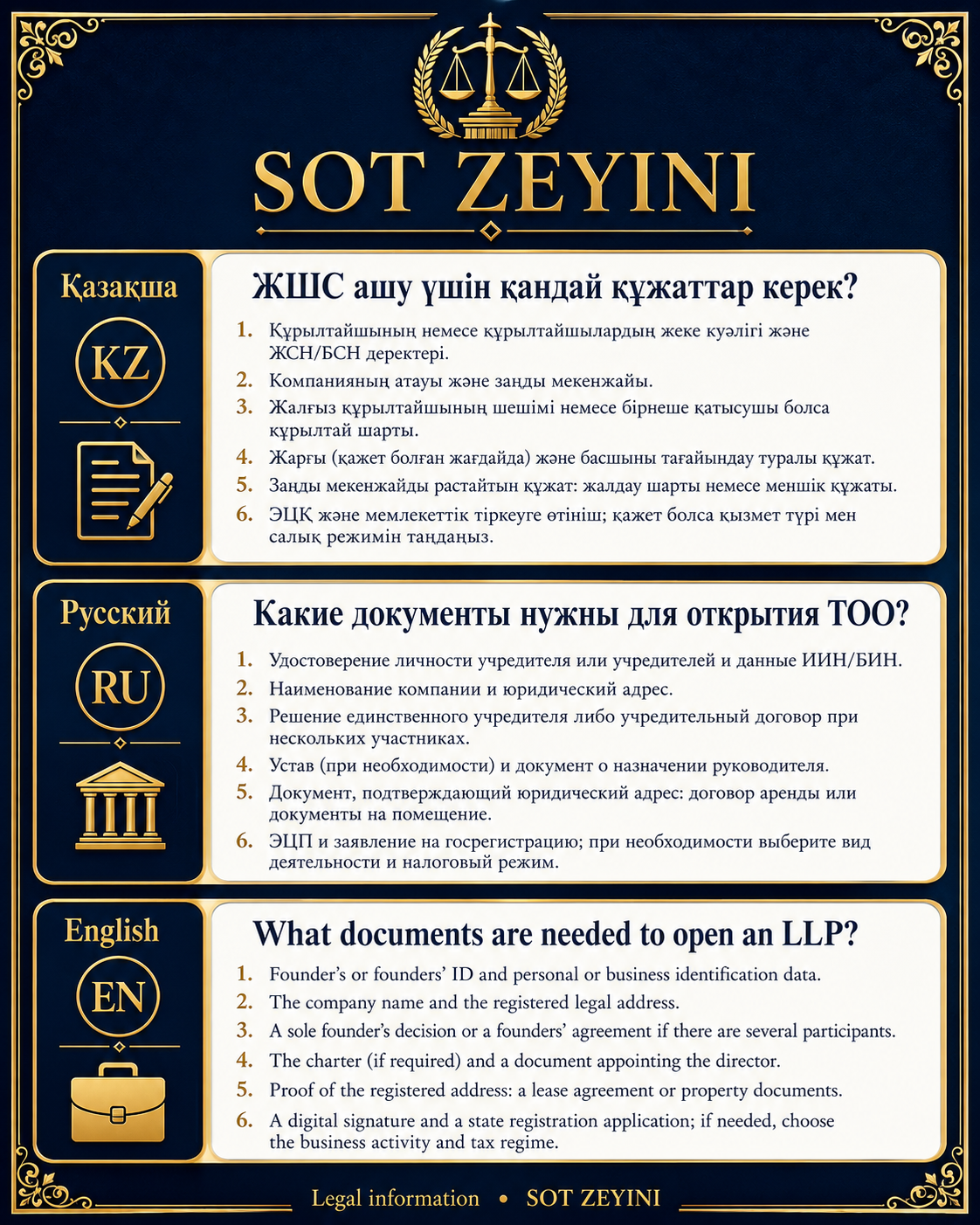
What is an LLP? An LLP, or Limited Liability Partnership, is one of the most common legal forms for doing business in Kazakhstan. It may be established by one or several individuals or legal entities. Opening an LLP allows a business to officially enter into contracts, open a bank account, hire employees, participate in tenders, pay taxes, and work with corporate clients. In simple terms, an LLP gives a business a formal legal identity.

Read article →
ИИ Бот