Articles

What Should You Do After a Court Decision on Debt Recovery?
Debt collection Jun 1, 2026 301 views

What Should You Do After a Court Decision on Debt Recovery?

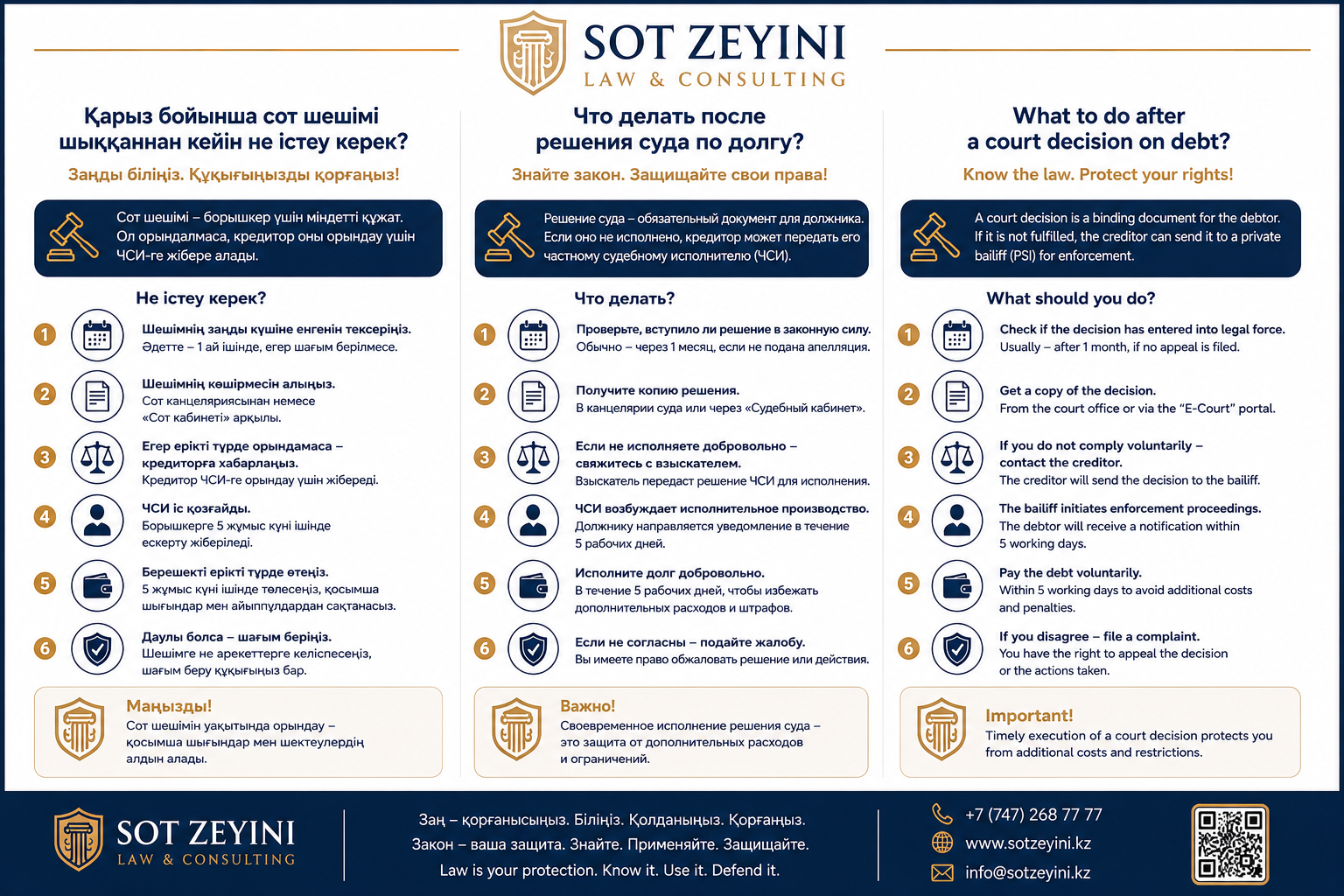
When the court issues a decision to recover a debt, many people expect the money to arrive immediately. In practice, however, a court decision is not the final step. It is the basis for the next stage: enforcement. If the debtor does not pay voluntarily, the creditor must obtain a writ of execution and submit it to a private enforcement officer. In simple terms: winning the court case is round one. Actually getting the money is round two.

Read article →
Is Mediation Effective in Debt Disputes?
Debt collection Jun 1, 2026 268 views

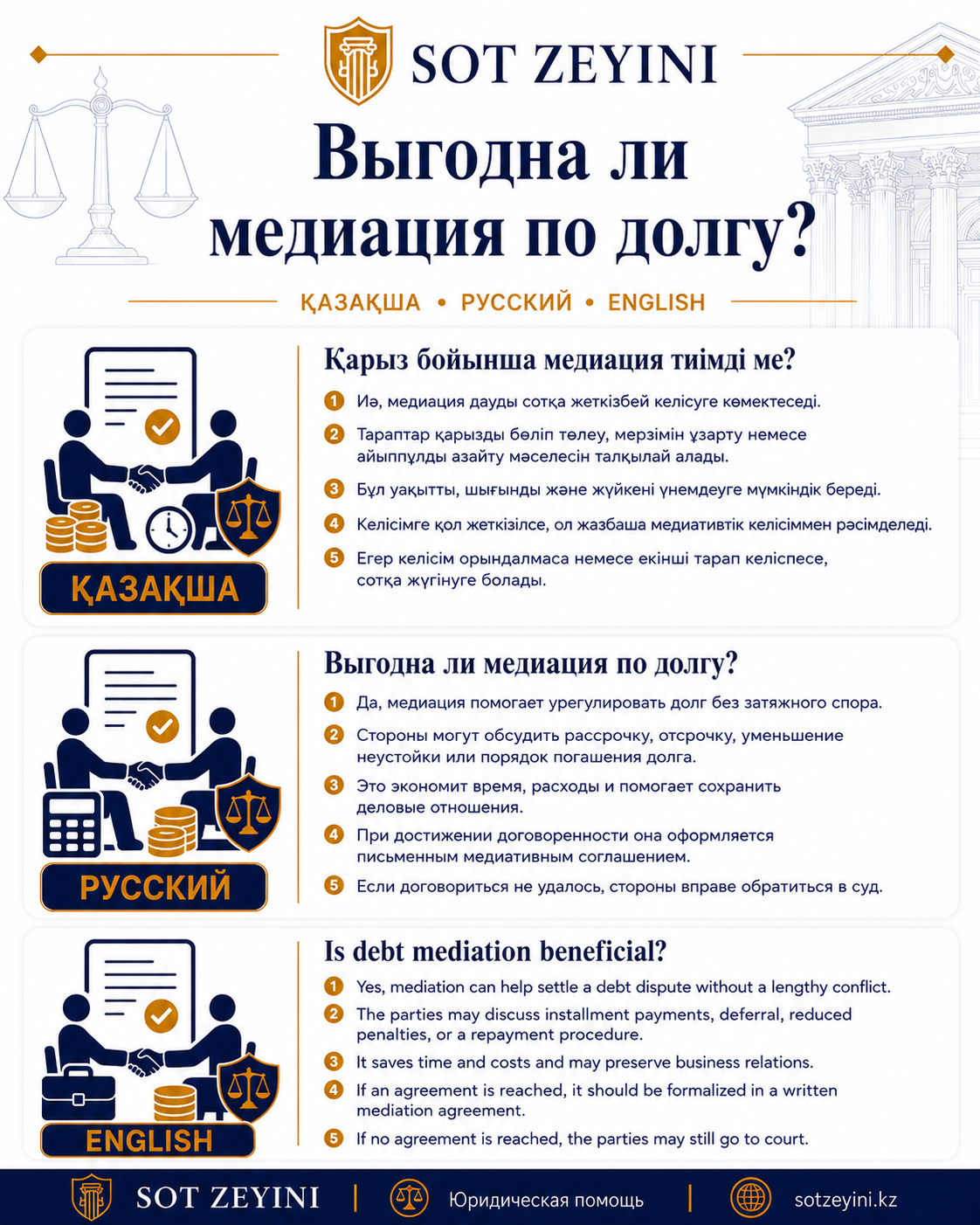
Is Mediation Effective in Debt Disputes?

In debt disputes, many people immediately think about going to court. However, in some cases, mediation may be faster, more practical, and less stressful than a full court process. This is especially true when the debtor admits the debt but cannot repay the full amount immediately. Mediation allows the parties to agree on repayment terms, create a payment schedule, and record the debtor’s obligations in writing. In simple terms: court is a legal enforcement mode, while mediation is a negotiation mode that may help recover money faster.

Read article →
What Should You Do If the Borrower Does Not Repay the Money?
Debt collection Jun 1, 2026 291 views

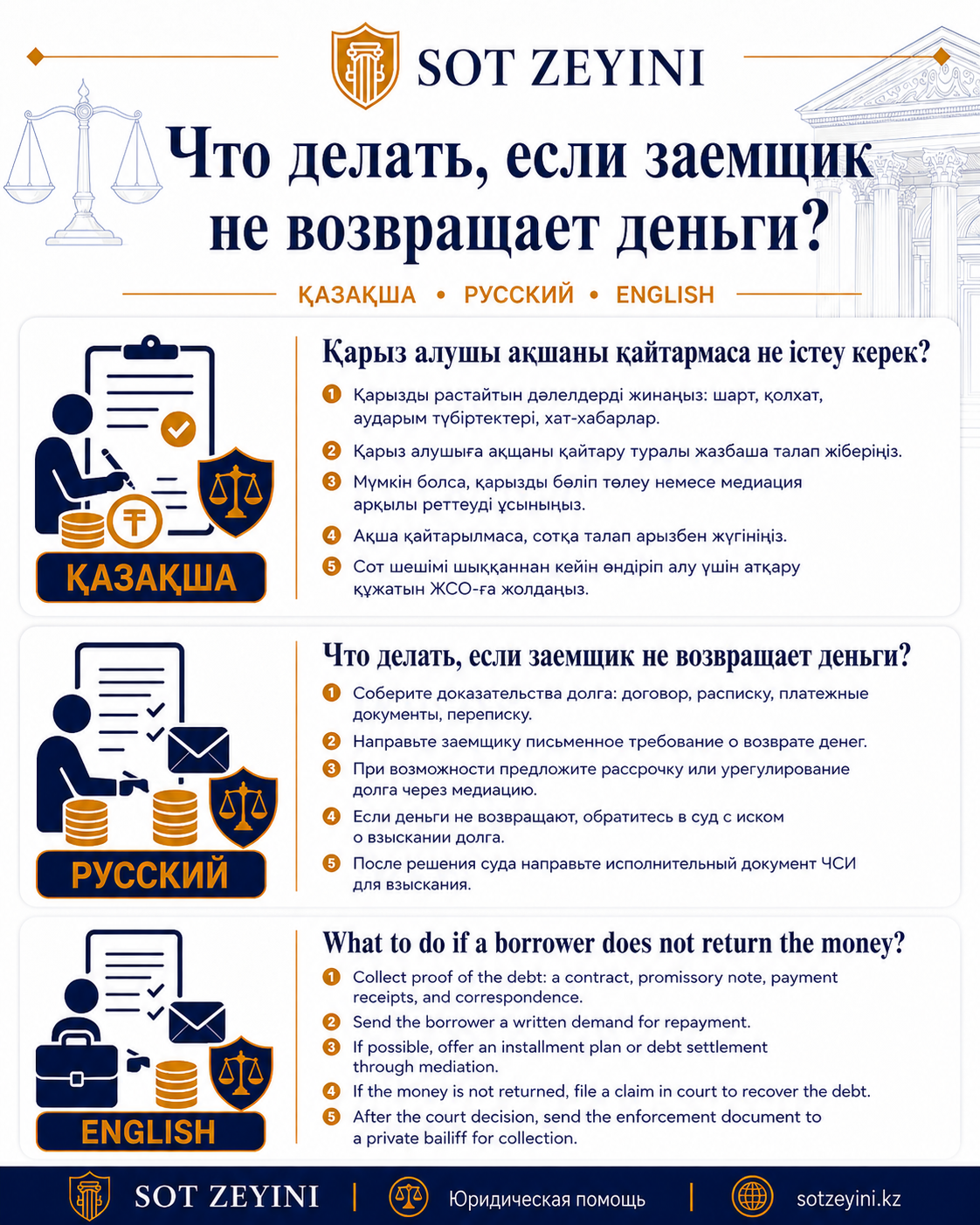
What Should You Do If the Borrower Does Not Repay the Money?

Situations where a person lends money and the borrower does not repay it on time are very common. At first, the borrower may promise to pay “tomorrow,” “after salary,” or “next week,” but later stops answering calls, ignores messages, and avoids repayment. In such a situation, it is important not to act emotionally. The right approach is to collect evidence, send a pre-trial demand letter, file a court claim if necessary, and then enforce the court decision. In simple terms: if the debt is not repaid by request, it should be recovered through documents.

Read article →
What Agreement Should You Make When Lending Money?
Debt collection Jun 1, 2026 253 views

What Agreement Should You Make When Lending Money?

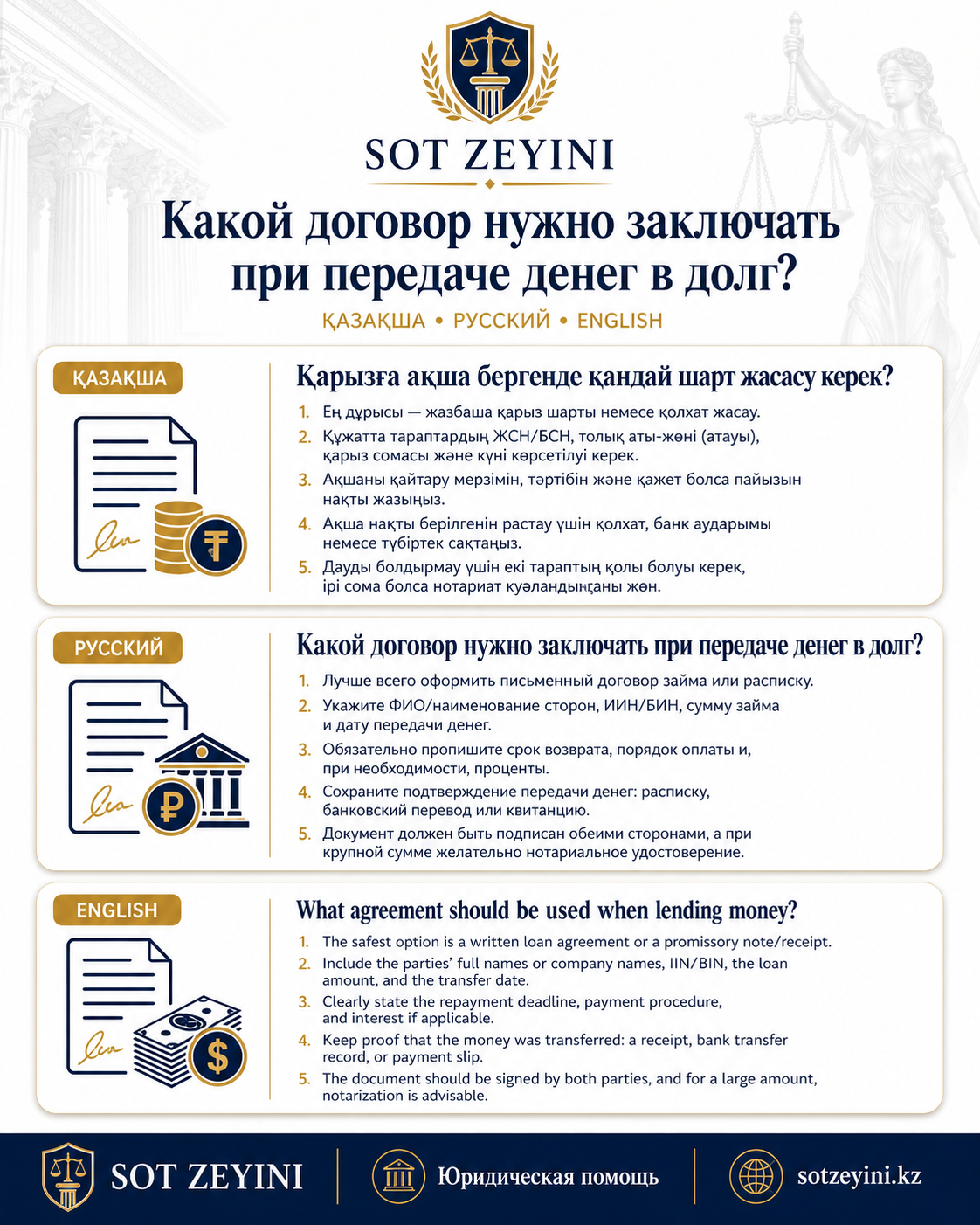
Lending money may seem simple: one person gives money, and the other promises to return it. However, many debt disputes arise because the money was given without a written agreement, without a receipt, or without clear repayment terms. To protect yourself, you should make a written loan agreement when lending money. It is also recommended to have a written receipt, payment schedule, bank transfer confirmation, collateral, or a guarantor. In simple terms: trust is good, but a written agreement works better in court.

Read article →
Can a Debt Be Recovered Through Simplified Proceedings?
Debt collection Jun 1, 2026 1585 views

Can a Debt Be Recovered Through Simplified Proceedings?

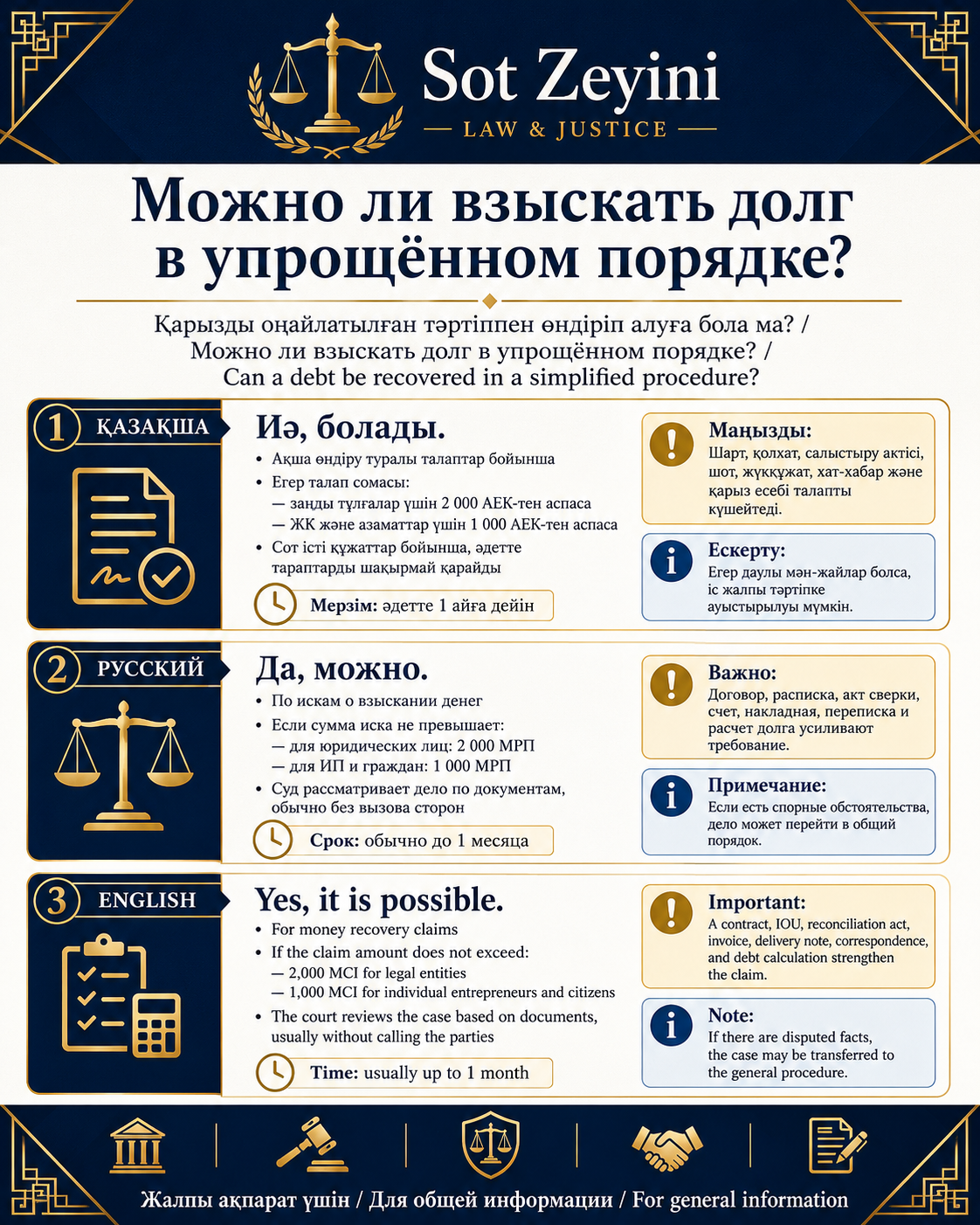
Simplified written proceedings are a form of civil court proceedings where the case is considered without a regular court hearing and without summoning the parties. The court reviews the statement of claim, response, objections, documents, and other written materials, and then issues a decision. This procedure is used for cases that do not require a complex hearing, witness testimony, expert examination, or detailed oral proceedings. In simple terms, simplified proceedings are a “documents speak for themselves” format. But this does not mean the court will recover the debt automatically. The evidence must still be strong and properly prepared.

Read article →
How to Obtain a Court Order for Debt Recovery?
Debt collection Jun 1, 2026 255 views

How to Obtain a Court Order for Debt Recovery?

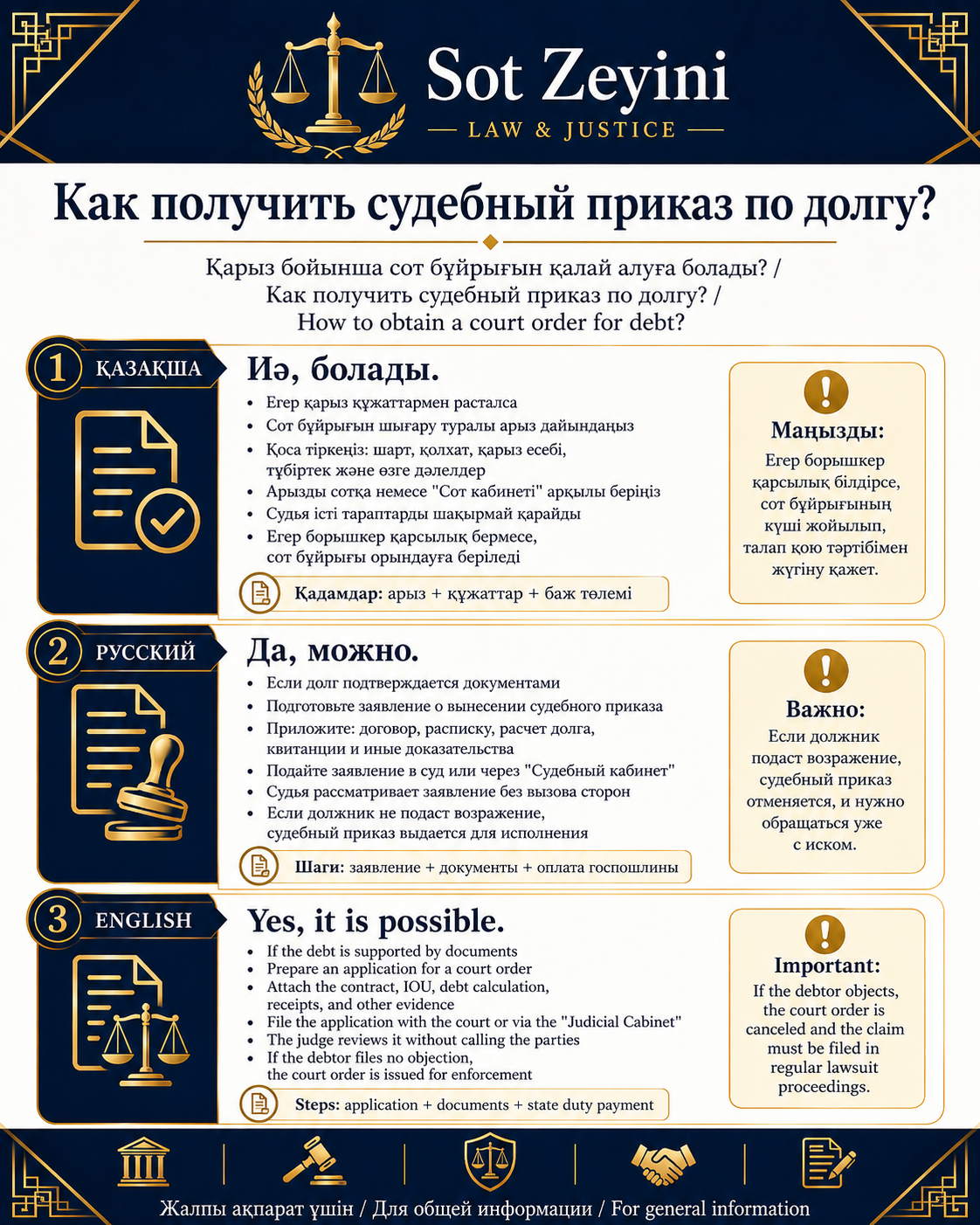
A court order is a judicial act issued by a judge for an uncontested claim. Unlike a regular lawsuit, a court order does not require a full court hearing. The court does not summon the creditor and debtor to a hearing and does not examine the dispute in the same way as in ordinary claim proceedings. The main advantage of a court order is speed. If the debt is confirmed by documents and there is no obvious dispute, a court order may be obtained faster than a court judgment under a lawsuit. In simple terms, a court order is a fast-track legal tool for debt recovery when the documents are clear and the debtor’s obligation is not seriously disputed.

Read article →
How to Write a Pre-Trial Demand Letter for Debt Repayment?
Debt collection Jun 1, 2026 705 views

How to Write a Pre-Trial Demand Letter for Debt Repayment?

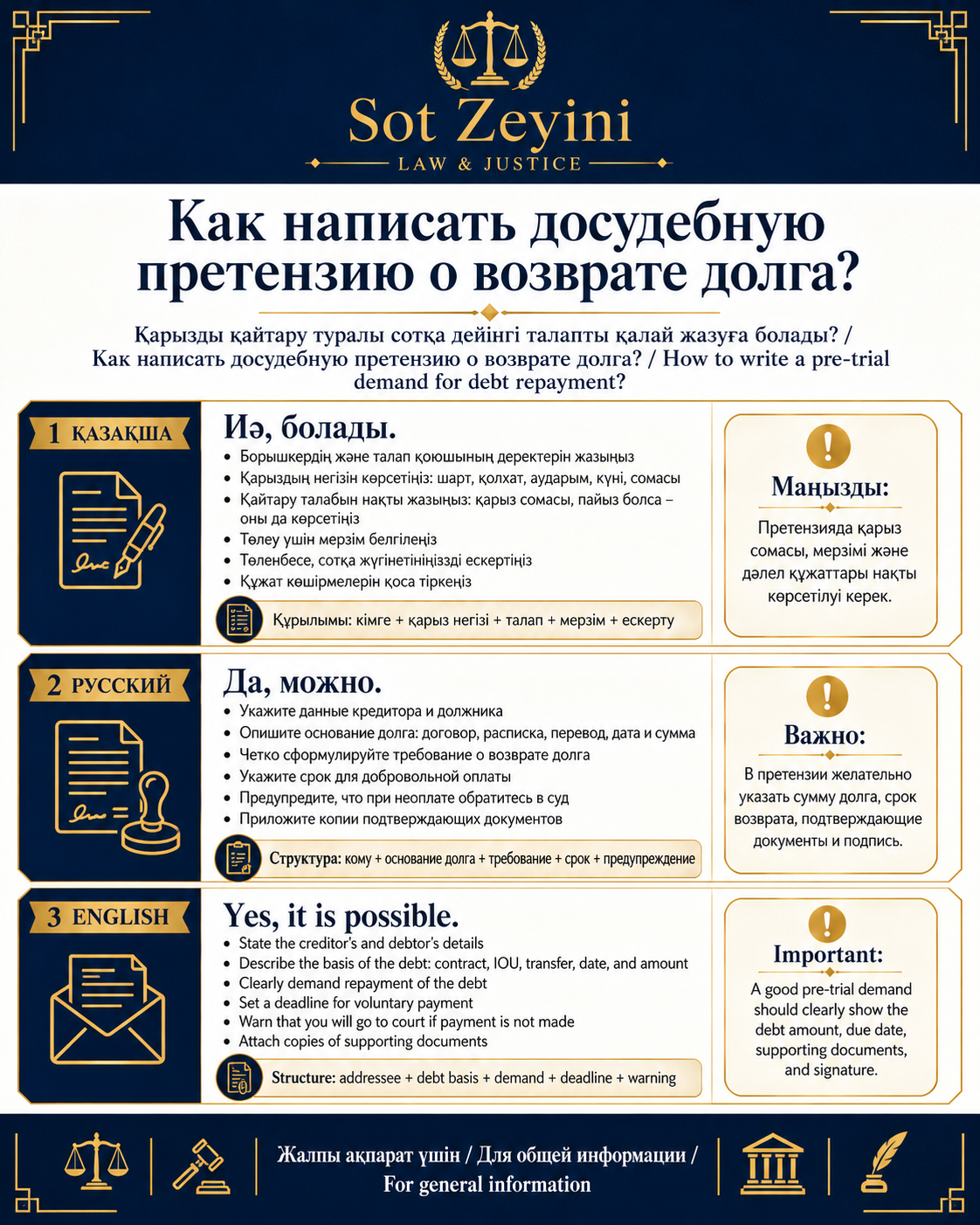
A pre-trial demand letter is a written request sent to a debtor asking them to repay the debt voluntarily before court proceedings. It usually states the debt amount, the basis of the debt, repayment deadline, available evidence, and a warning that a court claim may be filed. In simple terms, it is a formal notice: repay the money voluntarily, or the issue may be resolved in court. A demand letter may help recover the debt without litigation. If the debtor does not pay, the letter may be used in court to show that the creditor tried to resolve the dispute peacefully.

Read article →
Can a Kaspi Transfer Be Used as Evidence of a Debt?
Debt collection Jun 1, 2026 601 views

Can a Kaspi Transfer Be Used as Evidence of a Debt?

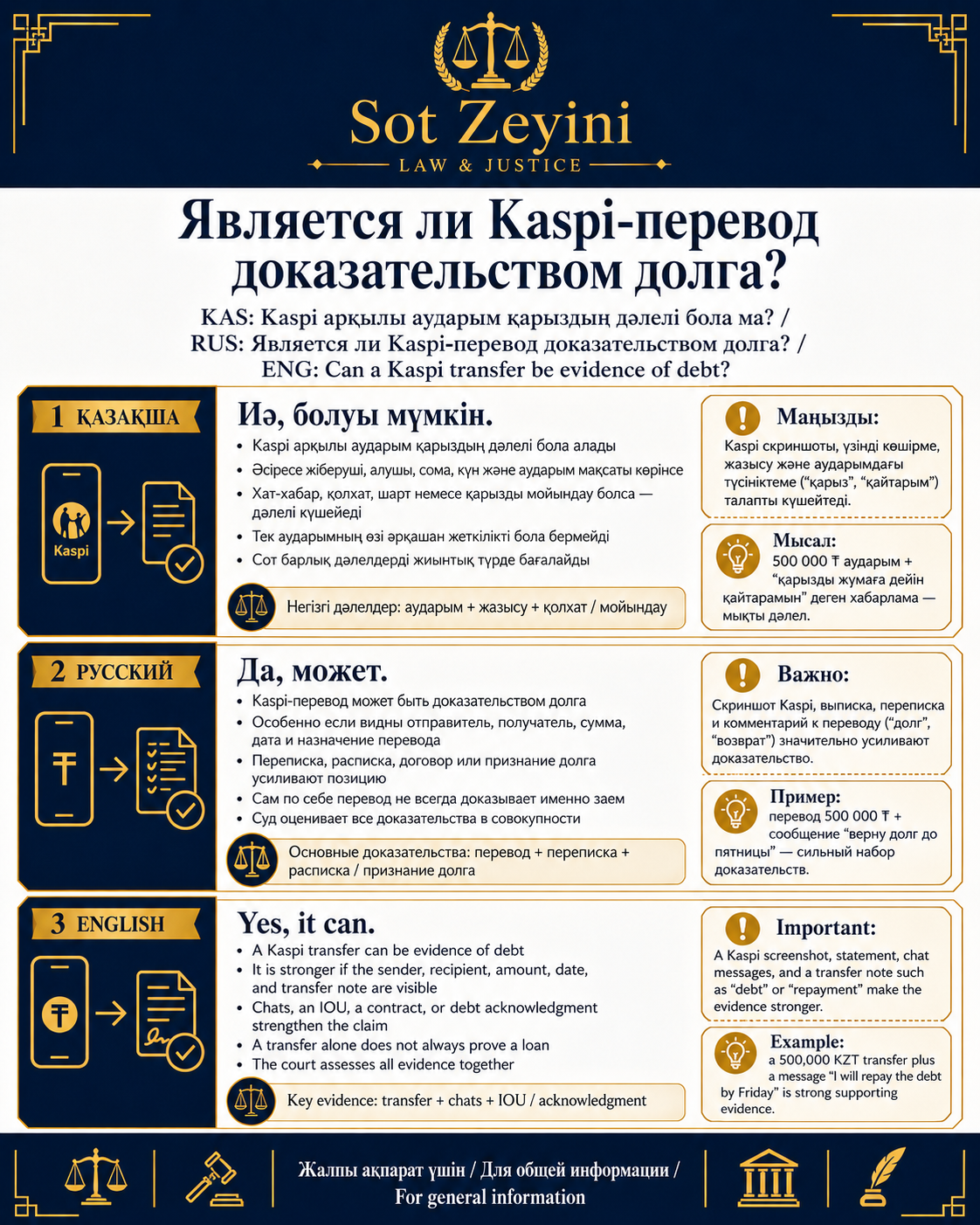
Yes, a Kaspi transfer may be used as evidence in court. It confirms that one person transferred a certain amount of money to another person on a specific date. However, a Kaspi receipt usually proves only the fact of money transfer. It does not always prove that the money was transferred specifically as a loan. The debtor may claim that the money was a gift, payment for services, repayment of another debt, or a transfer for another purpose. That is why a Kaspi transfer should preferably be supported by other evidence, such as a loan receipt, WhatsApp messages, SMS, loan agreement, partial repayment, or written demand. In simple terms, the Kaspi receipt shows that the money was sent. Other evidence explains why it was sent.

Read article →
ИИ Бот