Articles

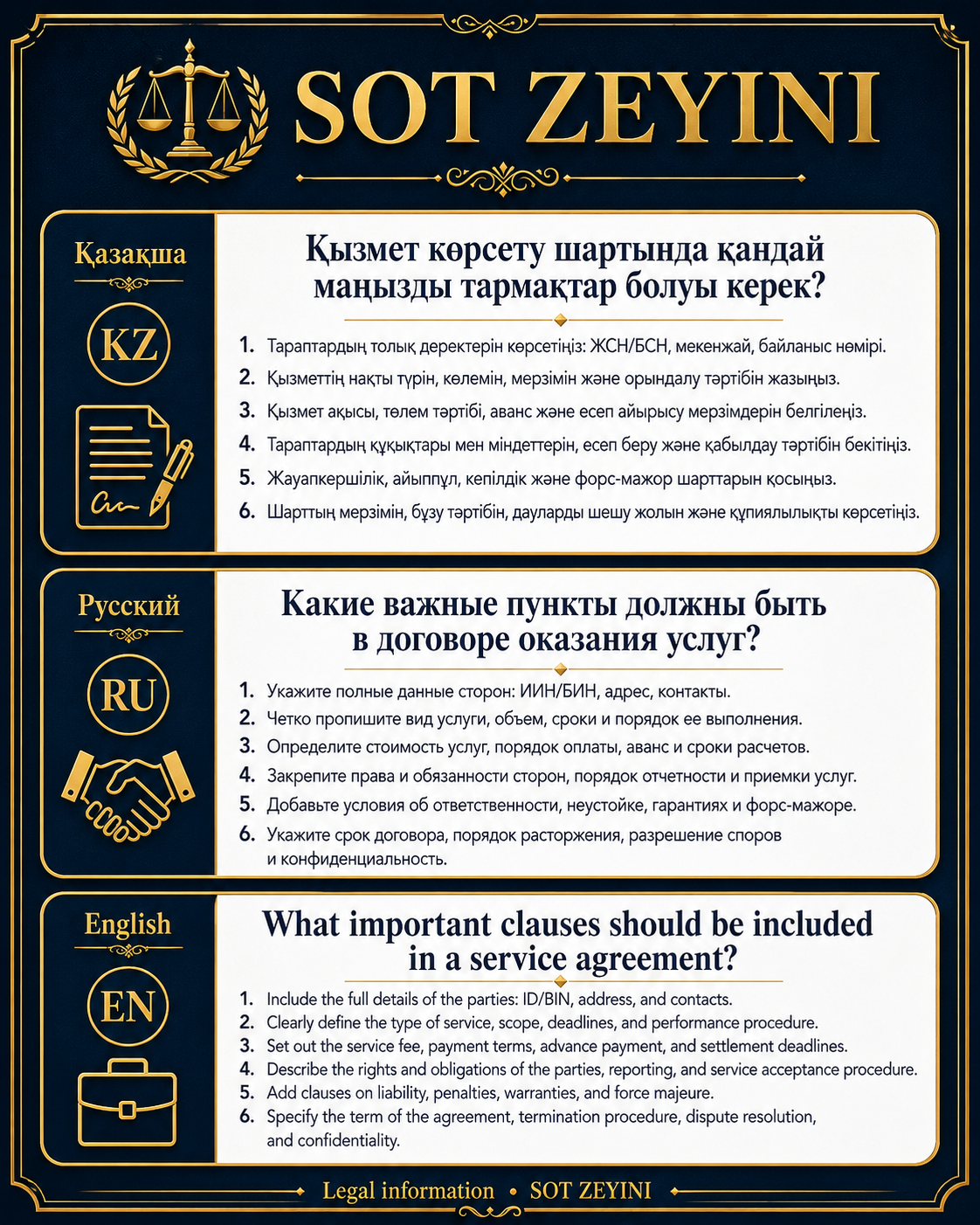
What Important Clauses Should Be Included in a Service Agreement?

What Important Clauses Should Be Included in a Service Agreement?

What is a service agreement? A service agreement is a contract under which one party, the service provider, agrees to provide certain services to the client, and the client agrees to accept and pay for those services. Service agreements are used in many areas, including legal services, accounting, marketing, advertising, IT, design, consulting, education, repair, business support and other professional services. The main purpose of a service agreement is to clearly answer several important questions: who provides the service, what exactly must be done, when it must be done, how much it costs and what happens if one party fails to perform. Without these answers, the agreement becomes legally weak.

Read article →
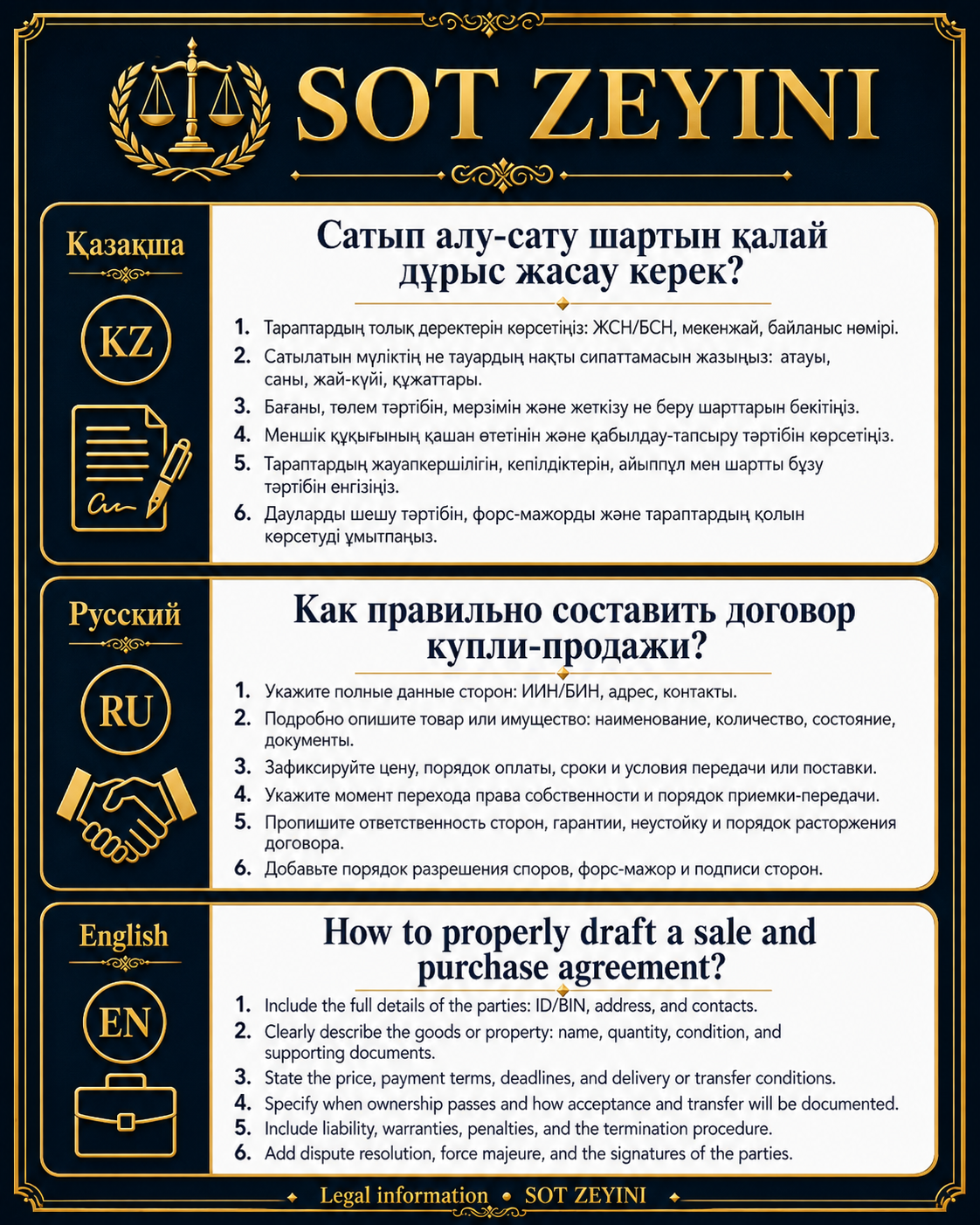
How to Properly Draft a Sale and Purchase Agreement

How to Properly Draft a Sale and Purchase Agreement

What is a sale and purchase agreement? A sale and purchase agreement is a legal contract under which the seller agrees to transfer property, goods, or another asset to the buyer, and the buyer agrees to accept it and pay the agreed price. At first glance, such an agreement may seem simple: one party sells, the other buys. However, many disputes arise precisely because the agreement was poorly drafted, incomplete, or copied from a generic online template. A properly drafted agreement protects both parties and helps avoid disputes over payment, ownership, defects, restrictions, liens, arrests, or third-party rights.

Read article →
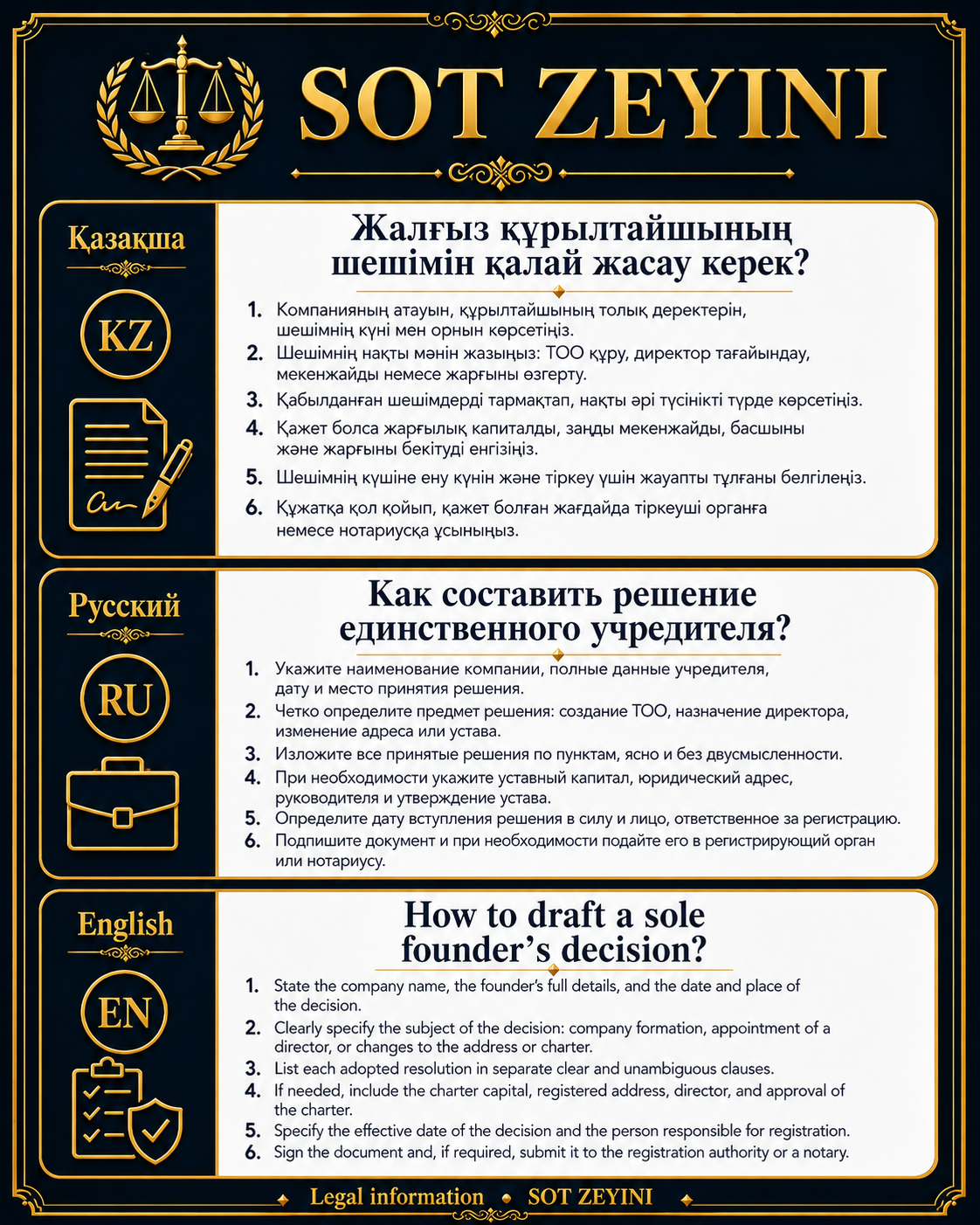
How to Draft a Founder’s Decision

How to Draft a Founder’s Decision

What is a founder’s decision? A founder’s decision is a document by which a sole founder decides to establish an LLP. If the LLP has only one participant, it is created based on that participant’s sole decision. In this case, a foundation agreement is not prepared. In simple terms, the founder’s decision officially states: “I establish this LLP, approve its name, appoint the director, approve the charter, and define the main company details.” This document may be needed for LLP registration, appointment of the director, approval of the charter, determination of the legal address, and setting of charter capital.

Read article →
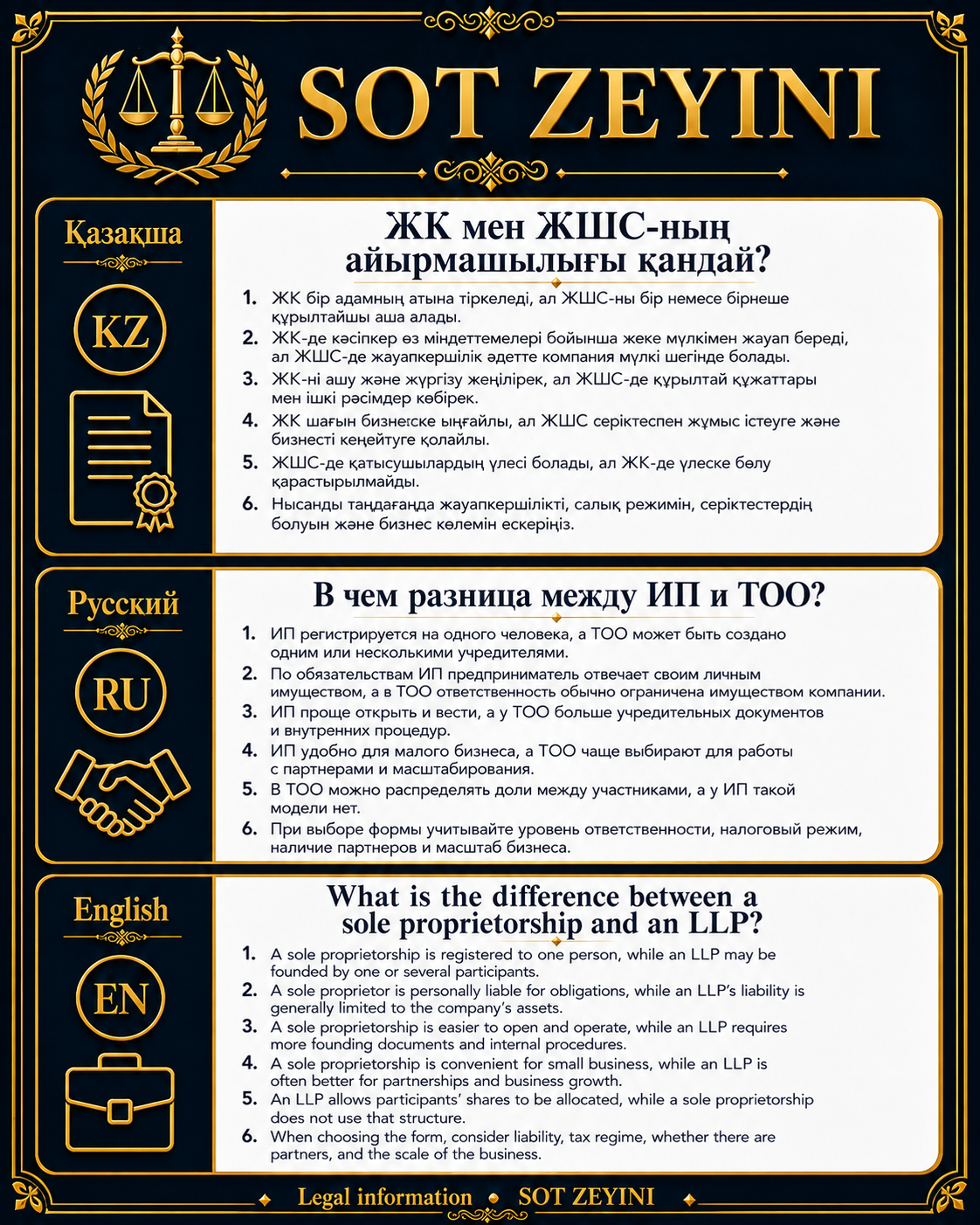
What Is the Difference Between a Sole Proprietor and an LLP?

What Is the Difference Between a Sole Proprietor and an LLP?

What are a sole proprietor and an LLP? When starting a business in Kazakhstan, many entrepreneurs choose between registering as a sole proprietor and opening an LLP. A sole proprietor is an individual who carries out business activity in their own name. In Kazakhstan, this is commonly referred to as IP or individual entrepreneur. An LLP, or Limited Liability Partnership, is a separate legal entity. It has its own name, business identification number, director, bank account, charter, and participants. In simple terms, a sole proprietor means “I am doing business,” while an LLP means “I have created a company.”

Read article →
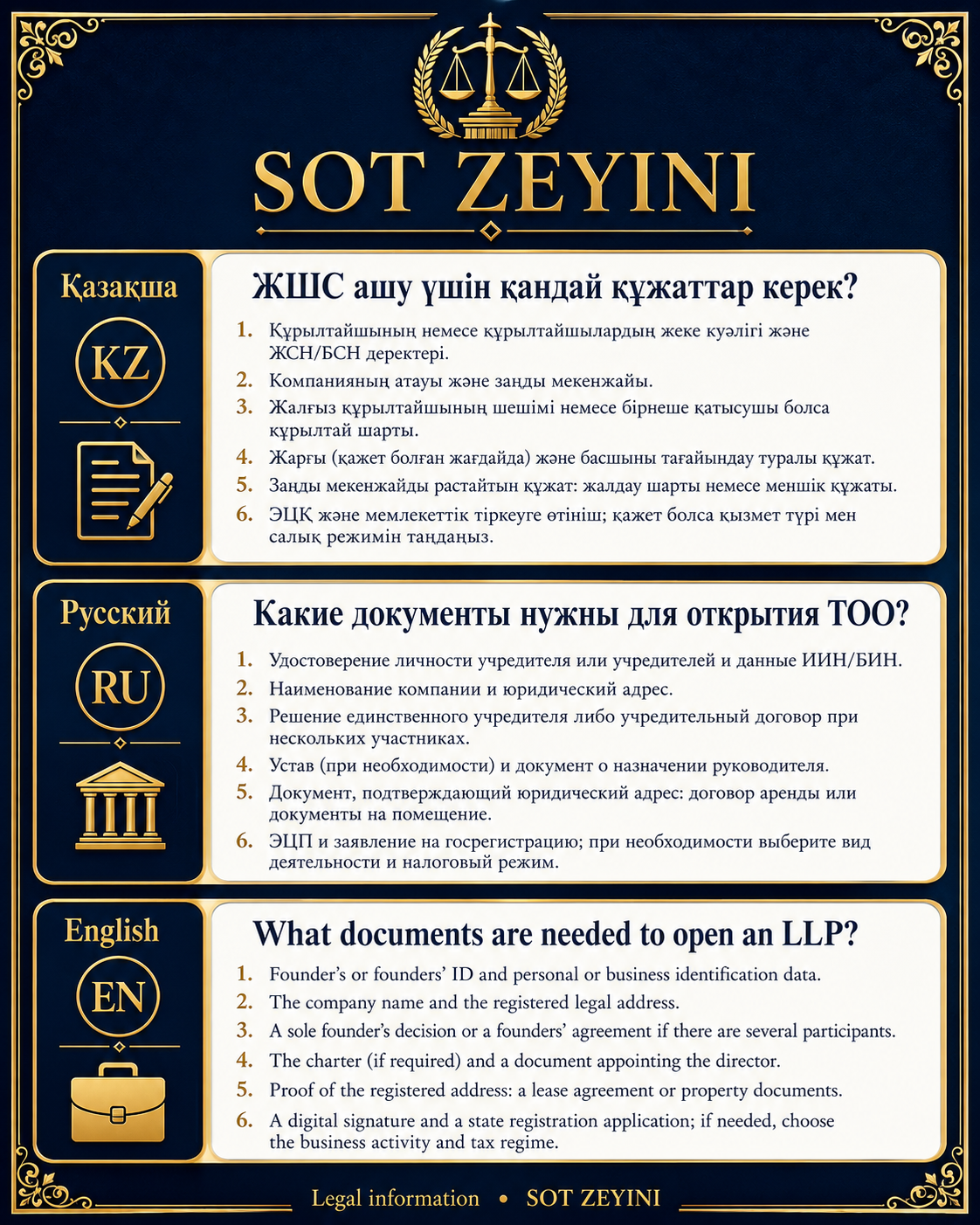
What Documents Are Needed to Open an LLP in Kazakhstan?

What Documents Are Needed to Open an LLP in Kazakhstan?

What is an LLP? An LLP, or Limited Liability Partnership, is one of the most common legal forms for doing business in Kazakhstan. It may be established by one or several individuals or legal entities. Opening an LLP allows a business to officially enter into contracts, open a bank account, hire employees, participate in tenders, pay taxes, and work with corporate clients. In simple terms, an LLP gives a business a formal legal identity.

Read article →
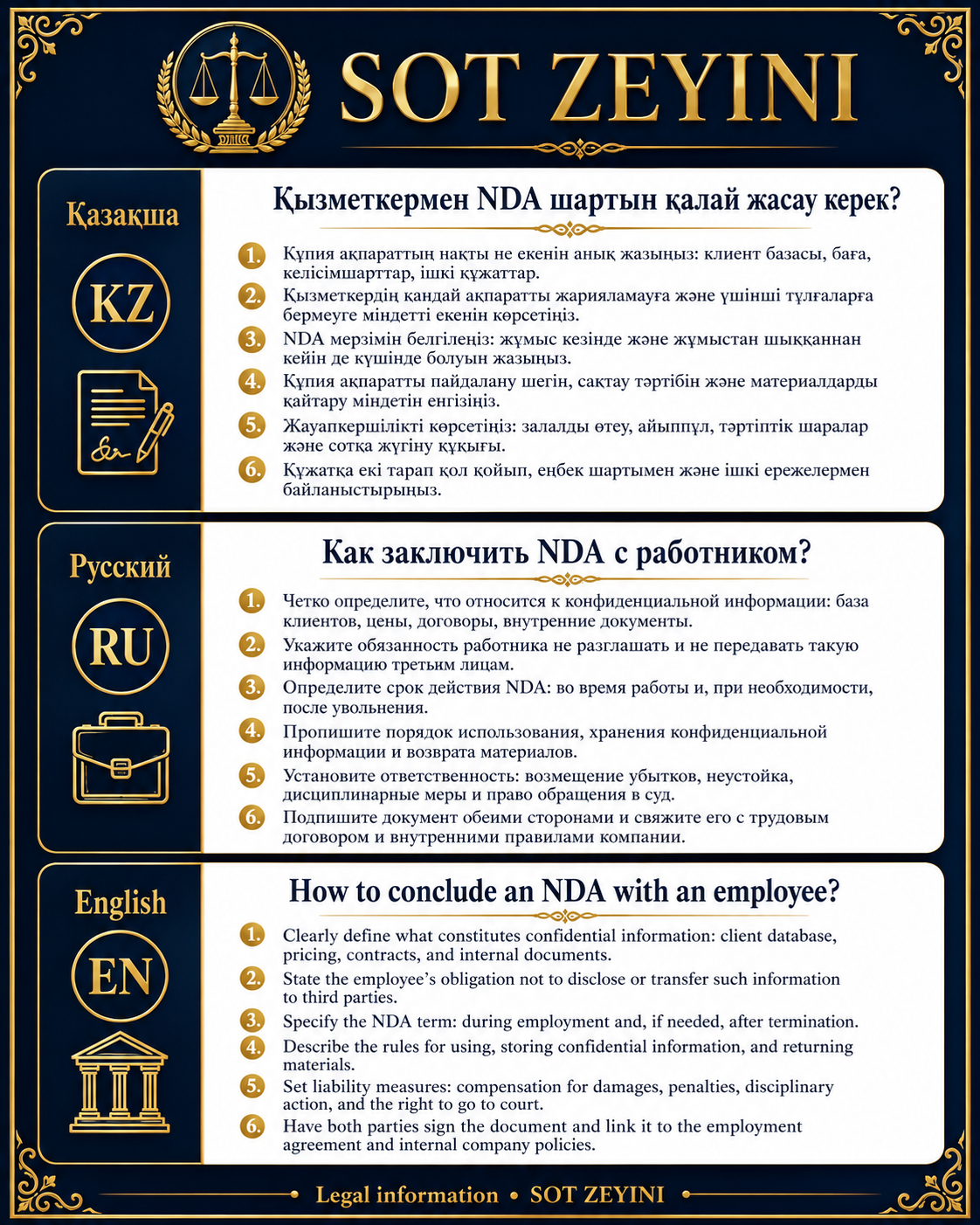
How to Sign an NDA with an Employee
Labor, employee, contract Jun 2, 2026 364 views

How to Sign an NDA with an Employee

What is an employee NDA? An NDA is a non-disclosure agreement. An employer signs it with an employee to protect the company’s client database, commercial offers, prices, CRM data, internal documents, business model, logins, passwords, and other important information. In simple terms, an NDA means that the employee may receive access to company information, but may not disclose it, copy it, transfer it to third parties, or use it for personal purposes. An NDA is especially important for sales managers, administrators, accountants, lawyers, marketers, SMM specialists, IT specialists, HR employees, department heads, and anyone who works with clients or internal company data.

Read article →
Can You Sue a Manager Who Takes a Client for Themselves?
Labor, employee, contract Jun 2, 2026 142 views

Can You Sue a Manager Who Takes a Client for Themselves?

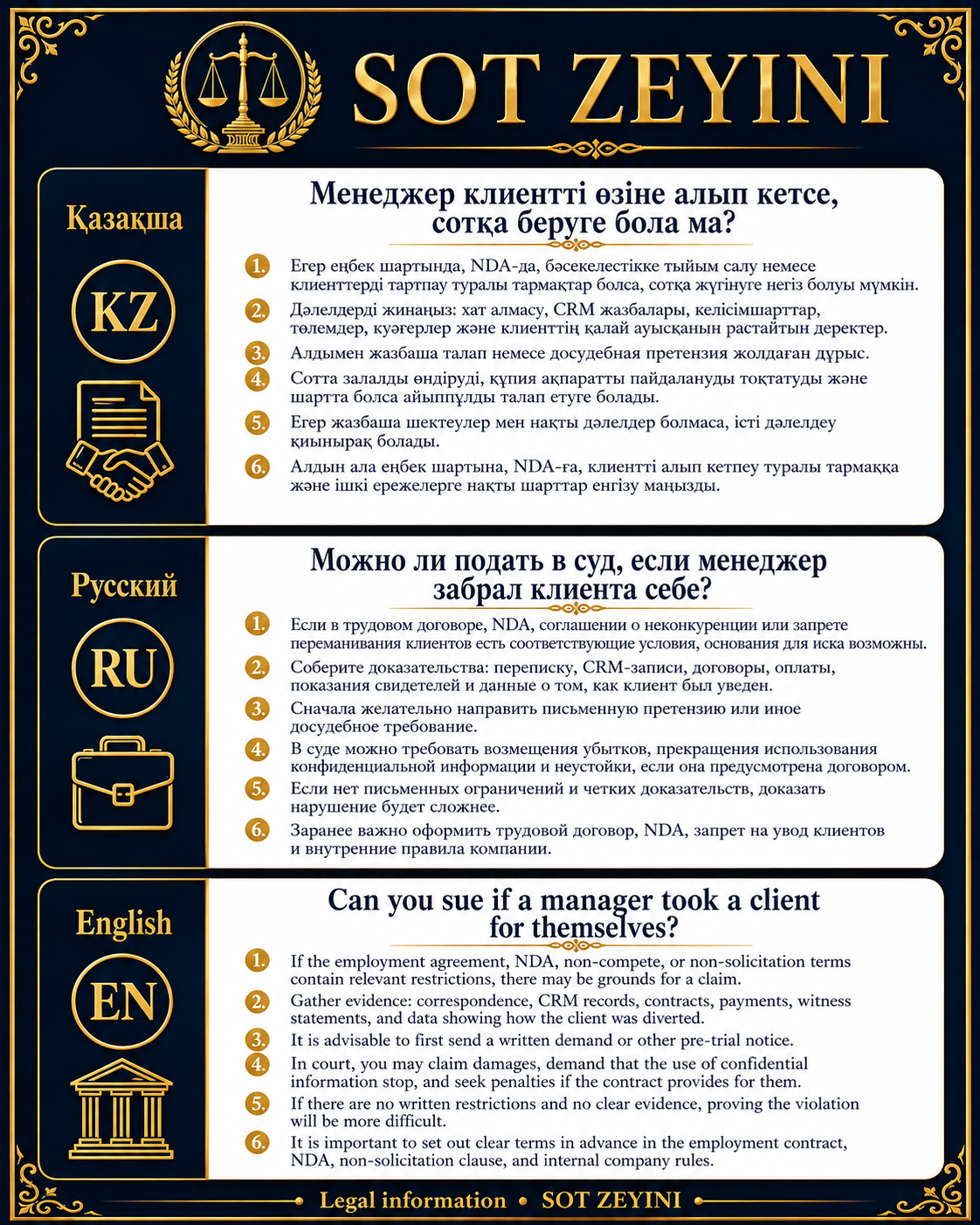
Can an employer sue a manager who takes a client? Yes, an employer may sue a manager if the manager used a company client for personal benefit, made a deal behind the employer’s back, transferred the client to a competitor, or unlawfully used the company’s client database. However, a successful claim requires evidence. The mere fact that a manager spoke with a client is not always enough. The employer must show that the client came to the company, the manager received access to the client through work, and then used that access against the company’s interests. In simple terms, the legal chain is: the client came to the company, the manager received access, the manager bypassed the company, and the company lost money. If this chain is proven, the employer has a stronger legal position.

Read article →
What Contract Should Be Signed with a Measurement Specialist?
Labor, employee, contract Jun 2, 2026 135 views

What Contract Should Be Signed with a Measurement Specialist?

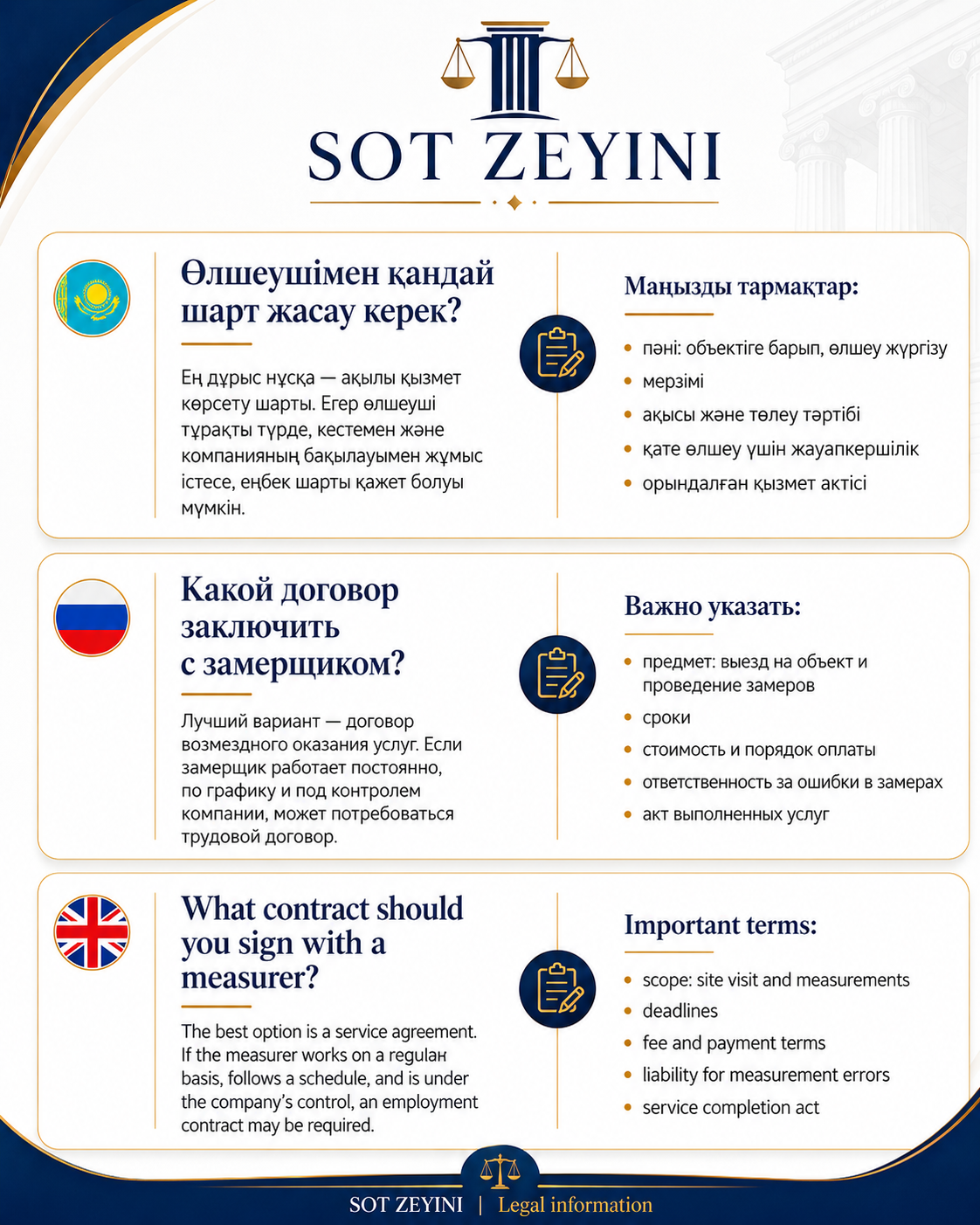
Who is a measurement specialist? A measurement specialist is a person who visits a client’s site, takes measurements, records technical details, and provides data for calculation, production, installation, or a commercial offer. Such specialists are often used in the fields of windows, doors, furniture, kitchens, wardrobes, stretch ceilings, repairs, construction, and interior design. Although the work may seem simple, one measurement error can cause serious losses: the product may not fit, installation may fail, the client may complain, and the company may have to redo the order. That is why the contract with a measurement specialist should be drafted carefully.

Read article →
How to Properly Draft a Penalty Clause in a Contract
Labor, employee, contract Jun 2, 2026 144 views

How to Properly Draft a Penalty Clause in a Contract

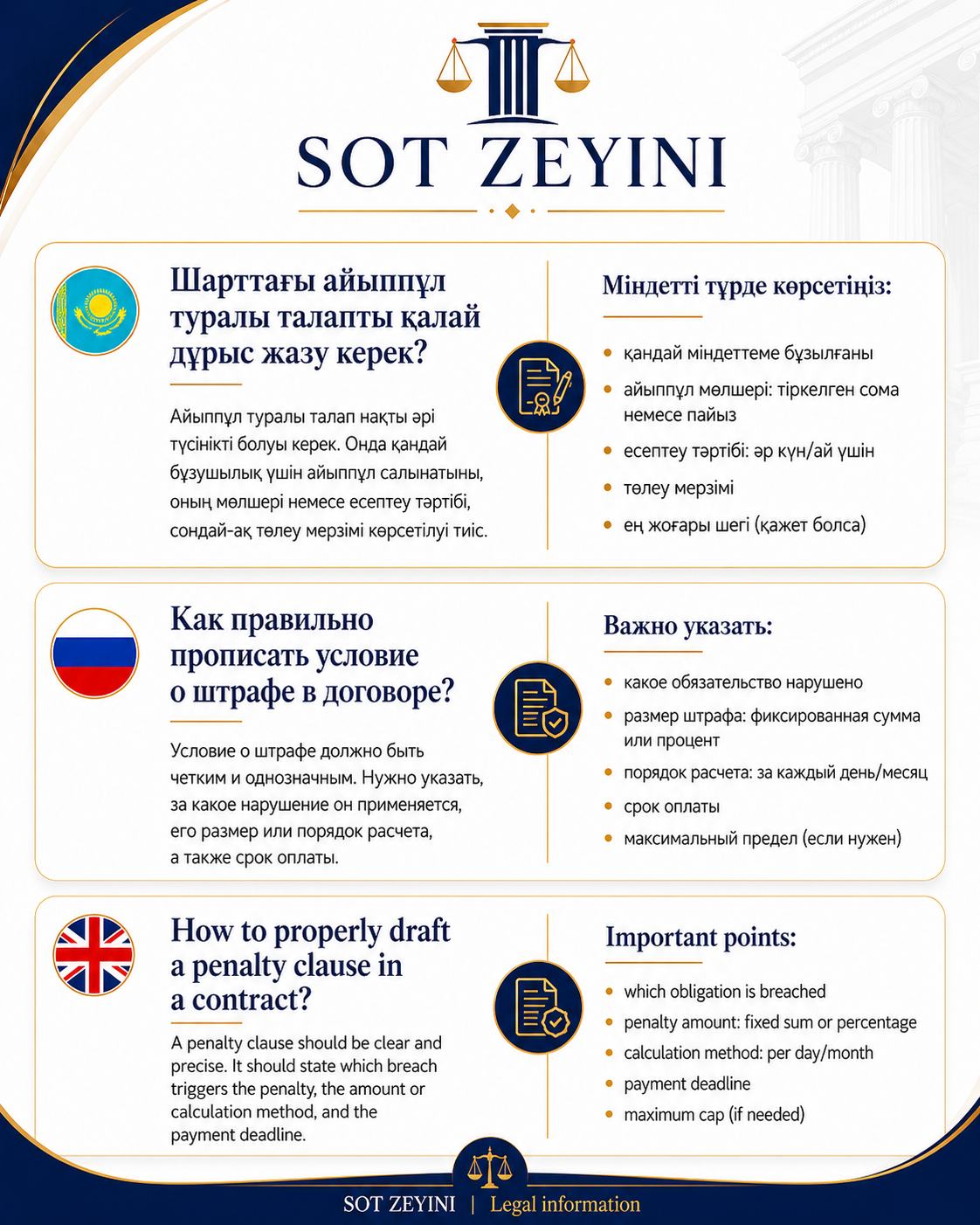
Why is a penalty clause needed? In any contract, the parties are expected to perform their obligations properly and on time. However, in practice, one party may delay payment, fail to perform work, miss a delivery deadline, disclose confidential information, or refuse to perform the contract. A penalty clause is included for such situations. It creates a pre-agreed monetary liability for breach of contract. A well-drafted penalty clause disciplines the parties and makes enforcement easier. It is not just a scary sentence in the contract. It is a practical protection tool.

Read article →
Can an Employer Recover Training Costs from an Employee?
Labor, employee, contract Jun 2, 2026 243 views

Can an Employer Recover Training Costs from an Employee?

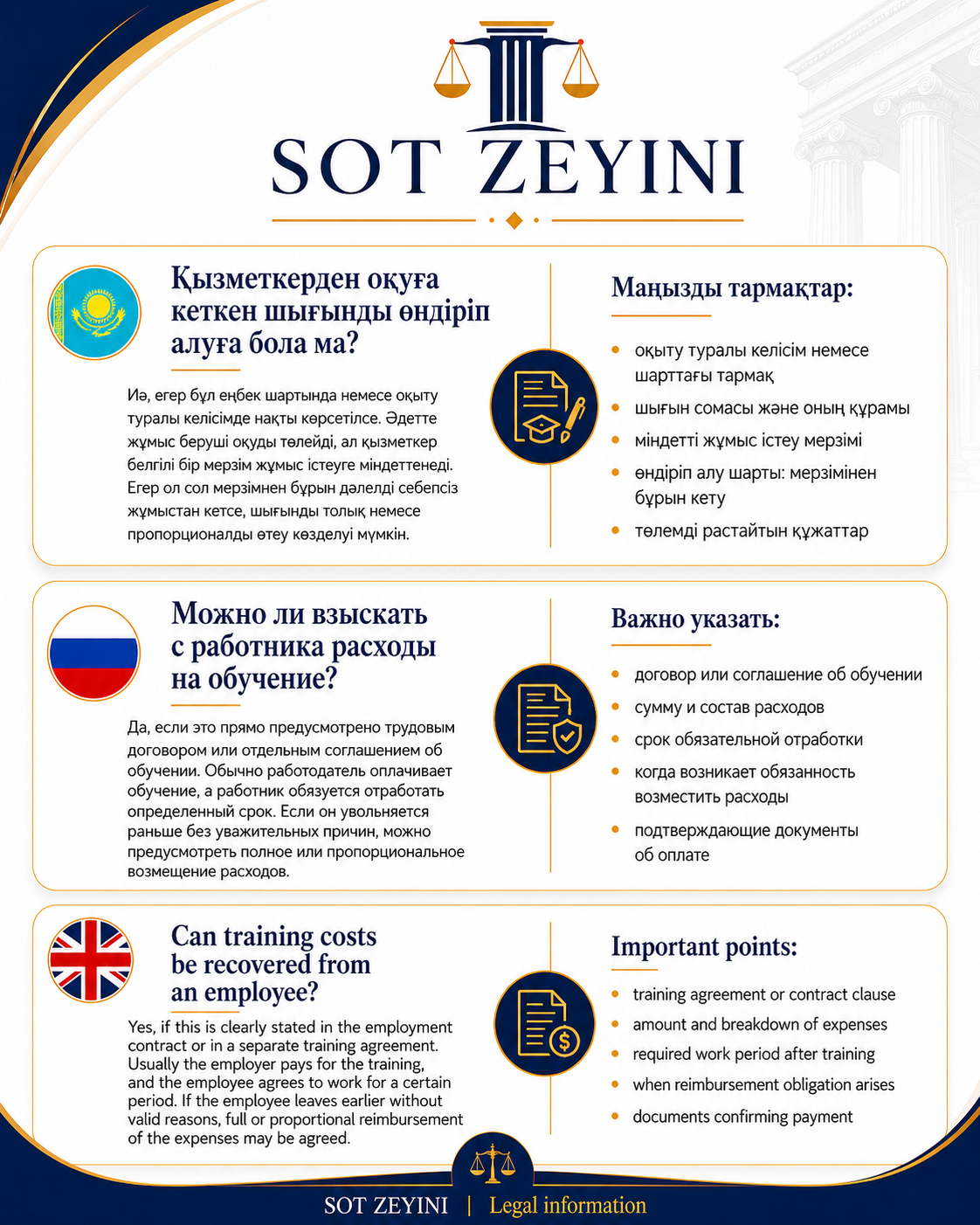
Can an employer recover training costs from an employee? Yes, in Kazakhstan an employer may recover training costs from an employee if the training was paid for by the employer and the parties signed a written training agreement or a relevant additional agreement. However, the recovery is not automatic. The employer must prove that the employee agreed to work for a certain period after completing the training or to reimburse the employer if they leave before that period ends. In practice, the employer needs documents: a training agreement, proof of payment, a work-off period, and a clear calculation of the amount to be reimbursed. When can the employer claim reimbursement? The employer may claim reimbursement if: the employee was sent to training by the employer; the training was paid by the employer; a written training agreement was signed; the agreement contains a work-off period after training; the agreement describes the reimbursement procedure; the employee did not complete the required work-off period; the expenses are supported by documents. If these conditions are met, the employer may request voluntary reimbursement or file a court claim.

Read article →
ИИ Бот